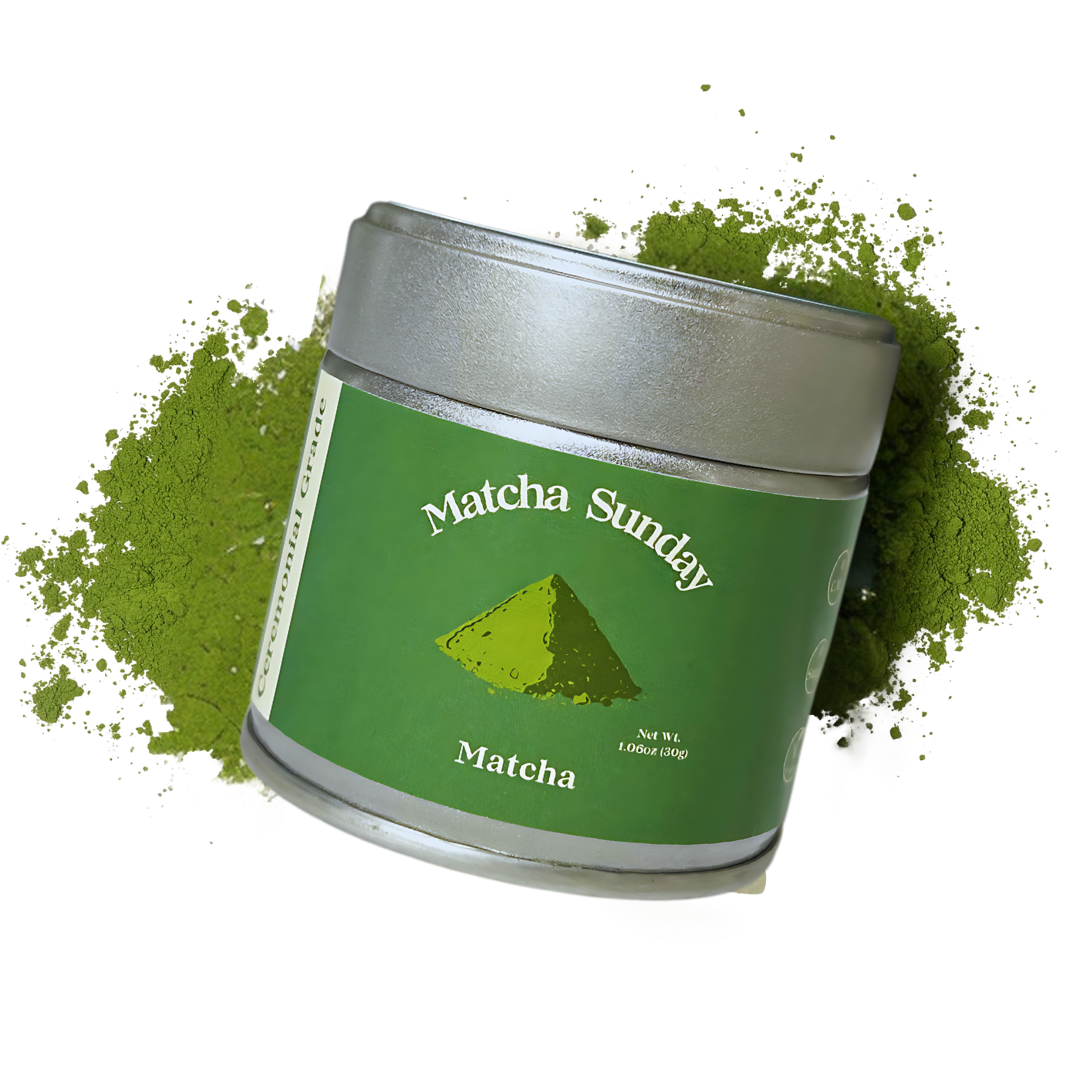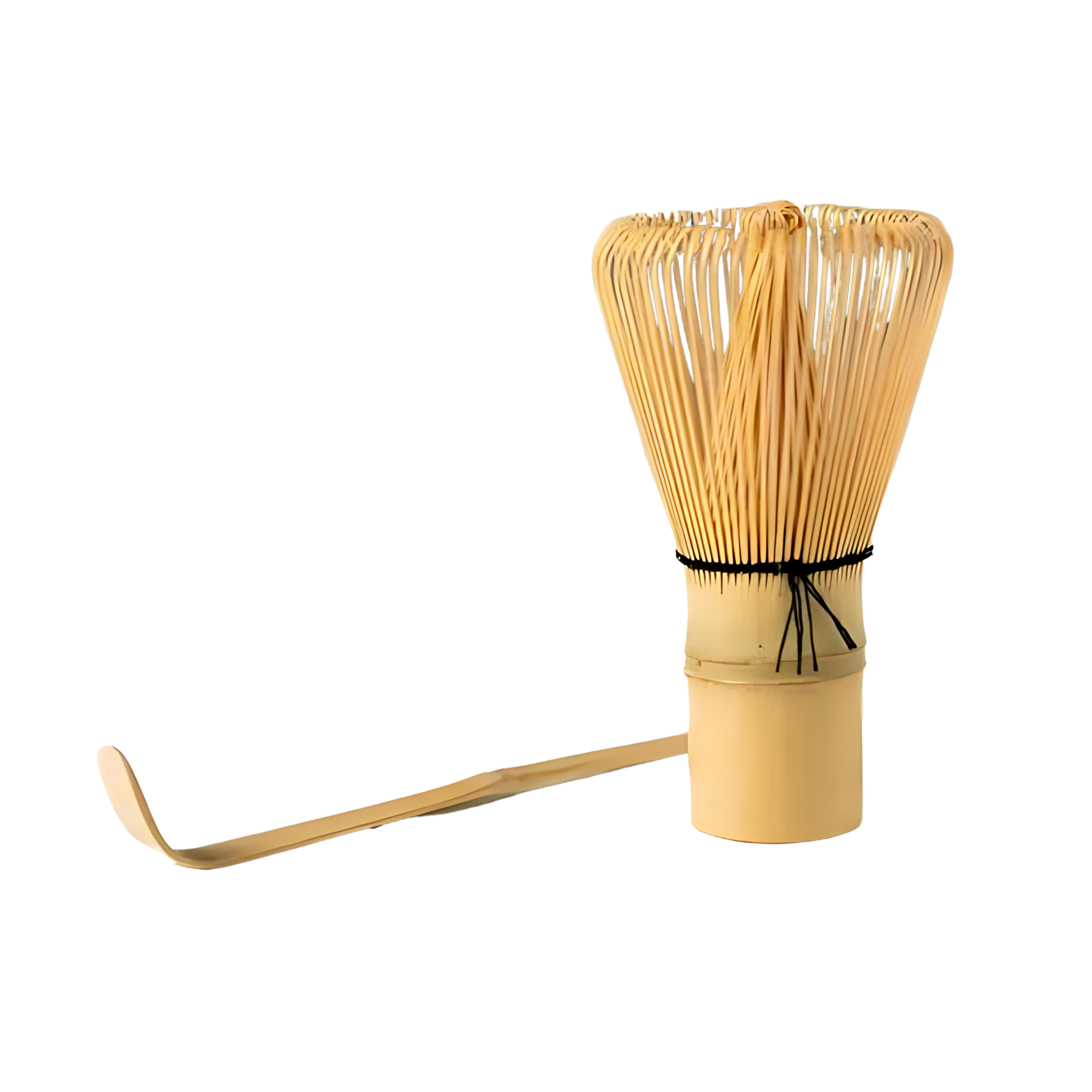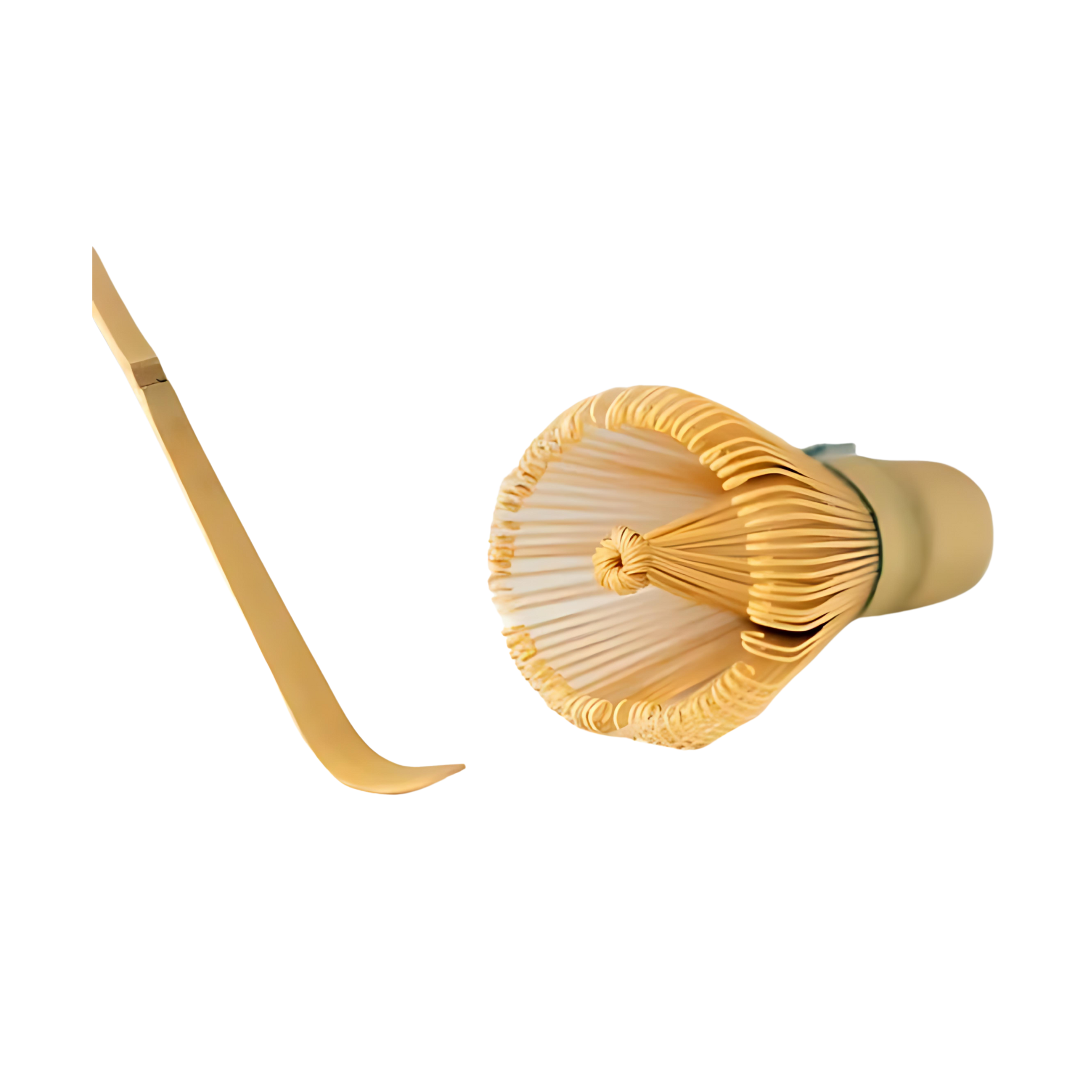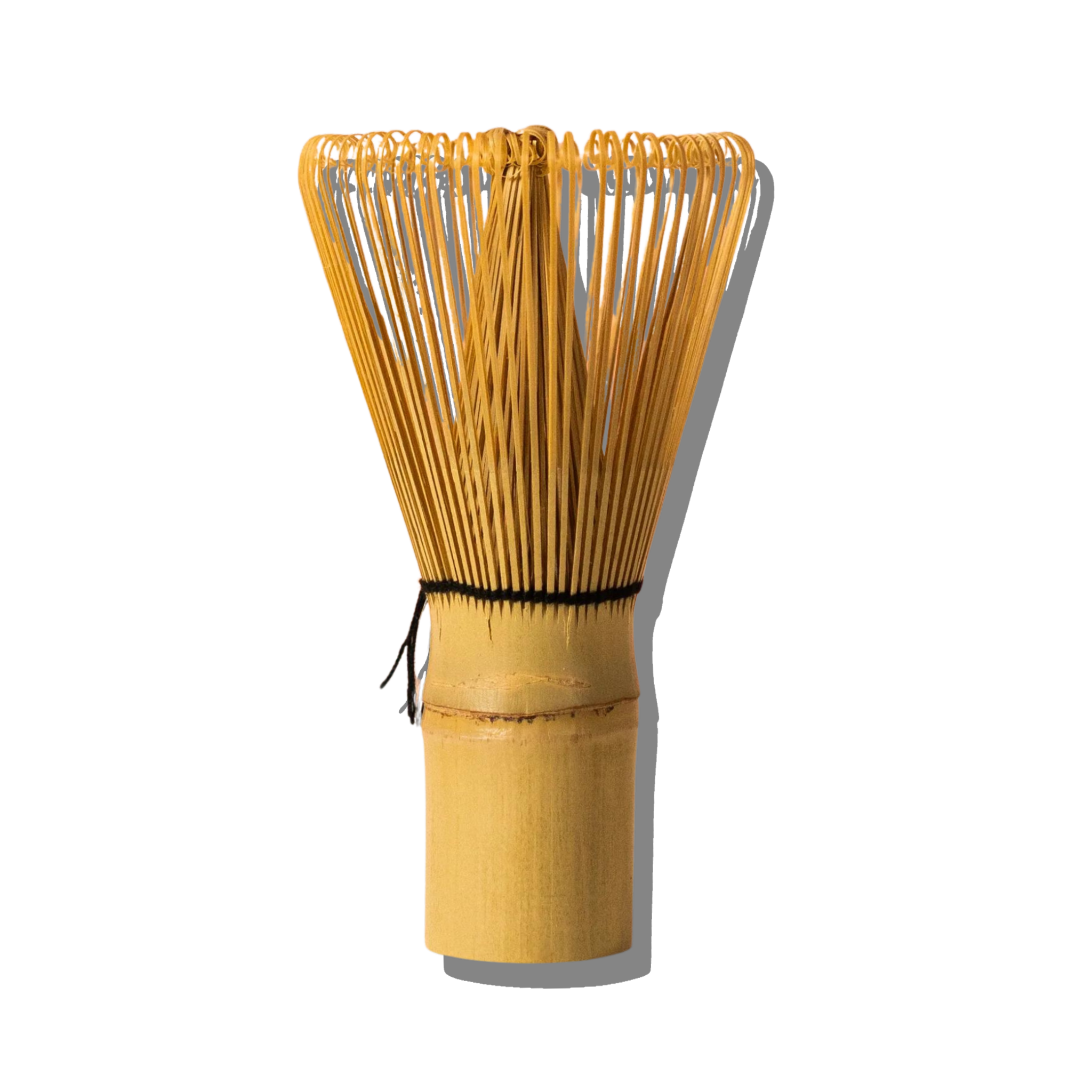
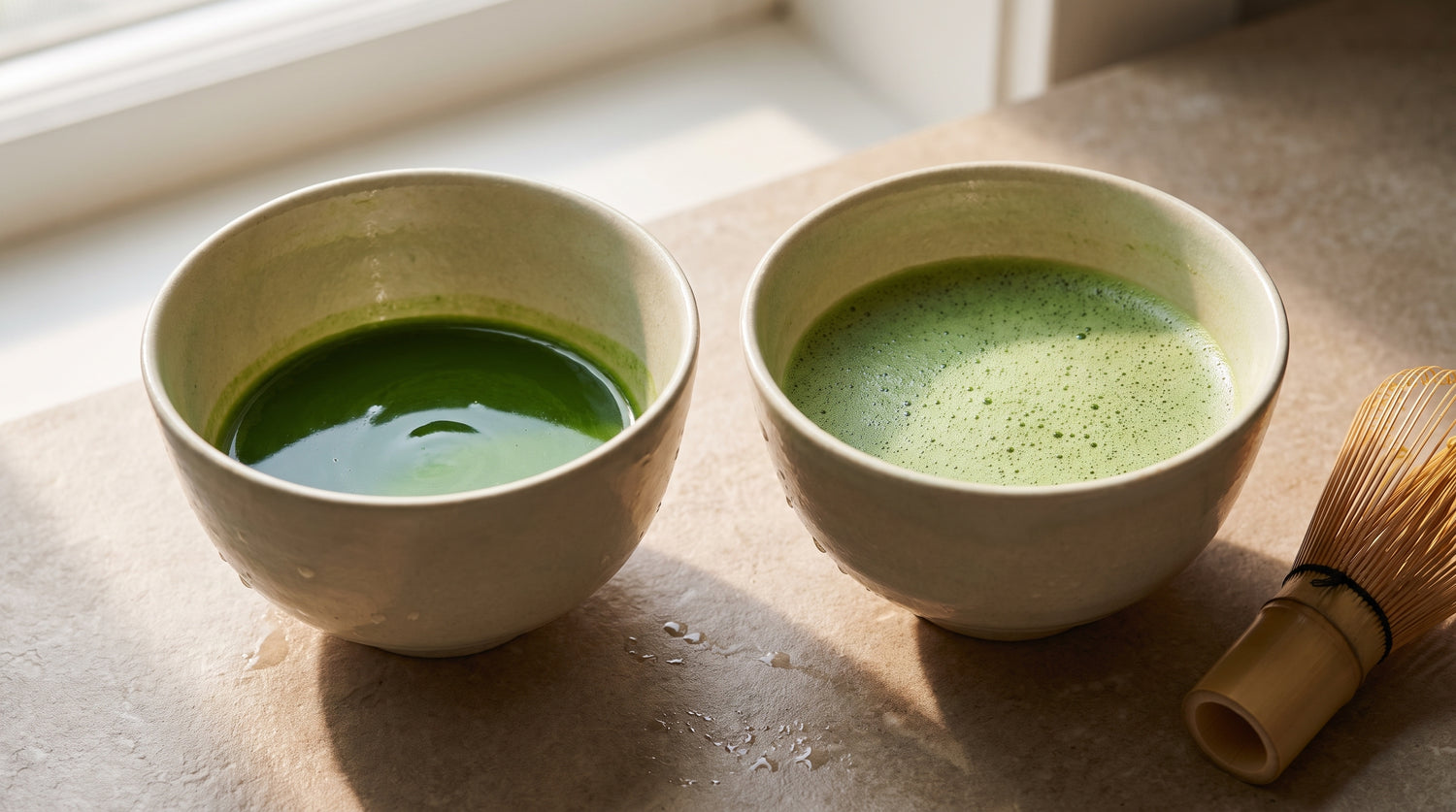
Koicha and usucha are the two traditional preparations of matcha from Japan. Koicha is a thick, glossy tea made by slowly kneading about 4 grams of matcha into just 30 to 40 ml of water. Usucha is a thin, frothy tea whisked briskly from about 2 grams of matcha into 60 to 70 ml of water. Same powder, two completely different drinks.
What is the difference between koicha and usucha?
The difference between koicha and usucha comes down to concentration and technique. Koicha, meaning thick tea, uses roughly twice the matcha and half the water of usucha, and it is kneaded slowly into a smooth, paint like consistency with no foam. Usucha, meaning thin tea, is whisked rapidly into a light, frothy cup that most people picture when they think of matcha.
The two styles also differ in where you encounter them. Usucha is the everyday preparation, served casually at home and in most cafes. Koicha is the more formal of the two and sits at the heart of the traditional tea gathering, where a single bowl is often shared among guests. Because koicha is so concentrated, it is far less forgiving: any bitterness or dullness in the powder is amplified, which is why it demands the finest grades of matcha.
- Koicha: thick, syrupy, no foam, kneaded slowly, intensely sweet and rich in umami, reserved for the highest grades
- Usucha: thin, frothy, whisked briskly, lighter and brighter in flavor, the standard daily preparation
What is koicha and how do you make it?
Koicha is thick matcha: roughly 4 grams of powder kneaded into 30 to 40 ml of water until it forms a smooth, glossy liquid with the consistency of warm honey or melted chocolate. There is no foam on koicha. The goal is a perfectly uniform, lump free texture and a deep, sweet, savory flavor with almost no bitterness.
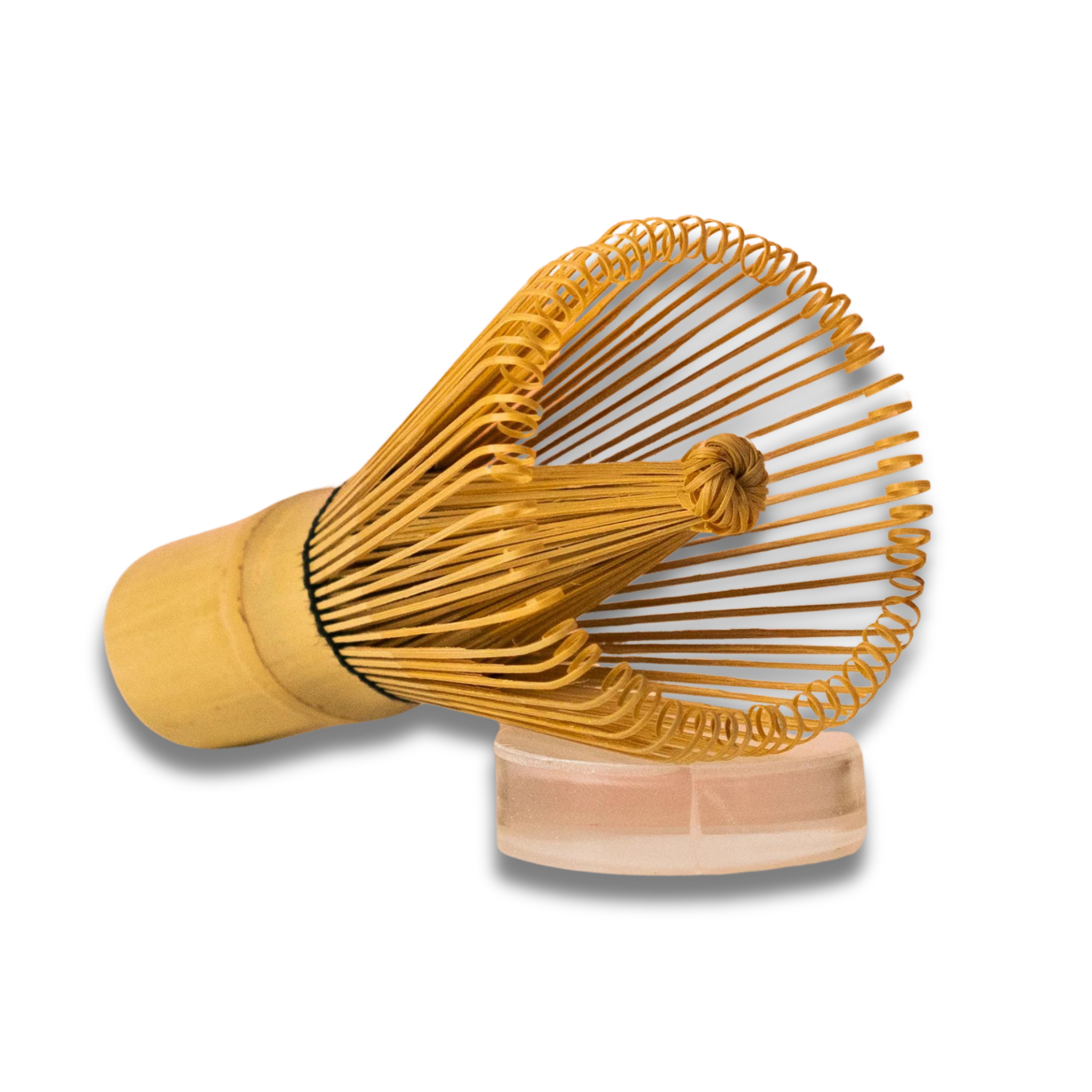
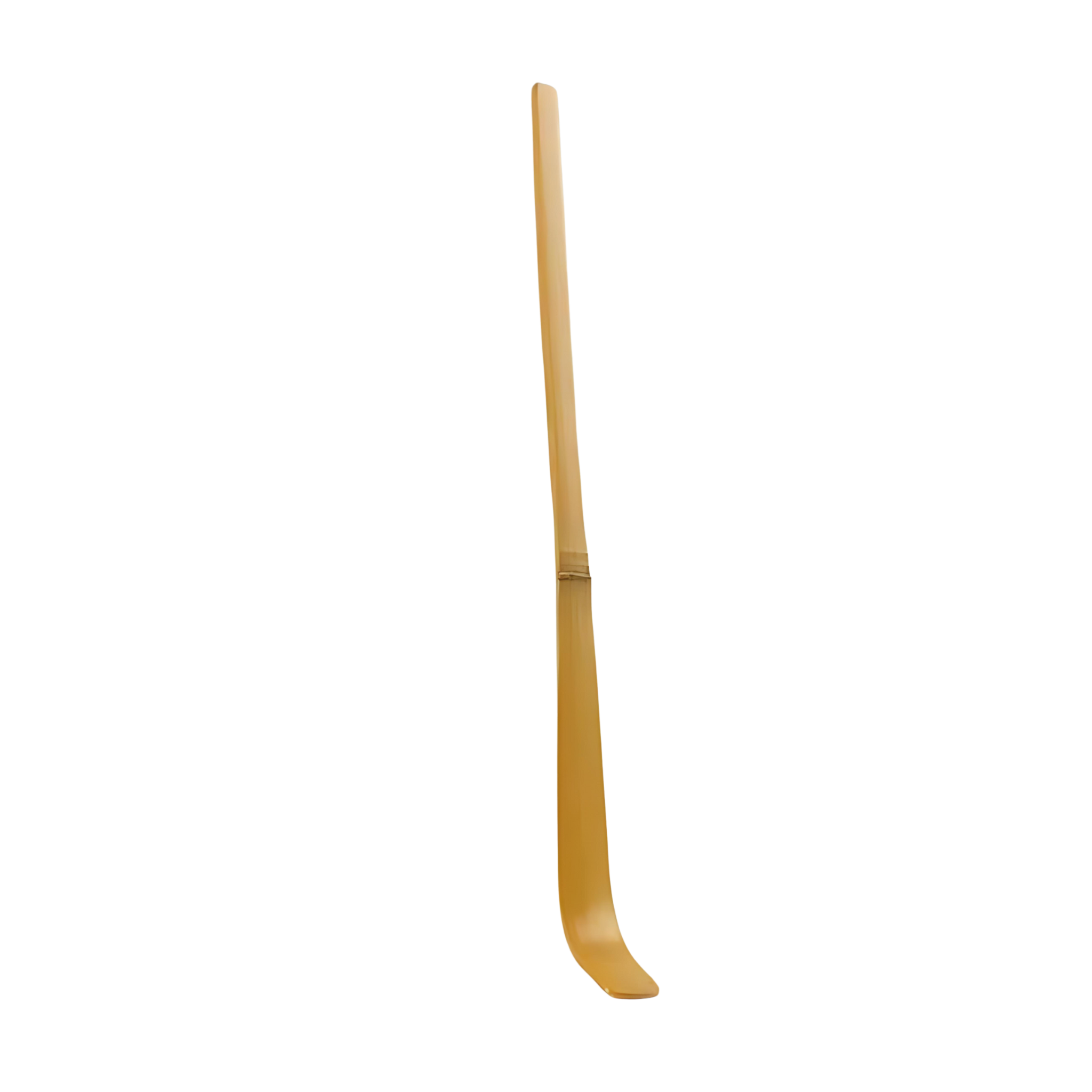
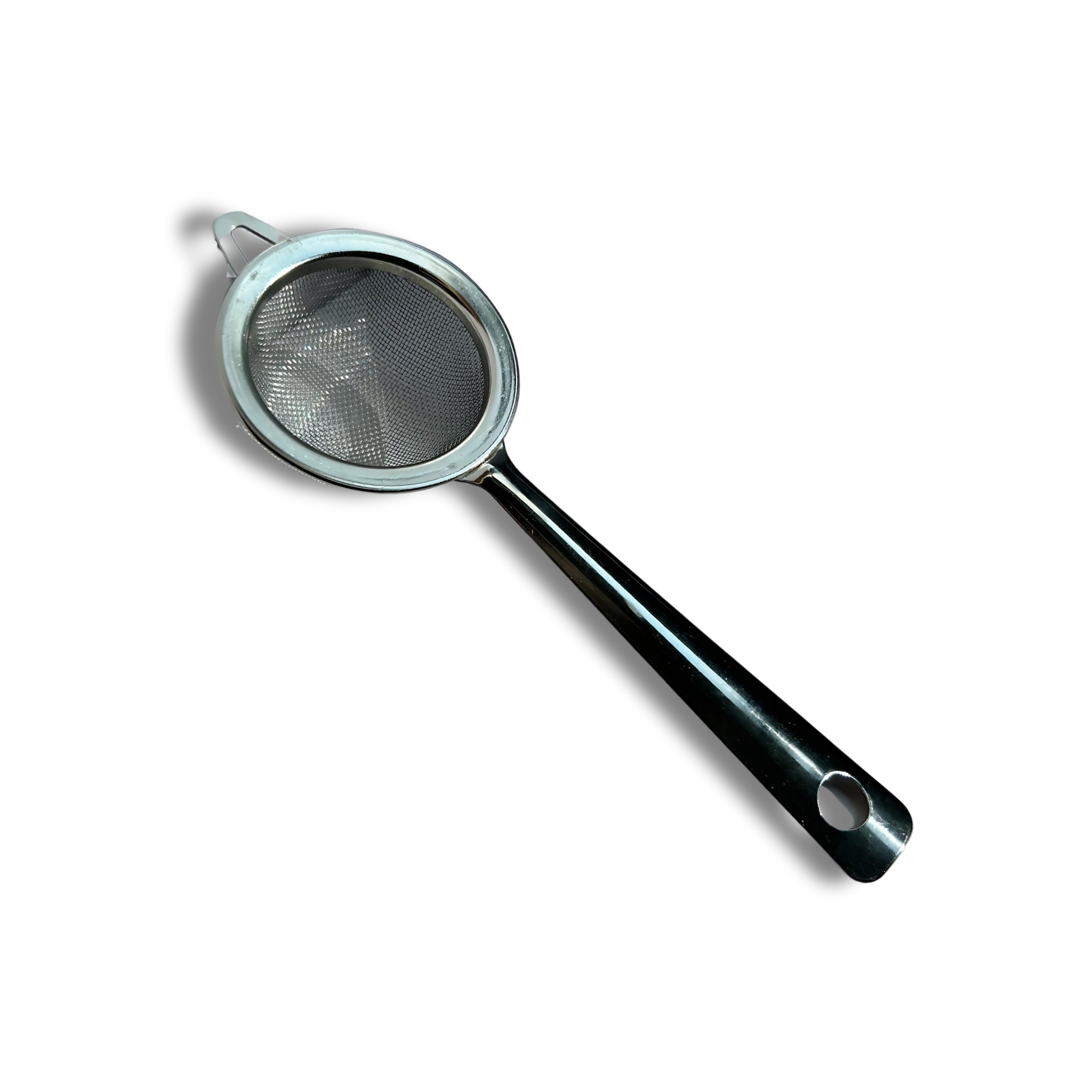
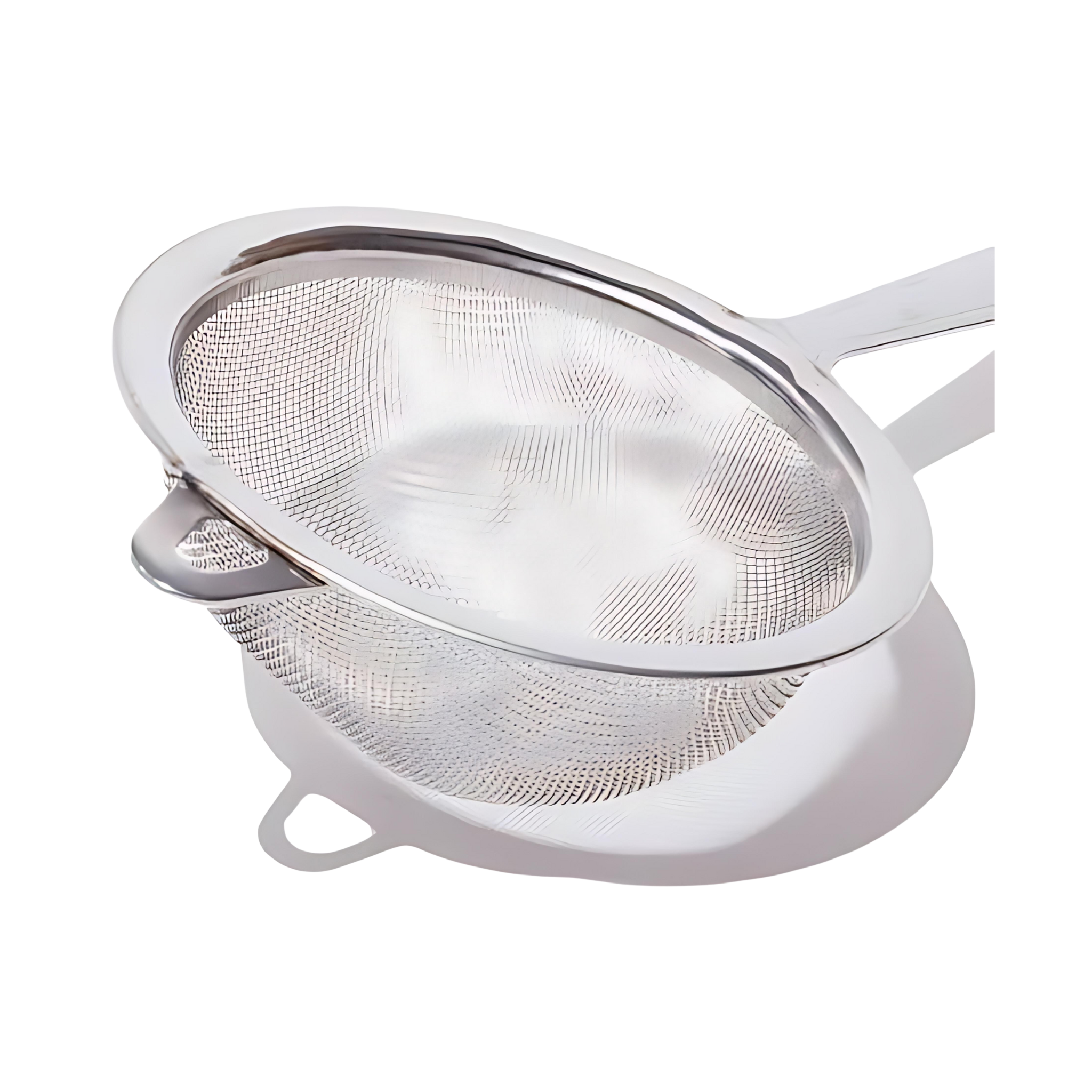
To make koicha, sift 4 grams of matcha (about two heaping bamboo scoops, or two level teaspoons) into a wide bowl. Sifting matters even more here than with thin tea, because at this concentration any clump becomes obvious. Add a small splash of water at 70 to 80 degrees Celsius (158 to 176 Fahrenheit), never boiling, and use the whisk to slowly work the powder into a paste. Then add the remaining water gradually while kneading the tea in slow, deliberate strokes, pressing the whisk through the liquid rather than beating air into it. The motion is closer to folding batter than whipping cream. When the surface turns glossy and the tea flows off the whisk in a smooth ribbon, it is ready.
Because the water volume is so small, temperature control matters. Water that is too hot scalds the powder and pushes the flavor toward bitterness, which koicha has nowhere to hide. If you are new to hand whisked matcha, our guide on how to prepare ceremonial grade matcha at home walks through the full setup before you attempt the thick style.
What is usucha and how do you make it?
Usucha is thin matcha: about 2 grams of powder whisked briskly into 60 to 70 ml of water until a fine layer of foam covers the surface. It is lighter, brighter, and slightly more brisk in flavor than koicha, and it is the version served in daily practice across Japan and in nearly every cafe worldwide.
To make usucha, sift 2 grams of matcha (one heaping bamboo scoop, or about one level teaspoon) into your bowl and pour in 60 to 70 ml of water at 70 to 80 degrees Celsius. Hold the whisk loosely and move it rapidly back and forth in a motion shaped like the letter W or M, using your wrist rather than your whole arm. Keep the whisk tines just off the bottom of the bowl. After roughly 15 to 30 seconds the surface should be covered in a fine, even foam with no large bubbles. Finish by lifting the whisk gently from the center to leave a small peak.
The whisking motion is the single biggest factor in a good cup of usucha, and it is the opposite of the koicha technique: fast and airy instead of slow and pressing. For a full breakdown of grip, speed, and troubleshooting, see our guide to whisking matcha.
Caffeine per bowl: koicha vs usucha
What matcha to powder ratio do koicha and usucha use?
Usucha uses about 2 grams of matcha to 60 to 70 ml of water, roughly 1 part powder to 30 or 35 parts water. Koicha uses about 4 grams of matcha to 30 to 40 ml of water, roughly 1 part powder to 8 or 10 parts water. In practical terms, koicha is about four times as concentrated as usucha.
| Koicha (thick tea) | Usucha (thin tea) | |
|---|---|---|
| Matcha | About 4 g (2 heaping scoops) | About 2 g (1 heaping scoop) |
| Water | 30 to 40 ml | 60 to 70 ml |
| Water temperature | 70 to 80 degrees Celsius | 70 to 80 degrees Celsius |
| Technique | Slow kneading, no air | Rapid whisking in a W motion |
| Texture | Thick, glossy, no foam | Thin, light, fine foam |
| Approximate caffeine | Roughly 120 to 140 mg per bowl | Roughly 60 to 70 mg per bowl |
| Grade required | Highest ceremonial grades only | Any good ceremonial grade |
Because koicha uses double the powder, it also delivers roughly double the caffeine and L theanine of a bowl of usucha. A typical 2 gram serving of matcha contains around 60 to 70 mg of caffeine, so a 4 gram bowl of koicha lands near the caffeine content of a strong cup of coffee, but with the calm, sustained lift that L theanine is known for. If you are still calibrating your daily amount, our article on how much matcha powder to use per cup covers portioning in detail.
Do you need ceremonial grade matcha for koicha?
Yes. Koicha genuinely requires the highest grades of matcha, because at 1 part powder to roughly 10 parts water there is nothing to dilute or mask flaws. A matcha that tastes pleasantly brisk as usucha can turn harsh and astringent as koicha. Traditionally, koicha is made only from the most carefully shaded, youngest leaves, which carry high levels of L theanine and natural sweetness and very little bitterness.
Usucha is more flexible. A good everyday ceremonial grade matcha from Japan makes an excellent bowl of thin tea, and the extra water softens minor edges in flavor. That said, culinary grade powders intended for lattes and baking are not a good match for either preparation drunk straight. If you want to understand what actually separates the grades, read our explainer on what ceremonial grade matcha really means.
A simple rule: if a matcha is sweet, smooth, and rich in umami on its own as usucha, it is a candidate for koicha. If you notice any bitterness in the thin preparation, koicha will multiply it.
Which should a beginner try first, koicha or usucha?
Beginners should start with usucha. It uses less powder, tolerates small mistakes in temperature and technique, and its light, frothy character is the most approachable introduction to drinking matcha straight. Once whisking a clean, evenly foamed bowl of usucha feels routine, koicha becomes a rewarding next step rather than an expensive gamble.
A sensible progression looks like this:
- Learn to whisk usucha consistently: 2 grams, 70 ml, water at 70 to 80 degrees Celsius, fine foam every time.
- Upgrade your powder until your usucha tastes sweet and smooth with no bitterness at all.
- Try a half step: 3 grams in 50 ml, kneaded slowly, to feel how the texture and technique change.
- Make true koicha: 4 grams in 30 to 40 ml with your best matcha, kneaded to a glossy ribbon.
Many people who love matcha drink usucha daily and reserve koicha for weekends or special moments, the way a coffee lover might treat a carefully brewed single origin. There is no rule that says you must graduate permanently to thick tea. They are two different experiences of the same leaf, and both are worth knowing.
Start your matcha ritual
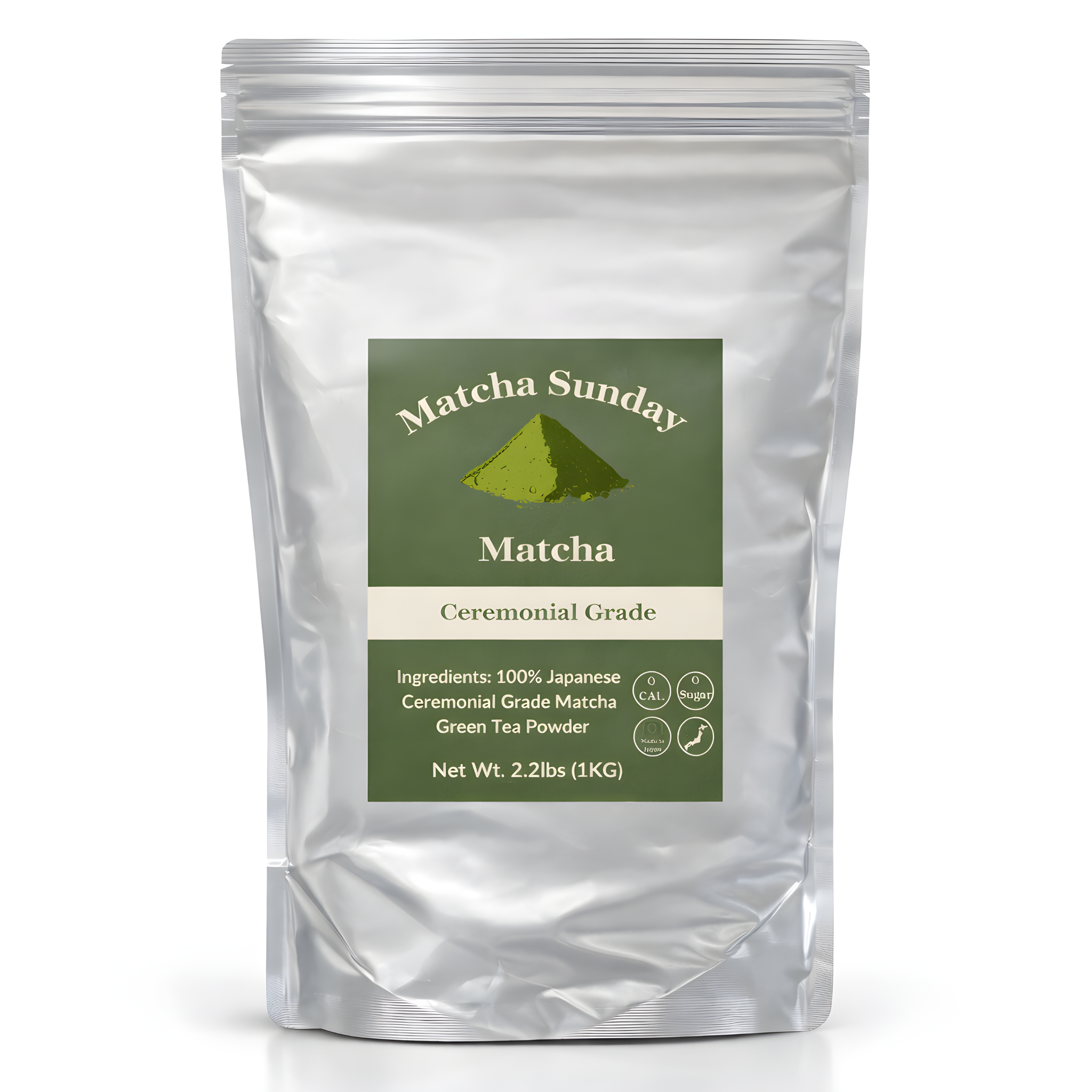
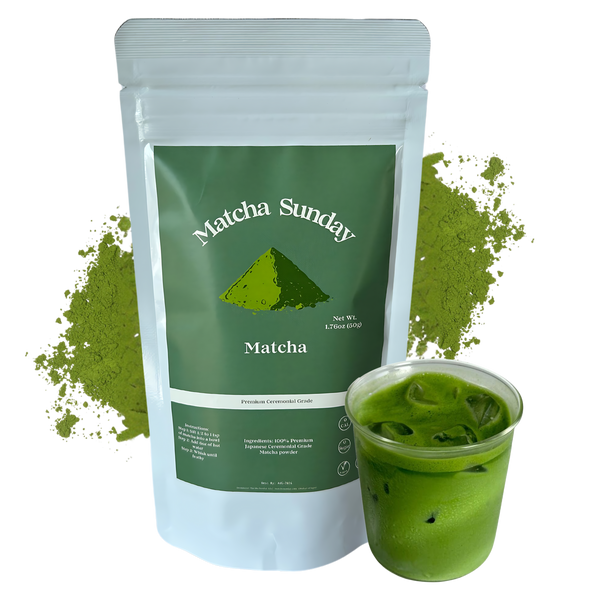
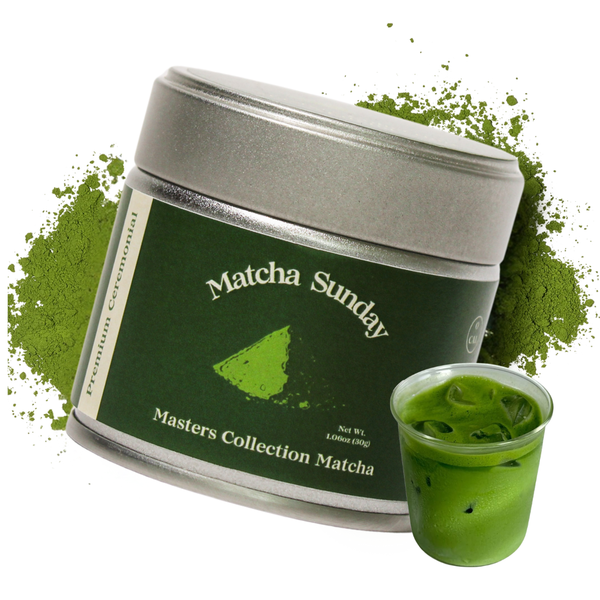
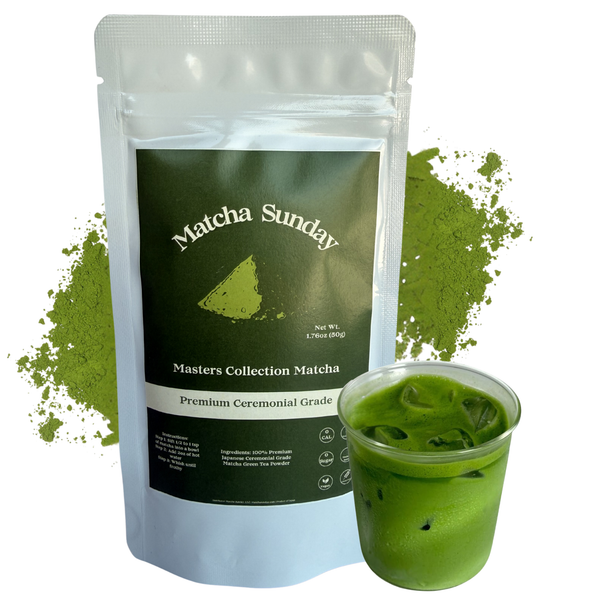
All 100% matcha from Japan. Pick the one that fits how you like to drink it.
Frequently asked questions
What does koicha taste like compared to usucha?
Koicha tastes dramatically more intense: deeply sweet, savory, and rich in umami, with a thick texture close to warm honey. Usucha is lighter and brighter, with gentle grassy freshness and a soft foam. Made from high quality matcha, neither should taste harshly bitter, but koicha magnifies every quality of the powder.
Why does koicha have no foam?
Foam is deliberately avoided in koicha. The tea is kneaded with slow, pressing strokes that work the powder into the water without incorporating air, producing a smooth, glossy surface. Whipping air into such a concentrated mixture would create a coarse, uneven texture and disturb the dense, velvety mouthfeel that defines thick tea.
Can I use the same whisk for koicha and usucha?
Yes, a standard bamboo whisk works for both preparations. Traditionally, whisks with fewer, sturdier tines are favored for kneading thick koicha, while whisks with many fine tines build the delicate foam of usucha more easily. For home practice, one good quality whisk handles both styles perfectly well.
How much caffeine is in koicha versus usucha?
A bowl of usucha made with 2 grams of matcha contains roughly 60 to 70 mg of caffeine. Koicha uses about 4 grams, so a bowl delivers roughly 120 to 140 mg, similar to a strong cup of coffee. Both also provide L theanine, which promotes a calmer, more sustained alertness.
What water temperature should I use for koicha and usucha?
Both preparations use water at about 70 to 80 degrees Celsius, or 158 to 176 Fahrenheit, never boiling. Temperature matters more for koicha because the small water volume gives bitterness nowhere to hide. Boil your water, then let it rest for a few minutes or pour it between vessels before whisking.
Is koicha served differently in the tea ceremony?
Yes. In the traditional tea gathering of Japan, koicha is the formal centerpiece, often prepared in a single bowl that guests share, each taking a few sips. Usucha follows as the lighter, more relaxed course, served in individual bowls. This order reflects koicha's status as the more honored preparation.
Can I make a latte with koicha?
Koicha itself is meant to be sipped straight, but the same thick paste technique is a useful trick for lattes. Kneading matcha into a small amount of water first eliminates clumps, and you can then pour it over milk and ice. For a latte, standard usucha strength powder works fine.