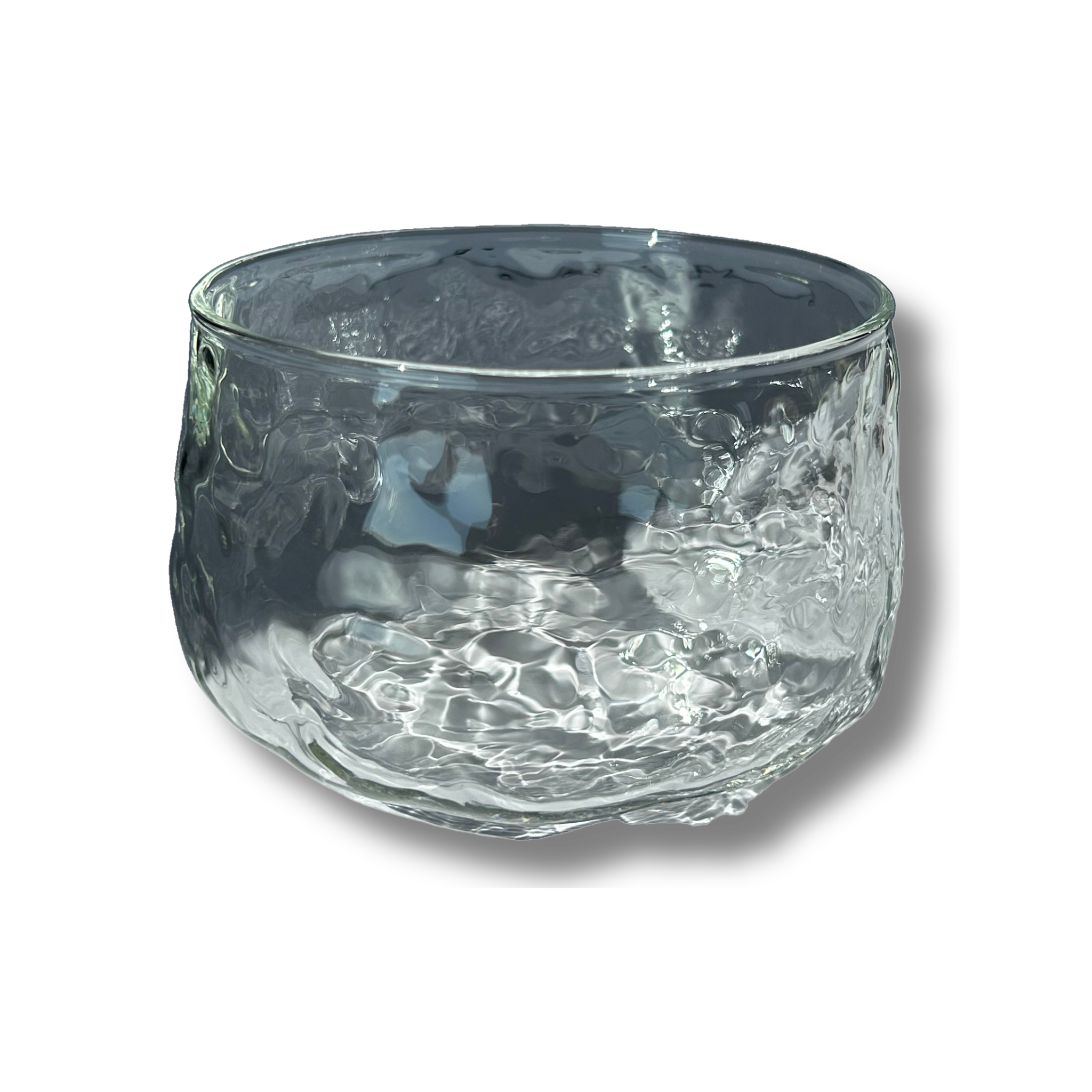

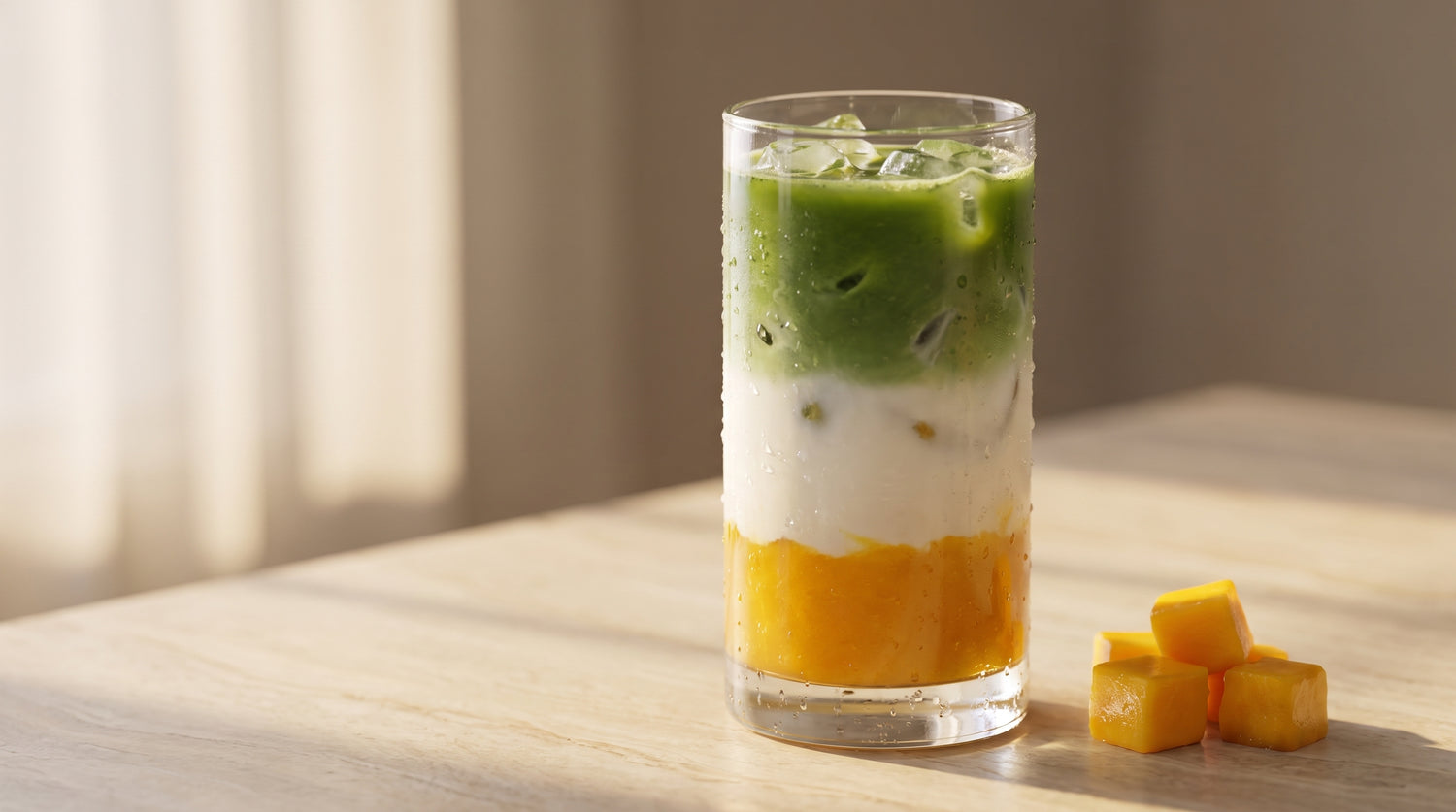
An iced mango matcha latte layers sweet mango puree, cold milk, and freshly whisked ceremonial matcha from Japan in a clear glass over ice, building a gold, cream, and green sunrise. It takes about 10 minutes, makes one tall serving, and carries about 60 to 70 mg of smooth, steady caffeine.
What is an iced mango matcha latte?
An iced mango matcha latte is a layered cold drink built from three parts: thick mango puree on the bottom, cold milk in the middle, and freshly whisked matcha floated on top. It has become a warm weather favorite for good reason. Mango season peaks in summer, the drink needs nothing more than a whisk and a blender, and the finished glass looks striking enough to carry a slow weekend breakfast or a golden hour moment on the porch.
We love this drink because mango and matcha sit at opposite ends of the flavor spectrum, and somehow that is exactly why they work. Ripe mango brings honeyed sweetness and a soft floral note, while good matcha brings the fresh, grassy, gently savory depth we start every morning with. The milk in the middle softens the handoff, so each sip moves from sweet to creamy to green. It is the same layering idea behind our iced strawberry matcha latte, swapped to a tropical fruit base, and it has quietly become the layered drink we get asked about most this summer.
How do you make an iced mango matcha latte at home?
You need ripe mango, ceremonial matcha, cold milk, and ice. Blend the mango into a thick puree, whisk the matcha separately, then build the glass in layers from heaviest to lightest. The whole thing takes about 10 minutes and makes one tall serving.
Ingredients
| Ingredient | Amount | Notes |
|---|---|---|
| Ripe mango | 100 g (about half a mango) | Or 3 tablespoons of thick mango puree |
| Honey or simple syrup | 1 teaspoon, optional | Skip it if the mango is very ripe |
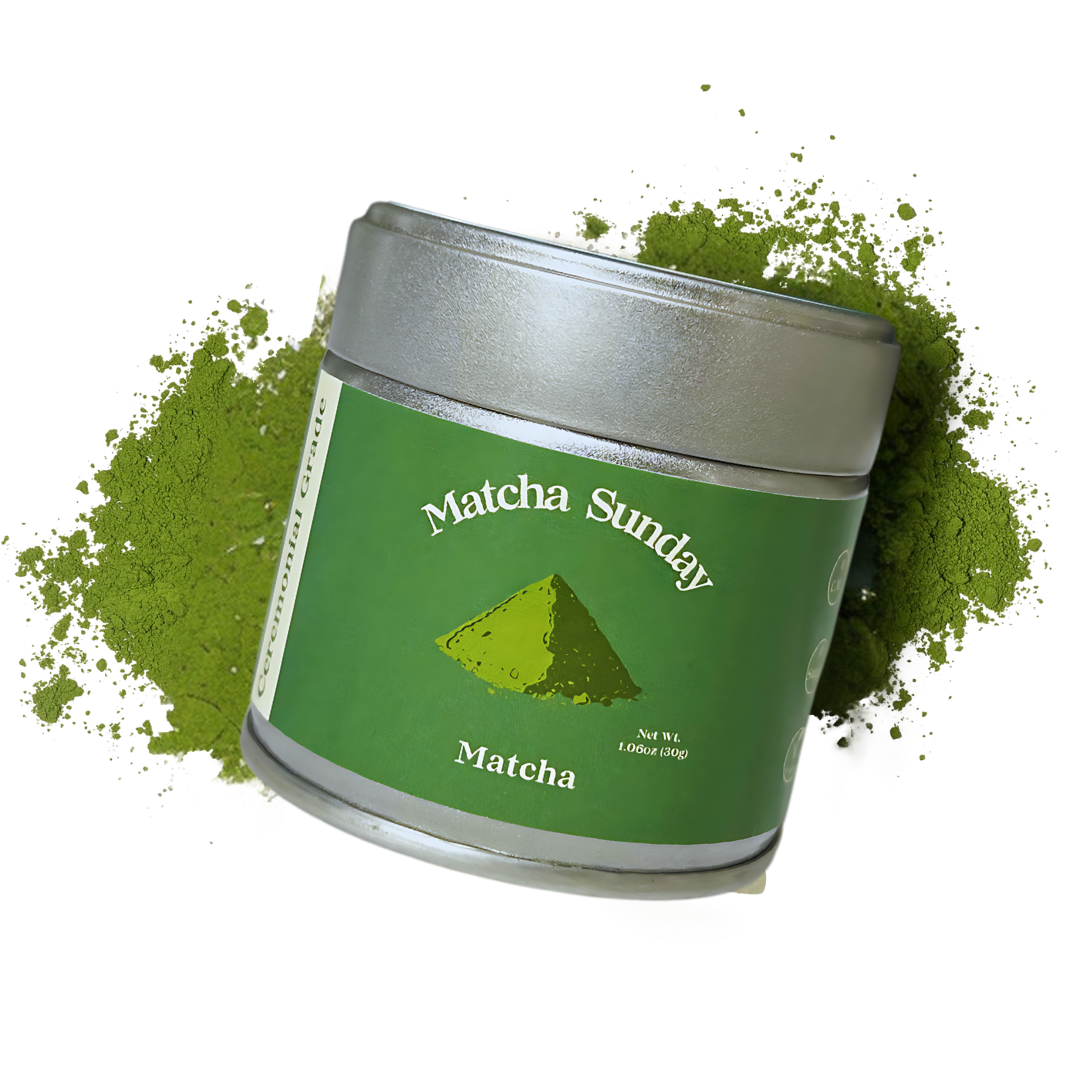
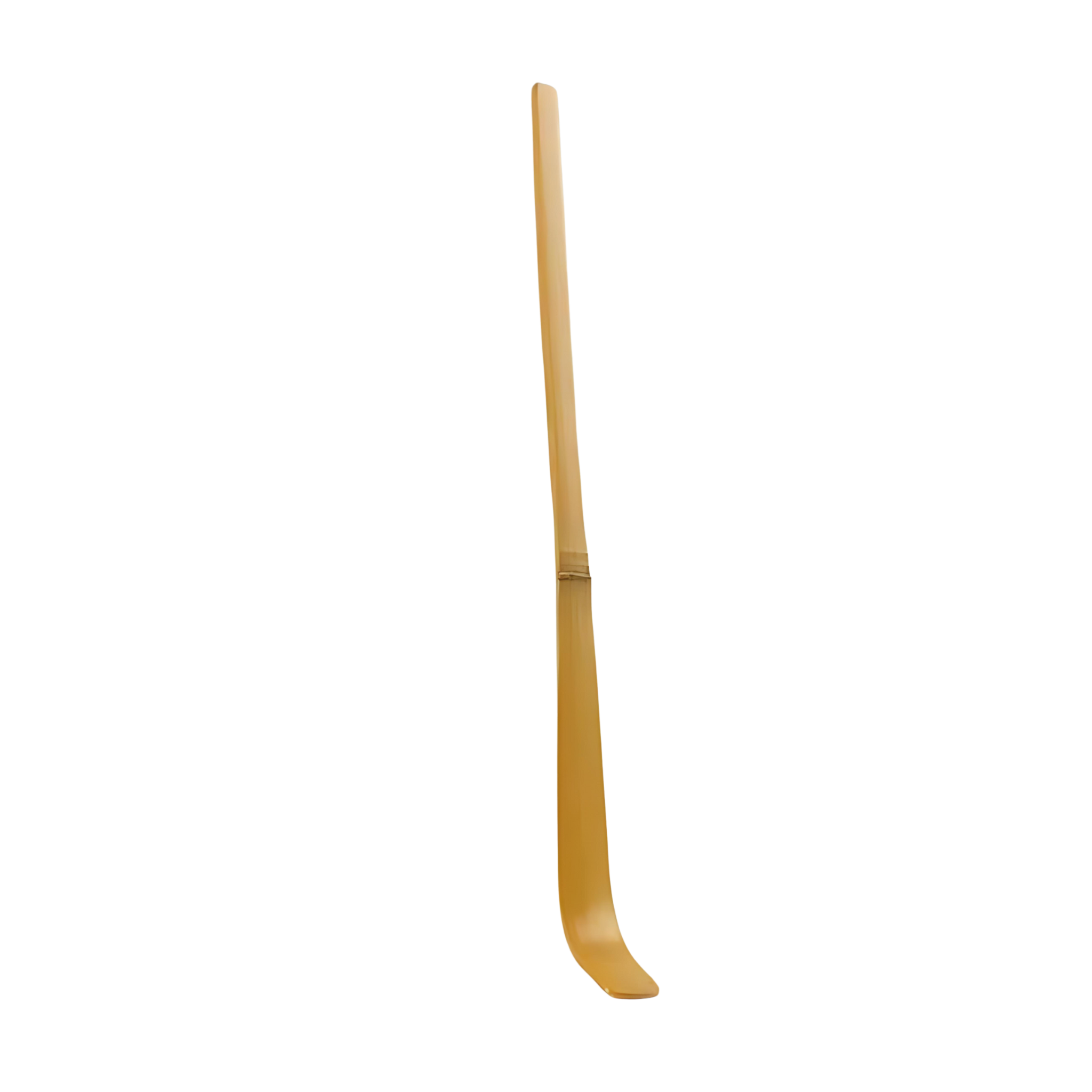
| Ceremonial matcha | 2 g (about 1 level teaspoon) | Sifted, from Japan |
| Water for whisking | 60 ml (2 oz) | About 75°C (167°F), never boiling |
| Cold milk | 180 ml (6 oz) | Whole milk or oat milk layer best |
| Ice | 1 cup of cubes | Large cubes melt slower |
A note on the optional sweetener: a very ripe mango carries enough natural sugar on its own to keep the puree dense, so you can skip the honey or syrup without losing the layered effect. If your mango is firm or tart, that teaspoon of sweetener adds back the sugar the bottom layer needs to stay put.
Method
- Blend the mango with the sweetener until completely smooth and thick. If it pours like water, blend in a few more mango chunks. A thick puree is what holds the bottom layer.
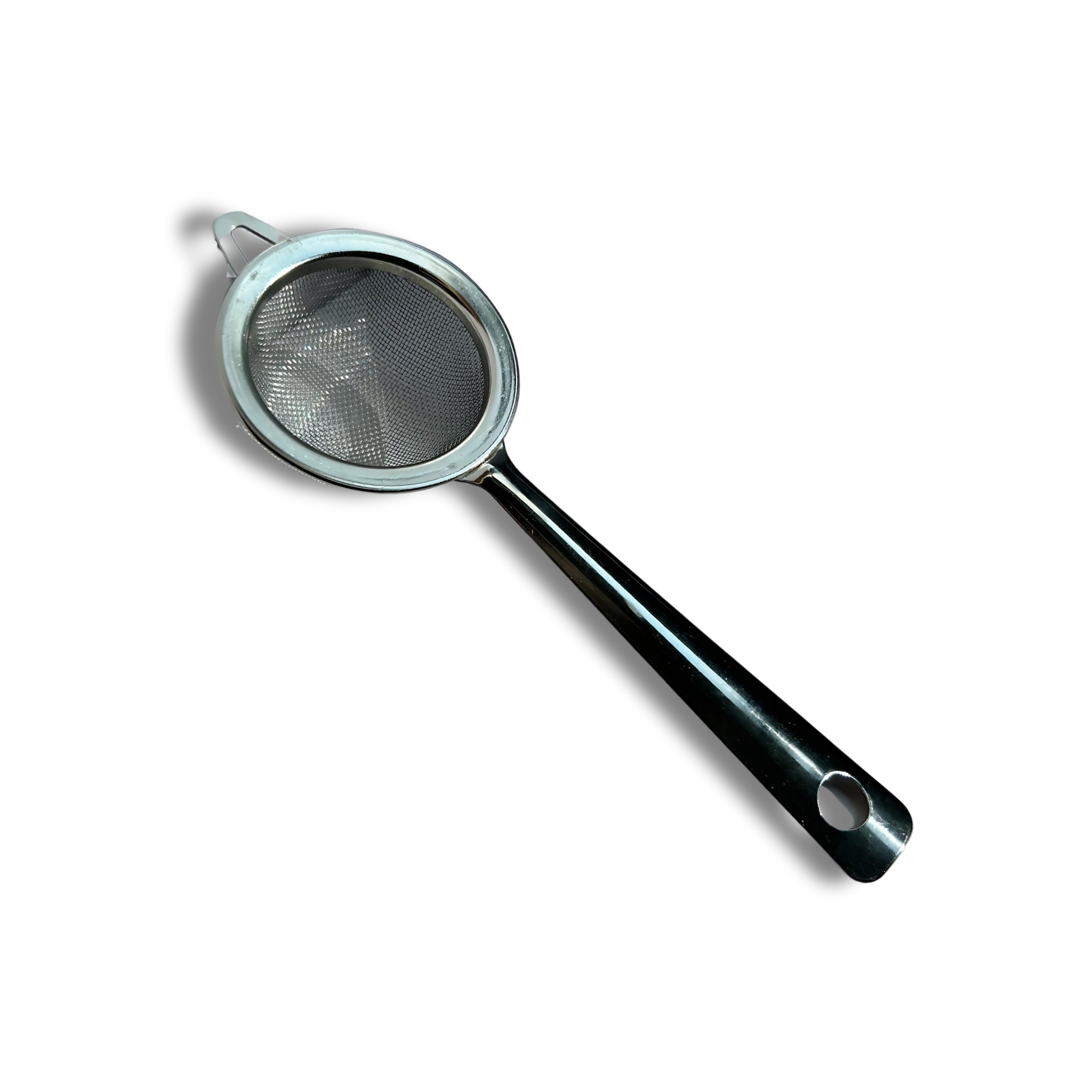
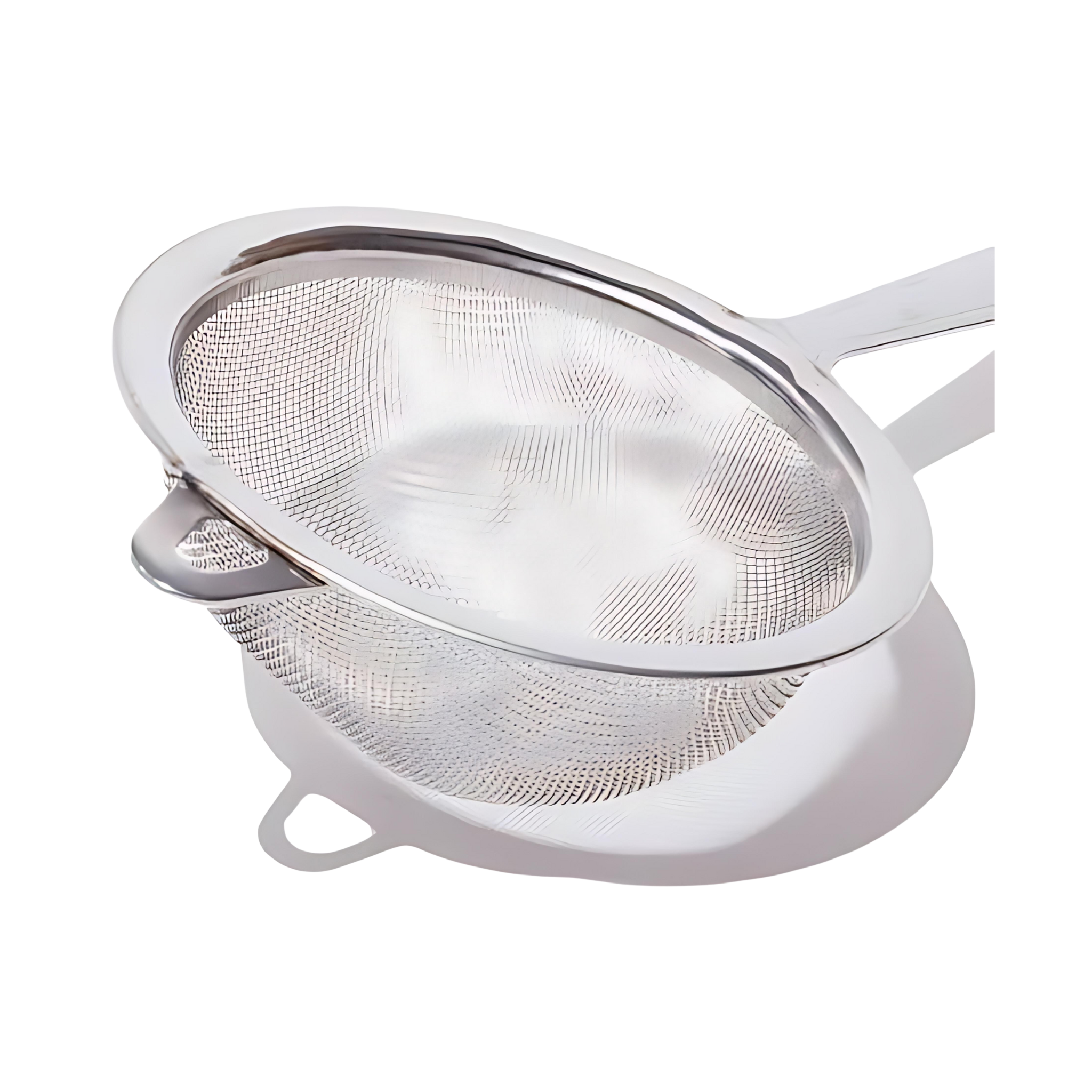
- Sift 2 g of matcha into a bowl to break up any clumps.
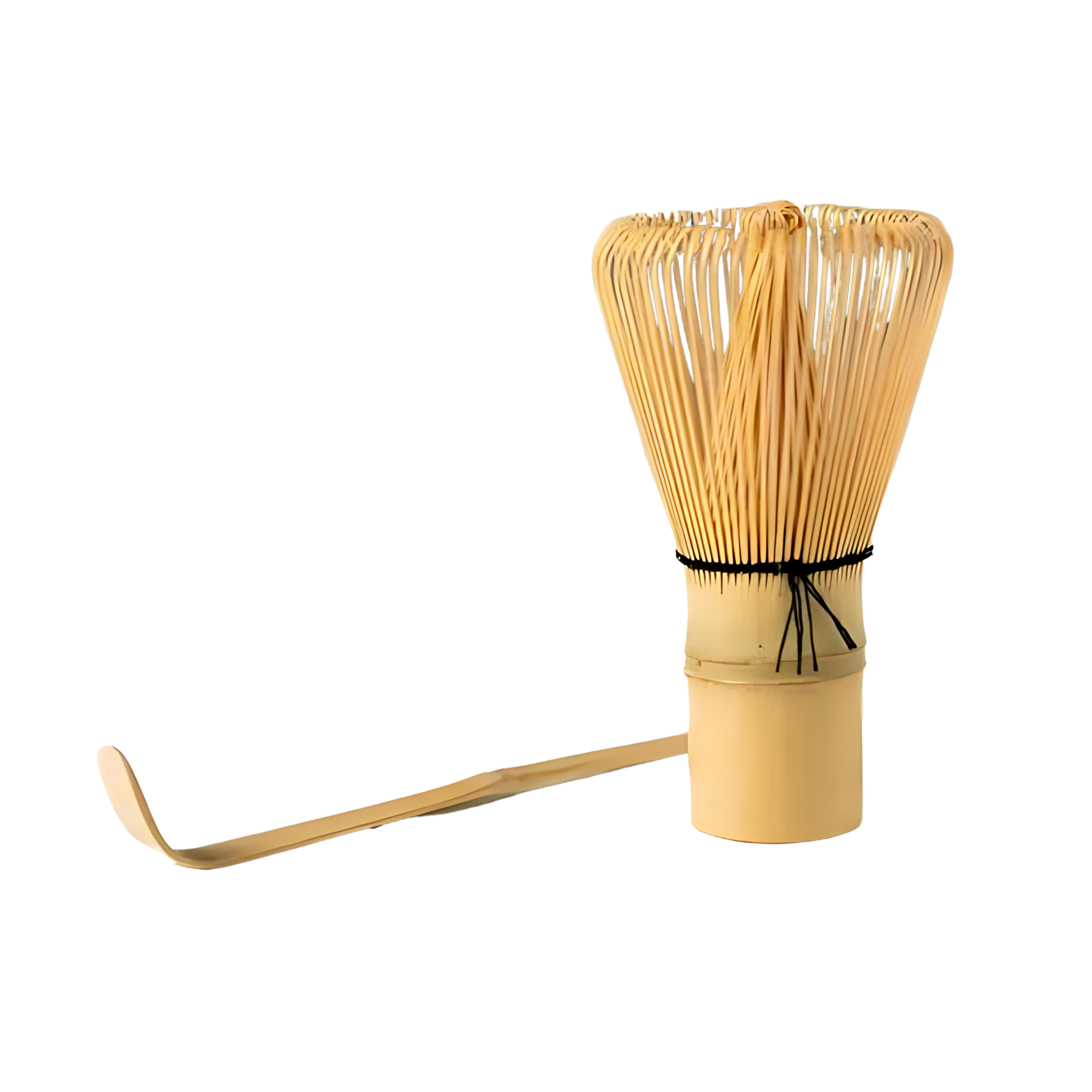
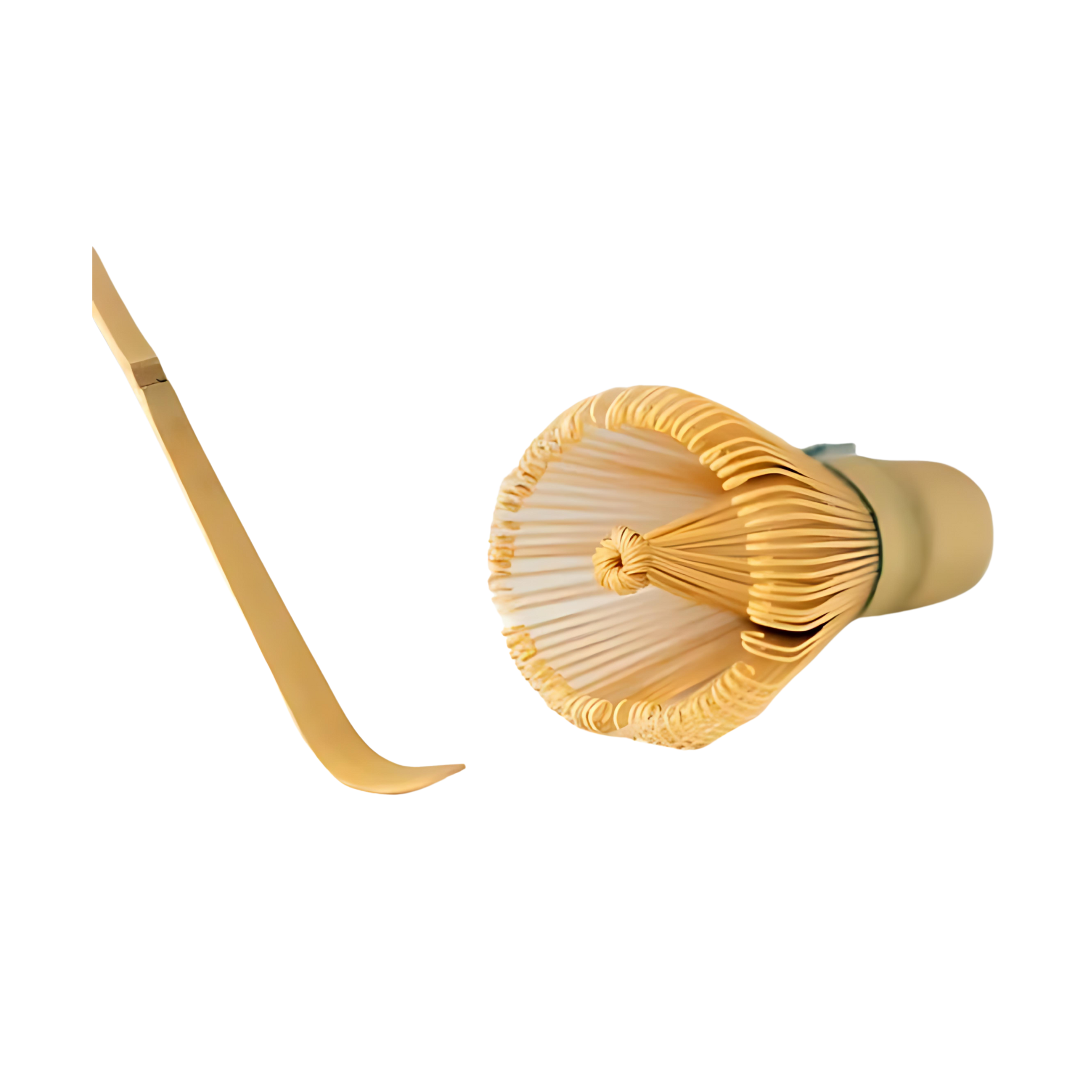
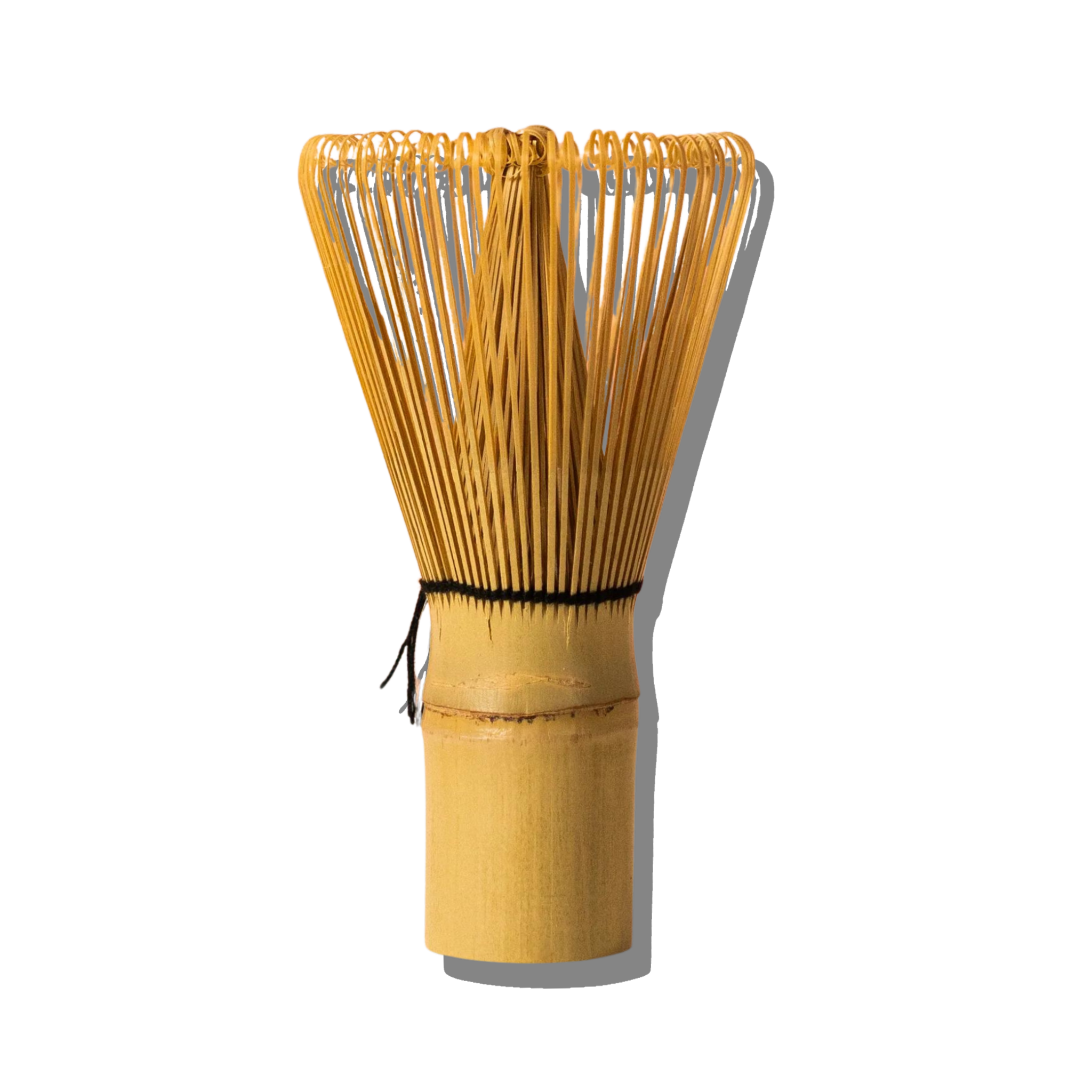
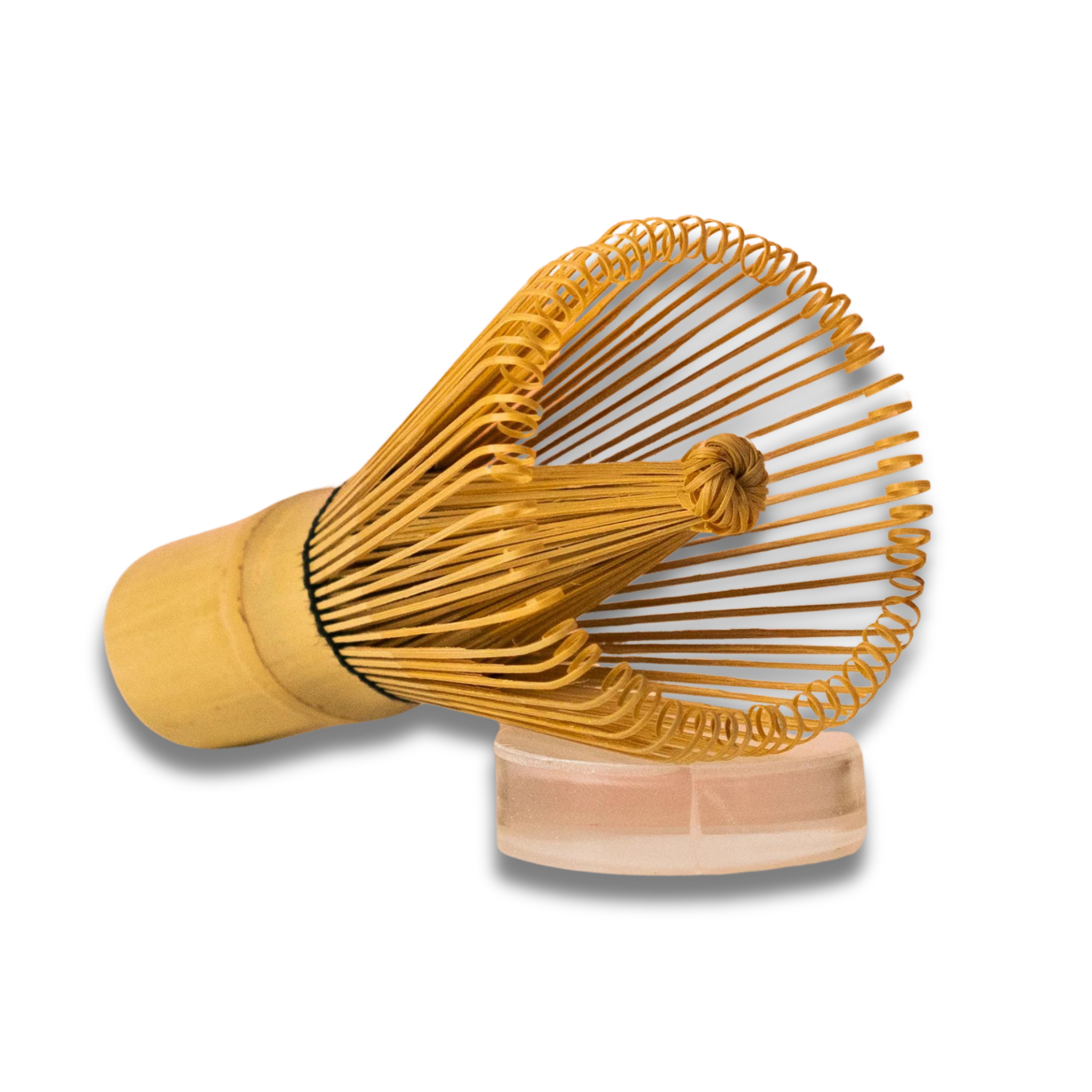
- Add 60 ml of water at about 75°C (167°F) and whisk in a fast zigzag motion for 15 to 20 seconds until the surface is smooth with a fine froth.
- Spoon the mango puree into the bottom of a tall clear glass.
- Fill the glass with ice, stacking the cubes gently so they do not punch through the puree.
- Pour the cold milk slowly over the back of a spoon held just above the ice, so it settles on the mango without mixing.
- Pour the whisked matcha slowly over the spoon again, letting it float on the milk as the final green layer.
- Serve immediately with a straw. Admire the sunrise for a moment, then stir before drinking so every sip gets mango, milk, and matcha together.
If you are new to building iced matcha drinks, our full iced matcha latte guide walks through the base technique that every layered version, this one included, builds on.
How do you keep the mango and matcha layers separated?
Layers hold because of density, not luck. Liquids with more dissolved sugar are heavier, so the drink stacks from most dense to least dense: thick sugary mango puree on the bottom, milk in the middle, and the whisked matcha on top, which is mostly water and therefore the lightest of the three. Respect that order, pour gently, and the sunrise holds until you stir.
After making this more times than we can count, four details separate a clean sunrise from a muddy swirl:
- Keep the puree thick. A spoonable puree is dense enough to stay put, and a very ripe mango supplies enough sugar to keep it that dense even with no added sweetener. Thin it with juice or water and the milk will sink straight into it.
- Use very cold milk. Cold liquids mix more slowly, which buys the layers time to settle.
- Pour over the back of a spoon. The spoon spreads the pour across the surface instead of letting it drill down.
- Keep the matcha layer small. Whisking 2 g of matcha into just 60 ml of water keeps the top layer light and concentrated, so it floats instead of sinking.
A silky, fully dissolved matcha layer also matters for looks, because clumps sink and streak through the milk. If your whisked matcha ever looks grainy, our guide to clump free iced matcha covers the sifting and whisking technique in detail.
What kind of matcha works best in a mango matcha latte?
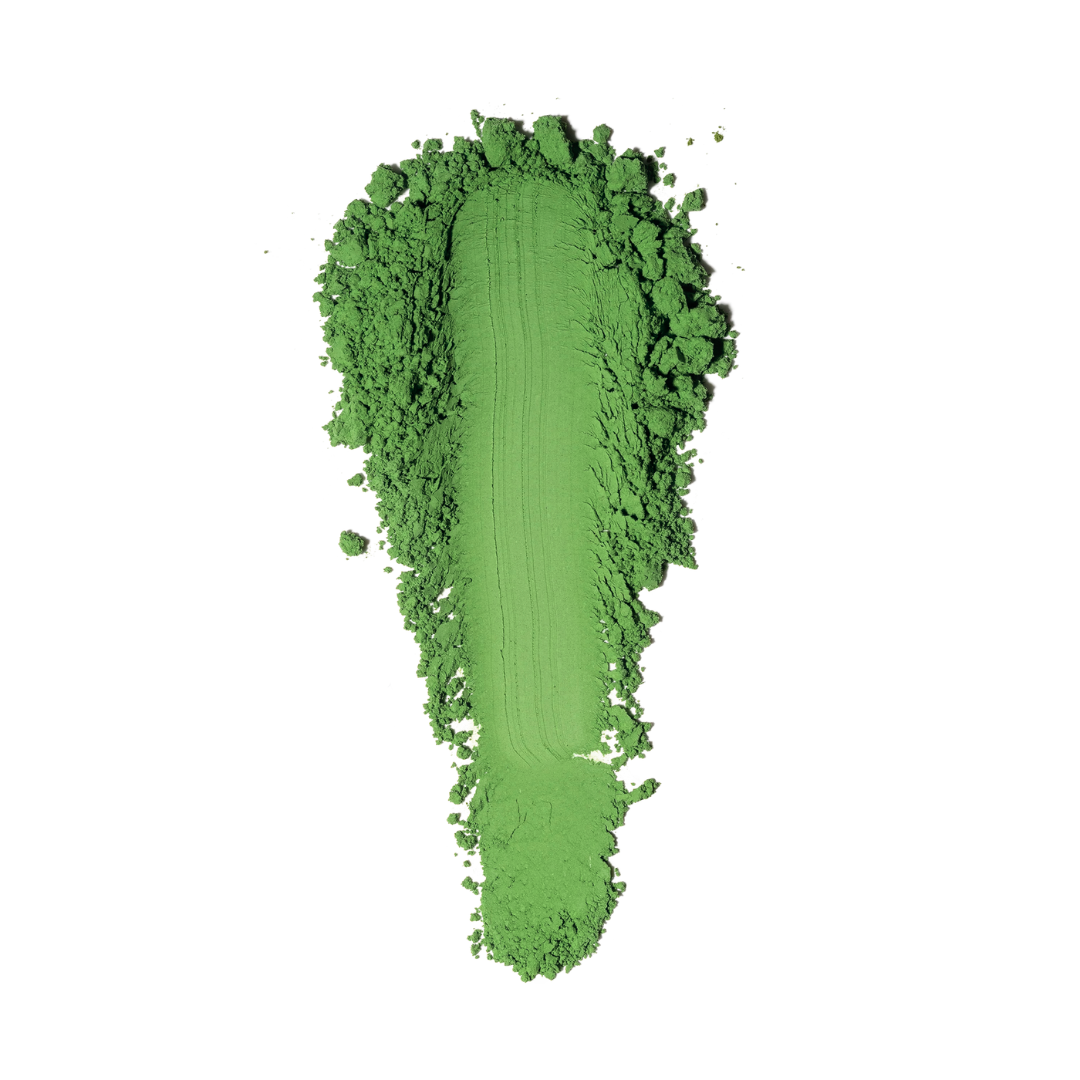
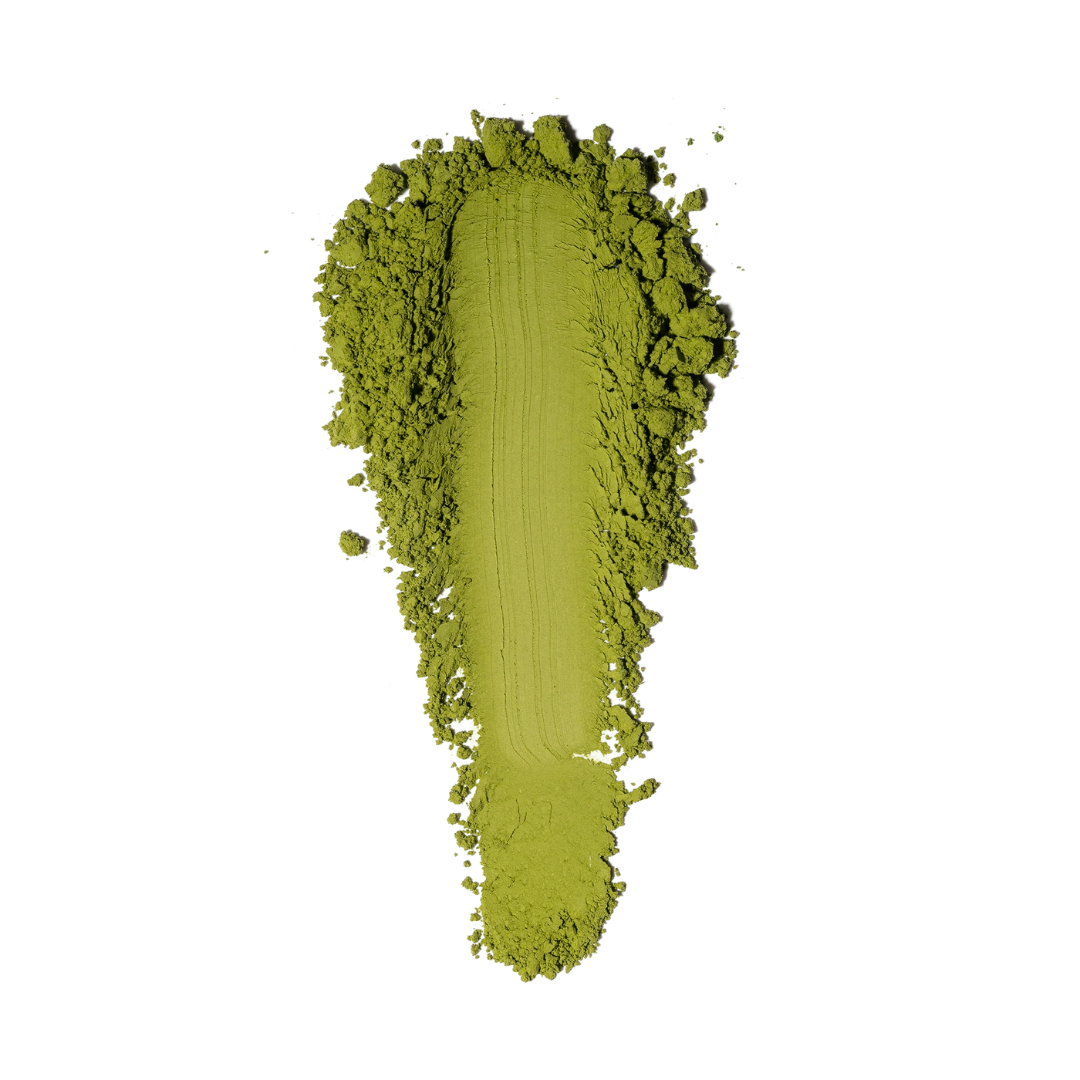
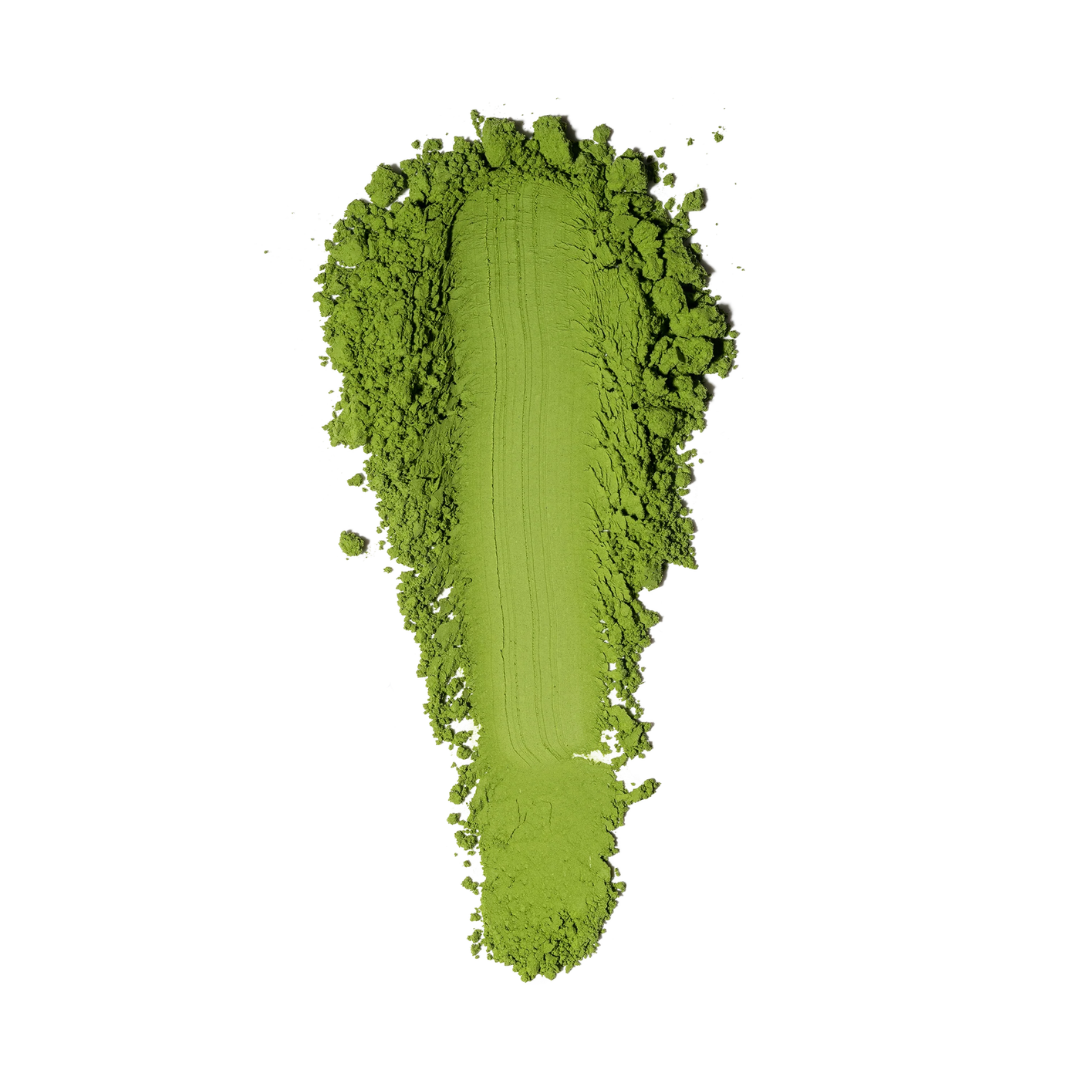
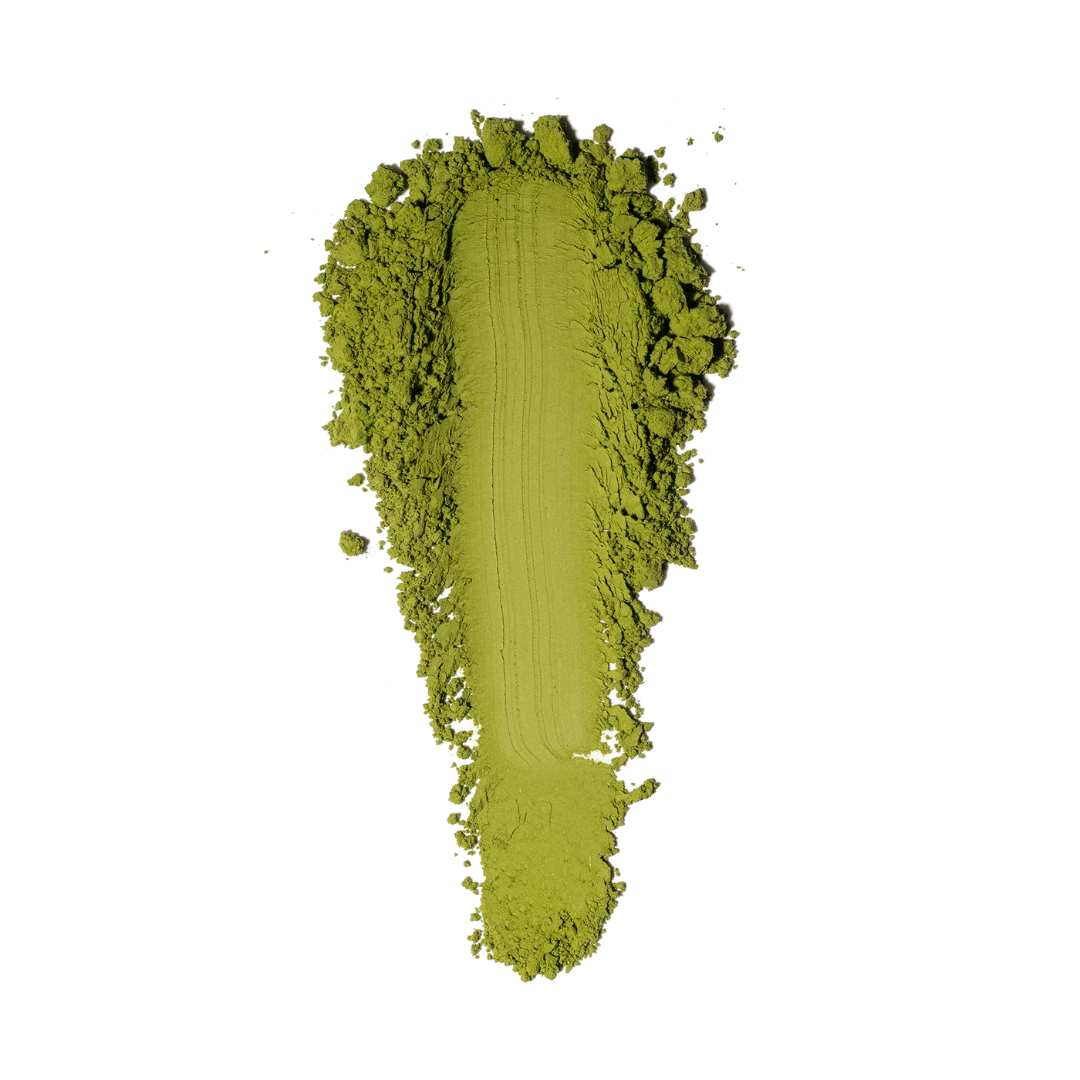
Ceremonial matcha from Japan is the right choice here, and this is one drink where we would not compromise. It delivers the two things the recipe depends on: a vivid jade green top layer and a smooth, naturally sweet flavor that can stand next to ripe mango without turning bitter.
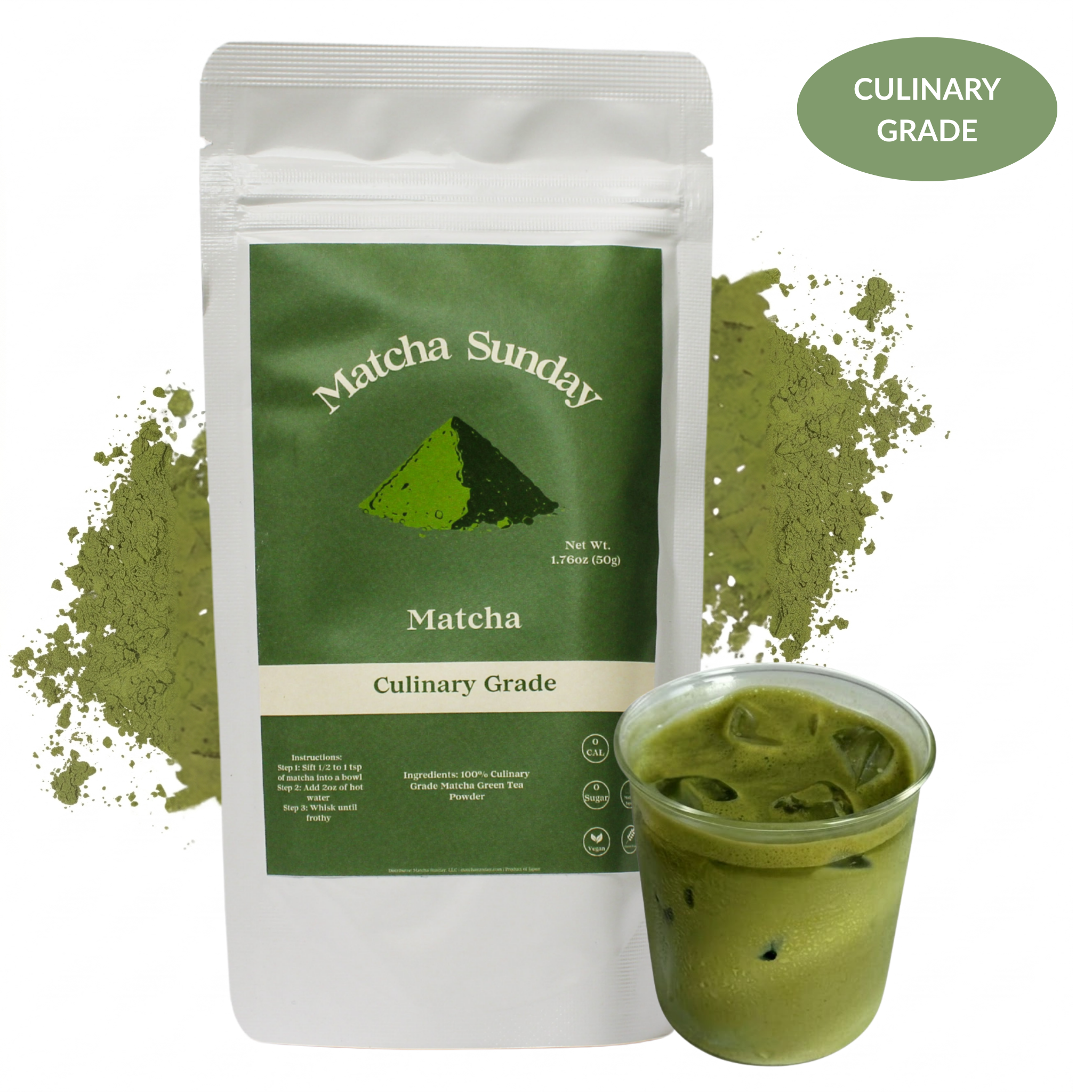
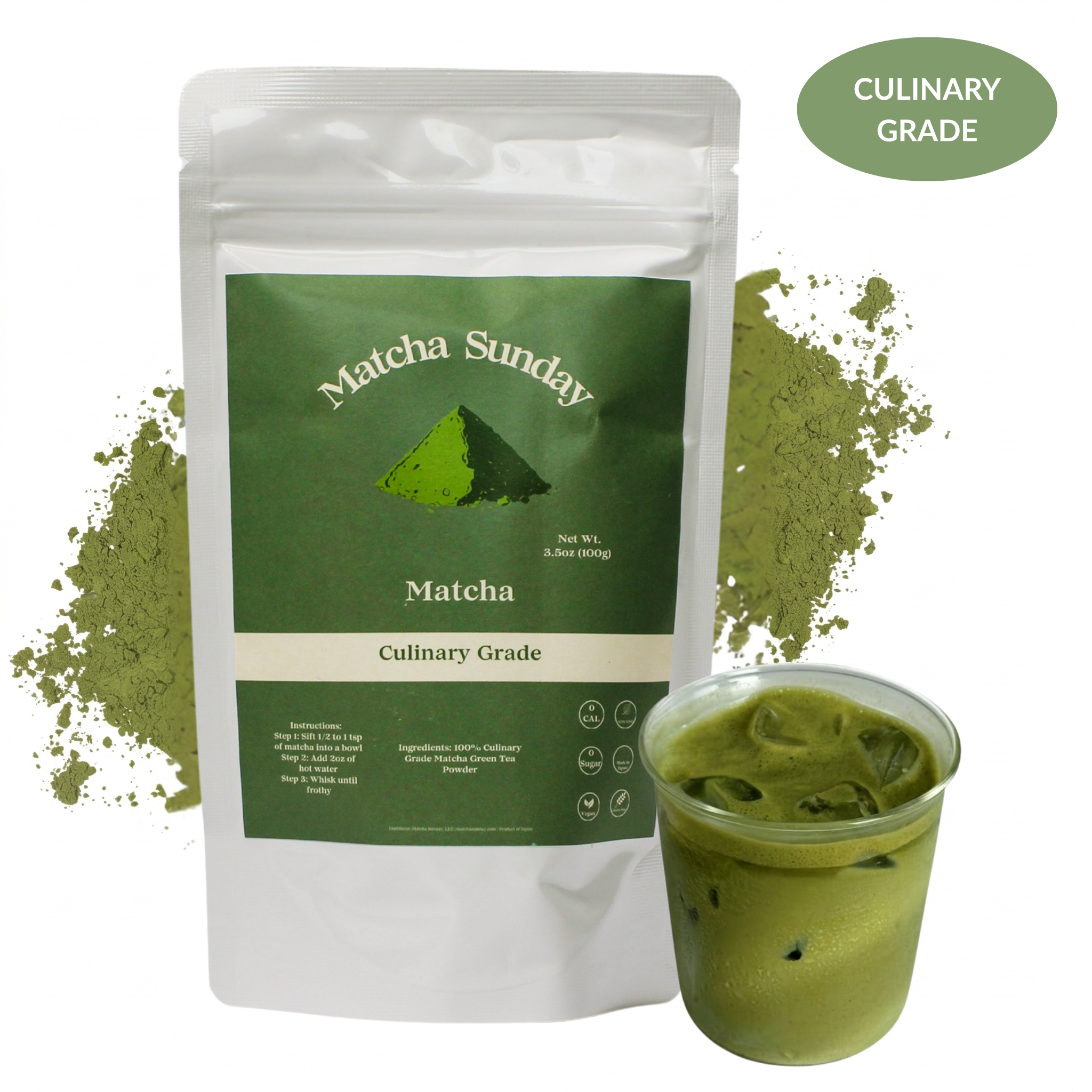
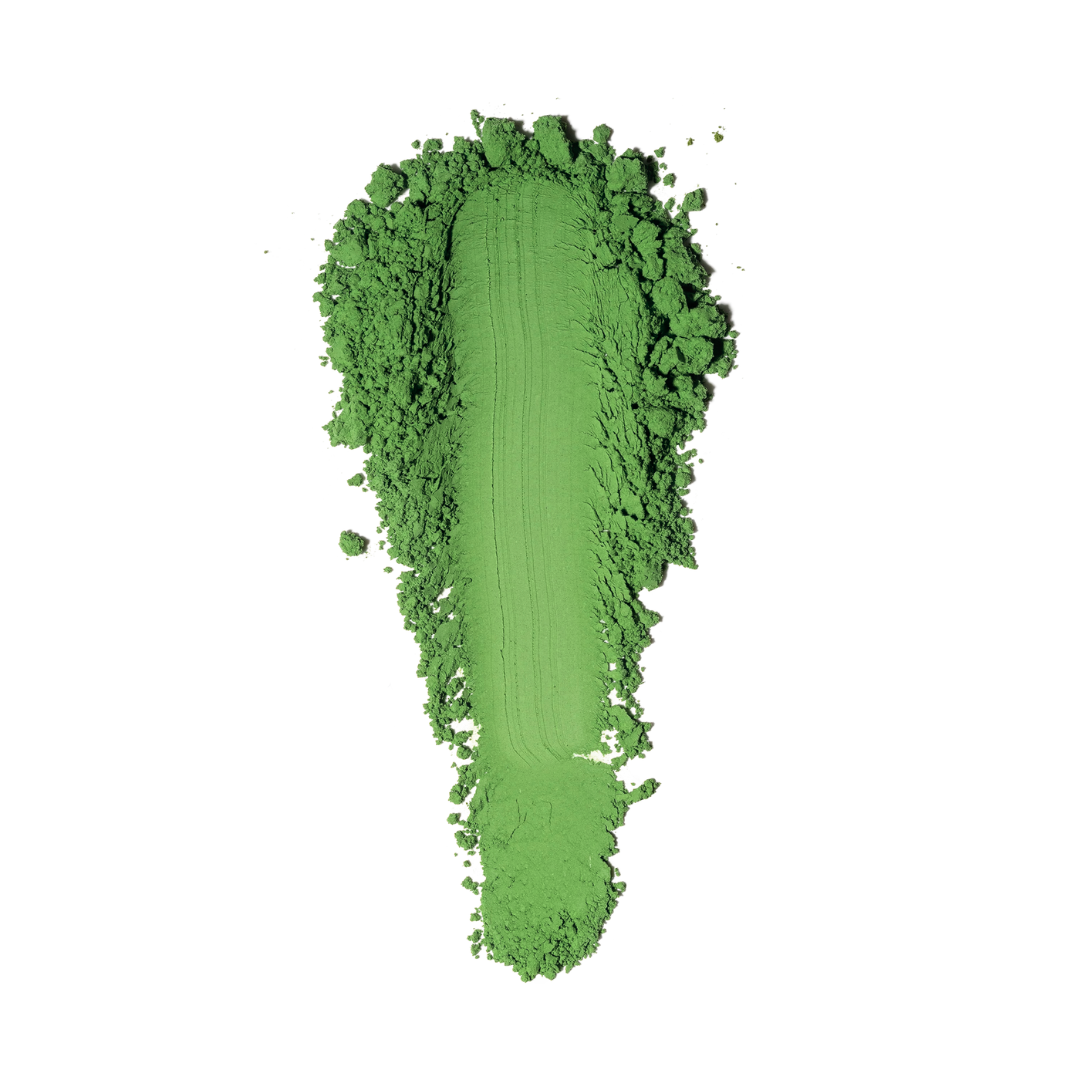
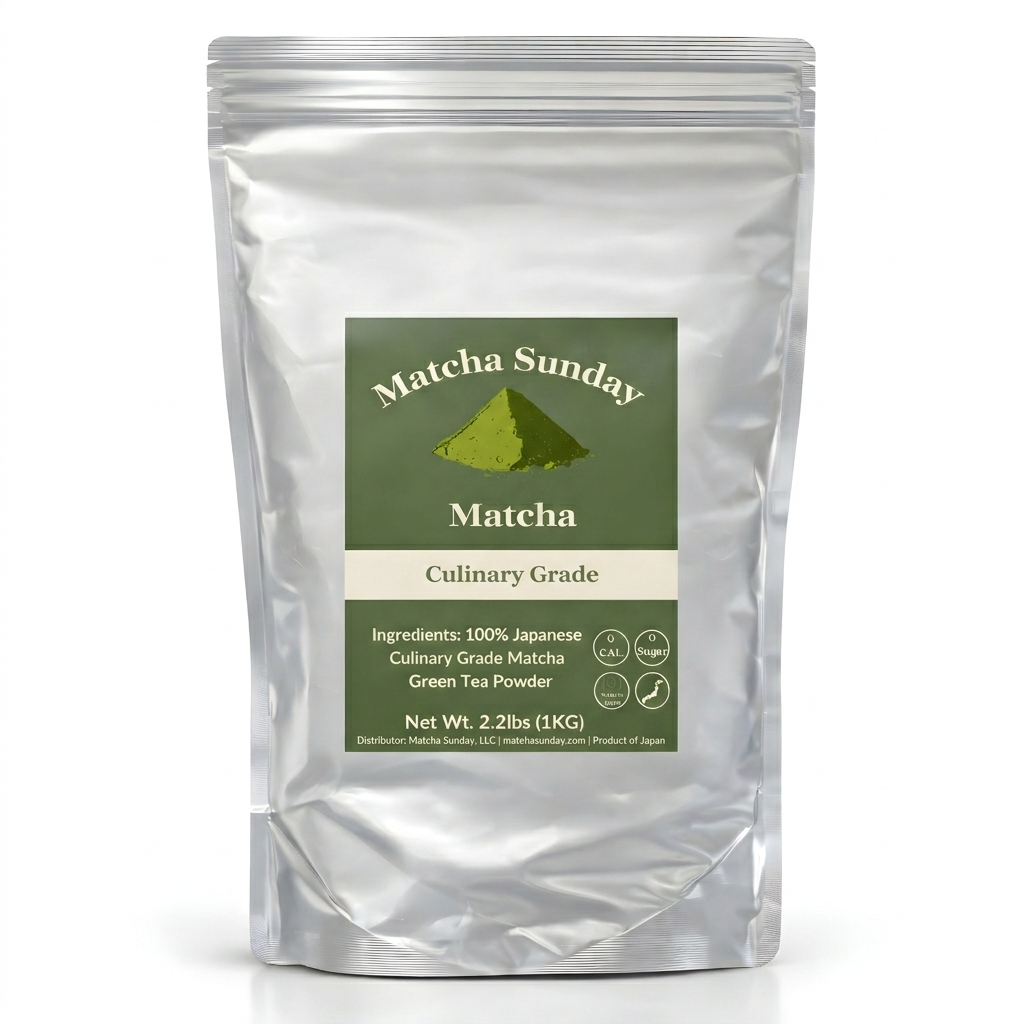
Culinary matcha has its place in baking, where sugar and butter mask rough edges, but in a layered latte the matcha is front and center in both color and taste.
| Ceremonial matcha | Culinary matcha | |
|---|---|---|
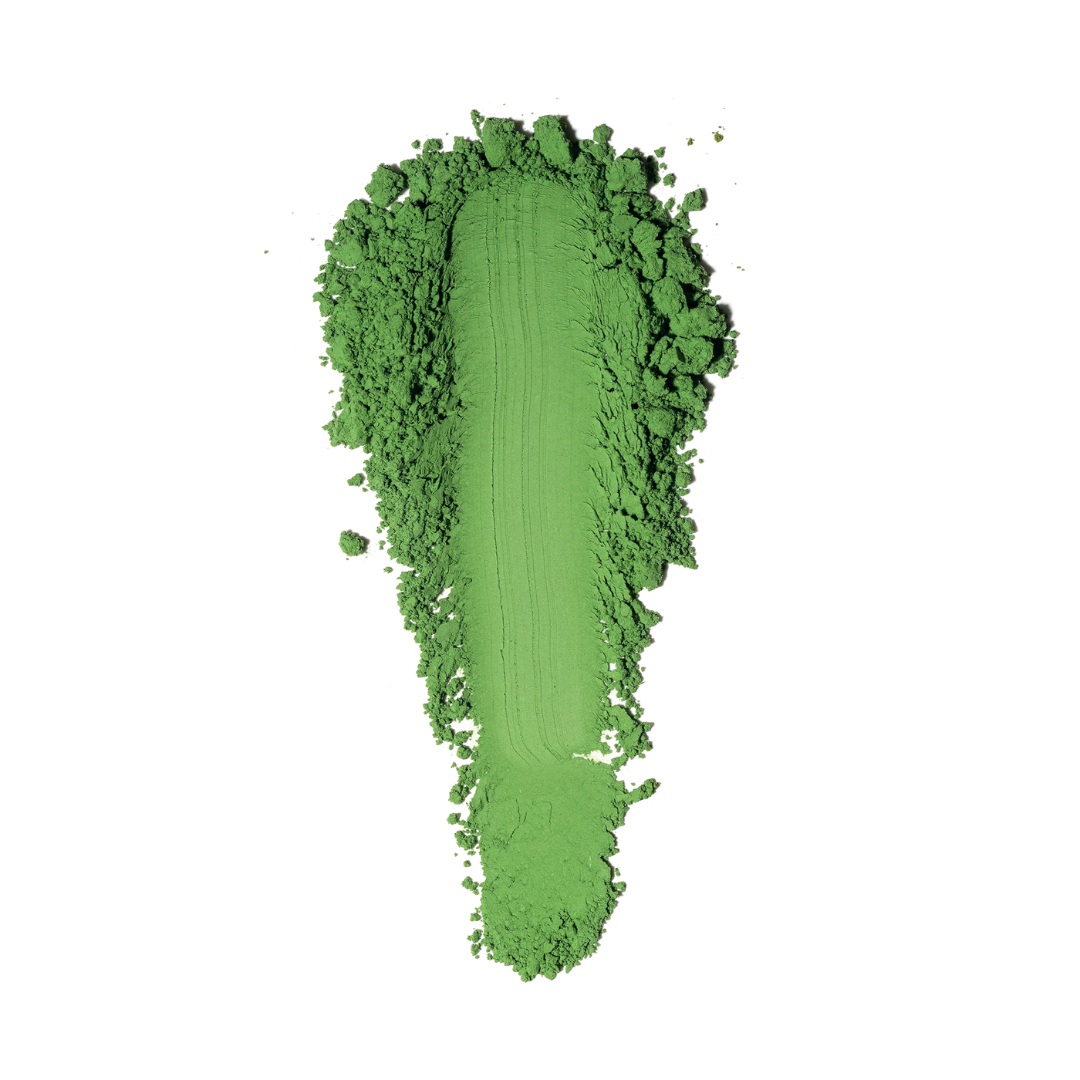
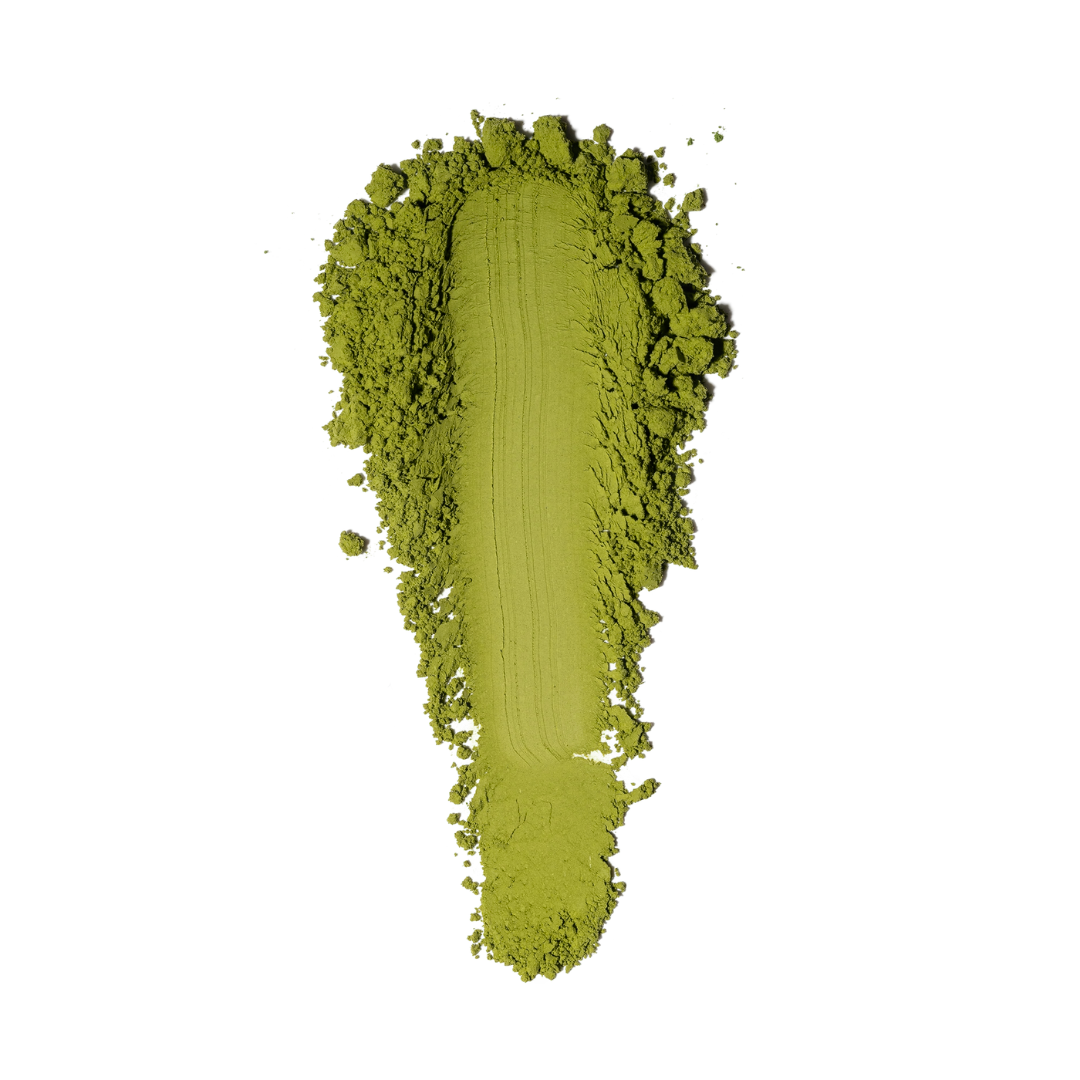
| Color | Vivid jade green | Dull olive or yellowish green |
| Flavor | Smooth, sweet, gently savory | Sharper, more bitter and astringent |
| Texture when whisked | Fine and silky, froths easily | Coarser, can taste chalky |
| Best use in this recipe | The top layer of the latte | Better saved for baking |
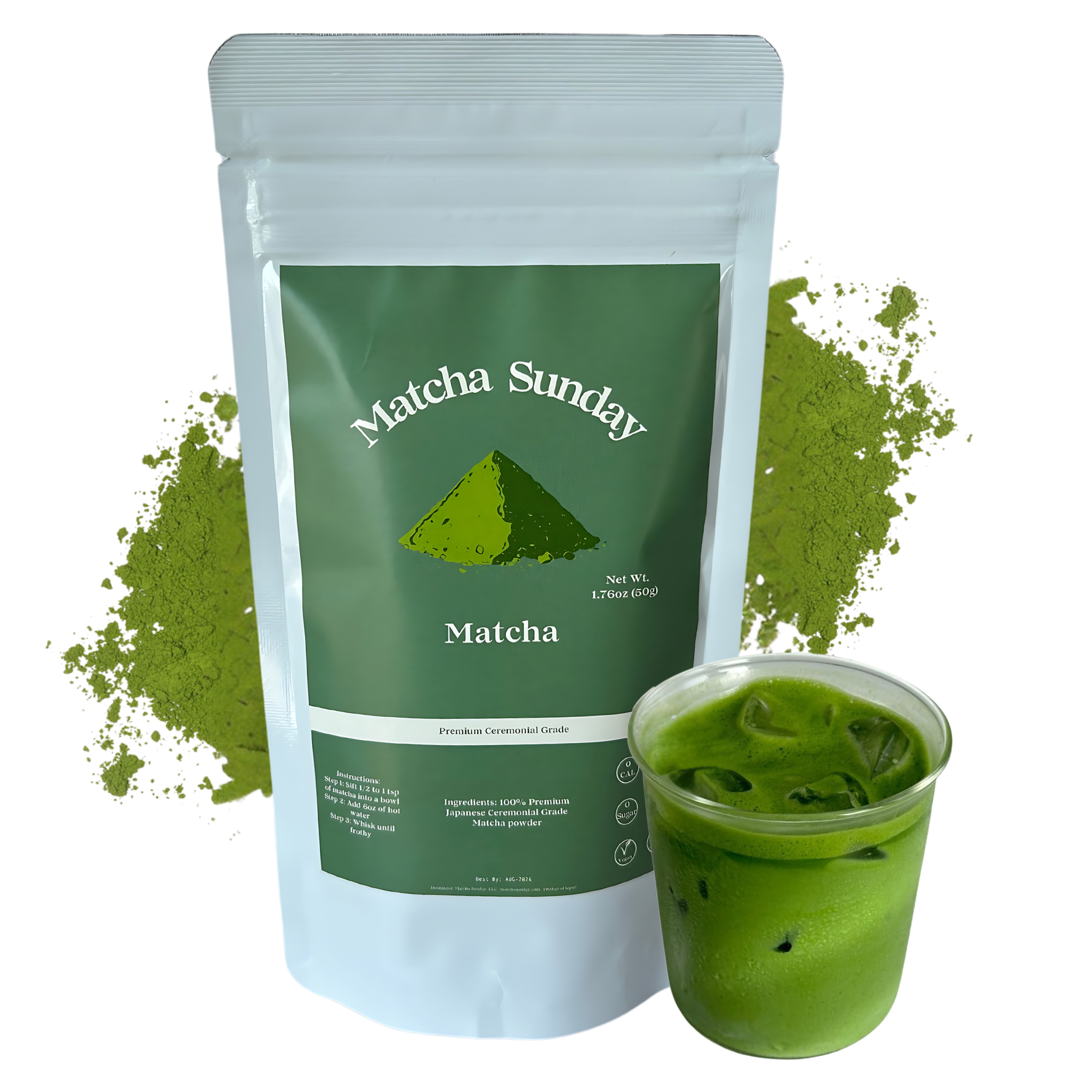
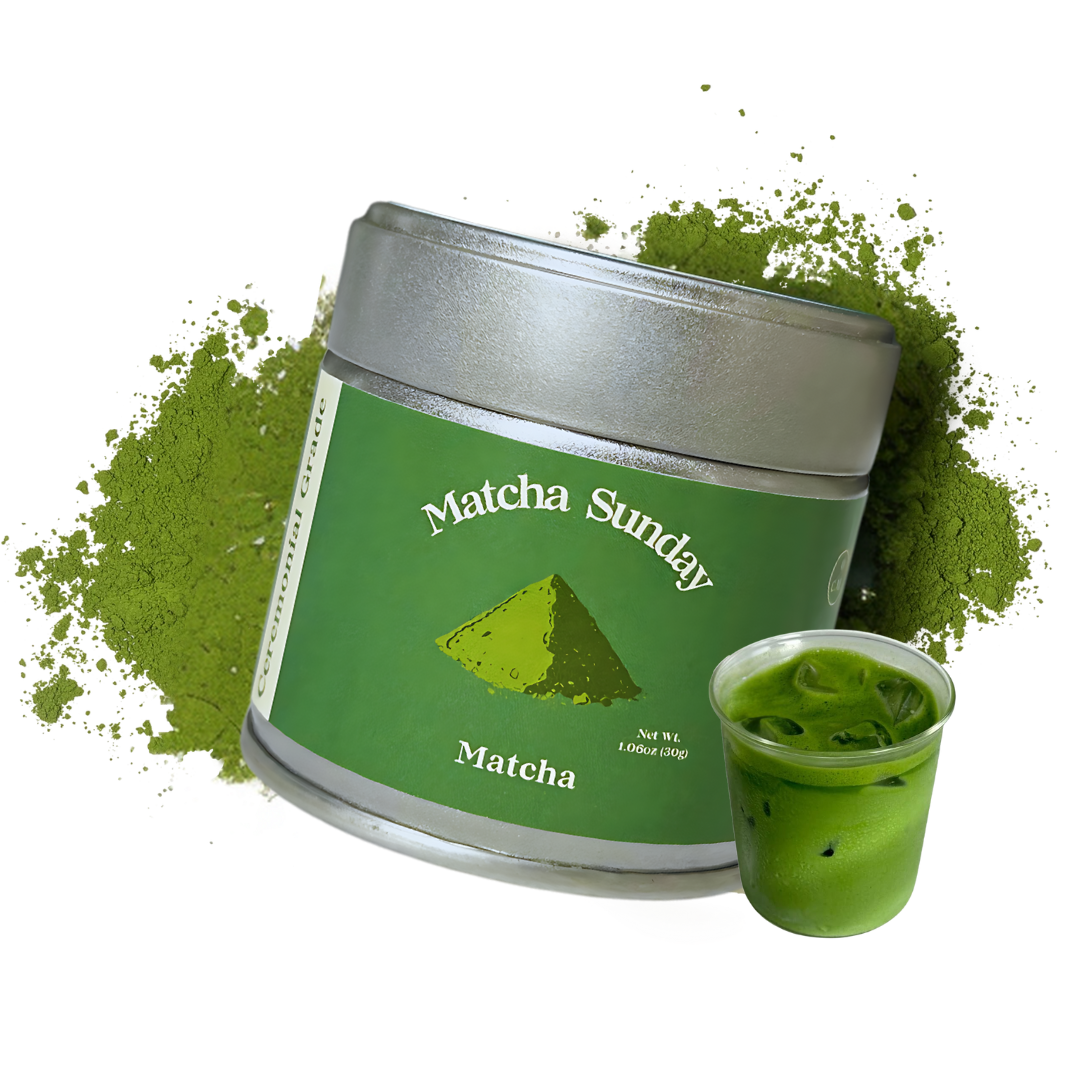
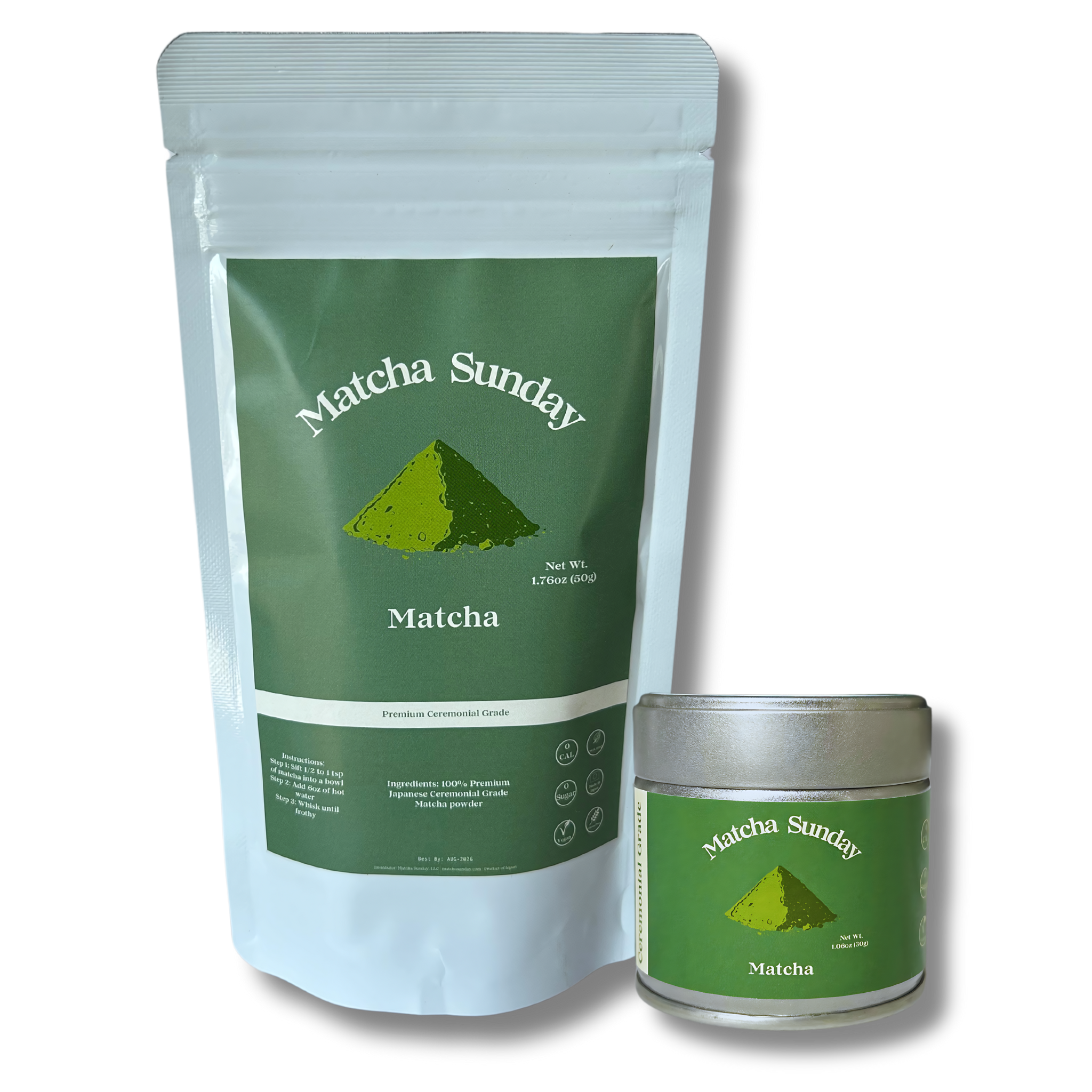
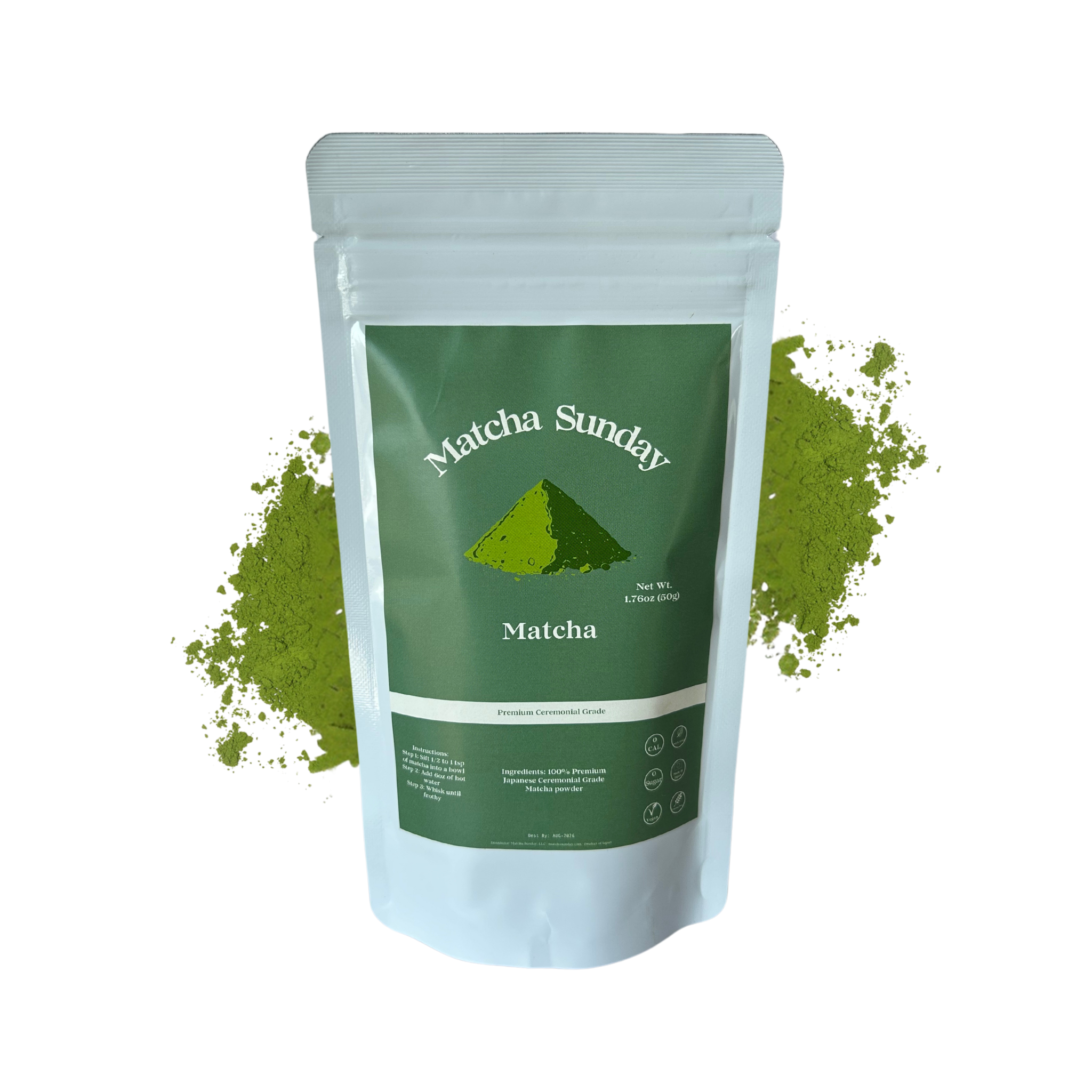
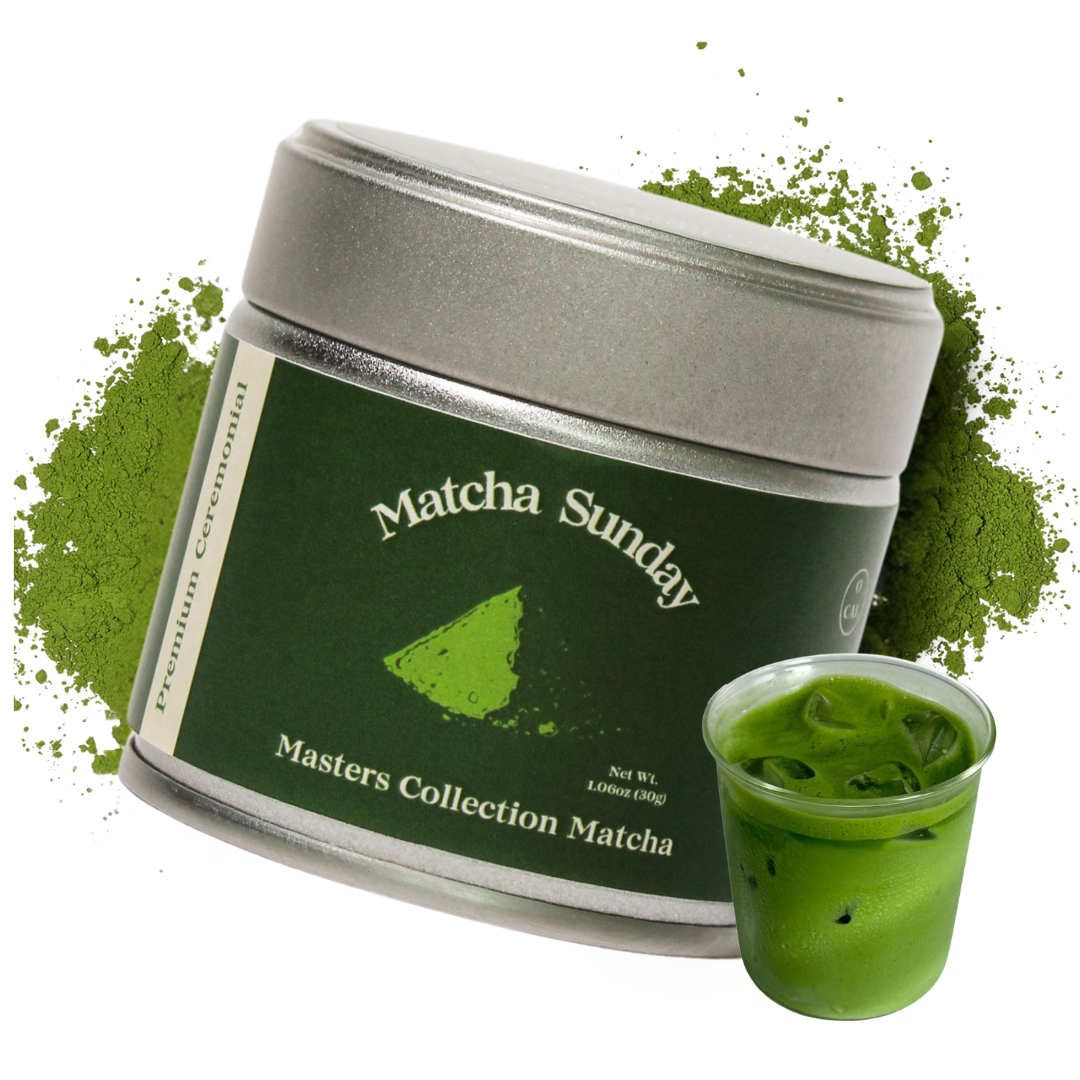
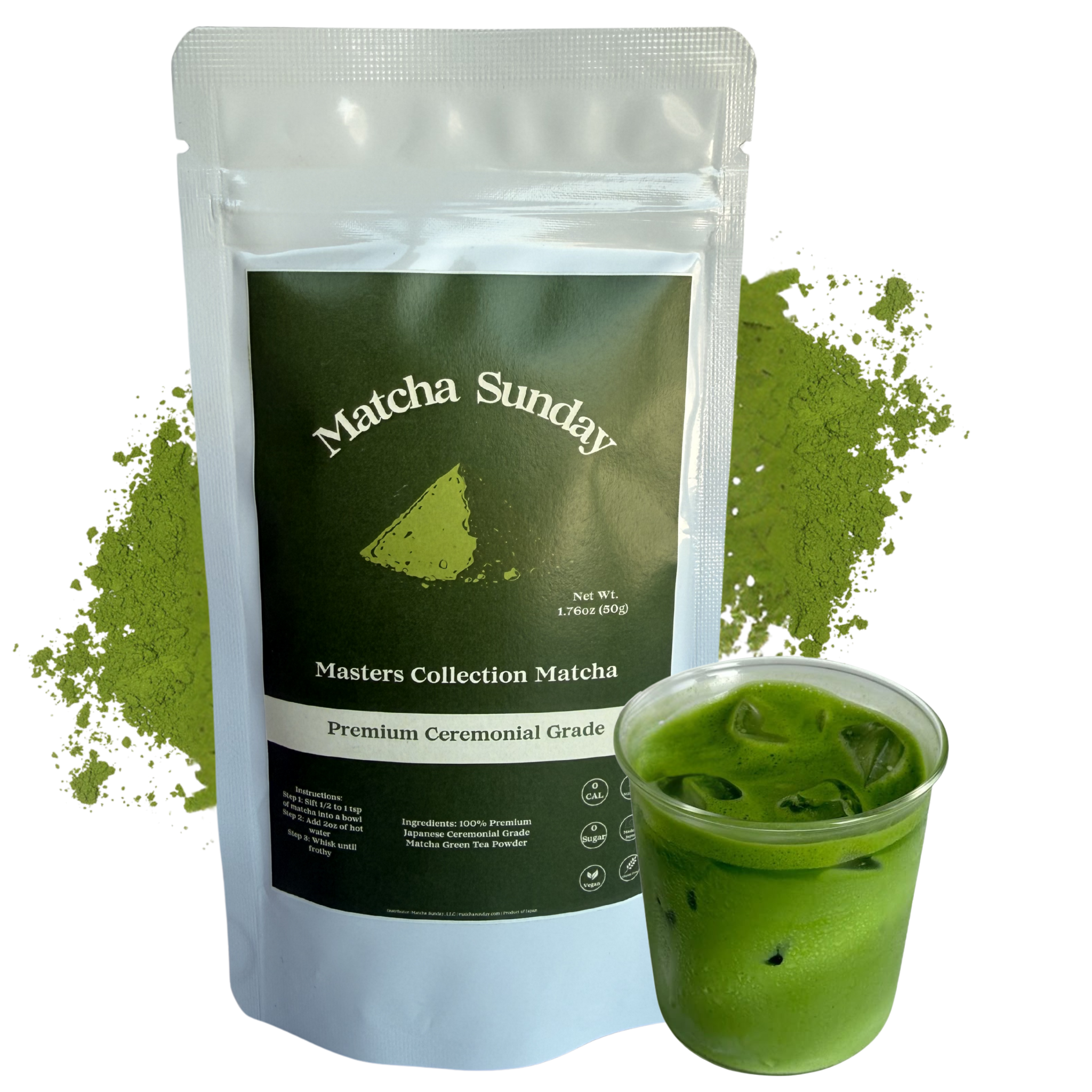
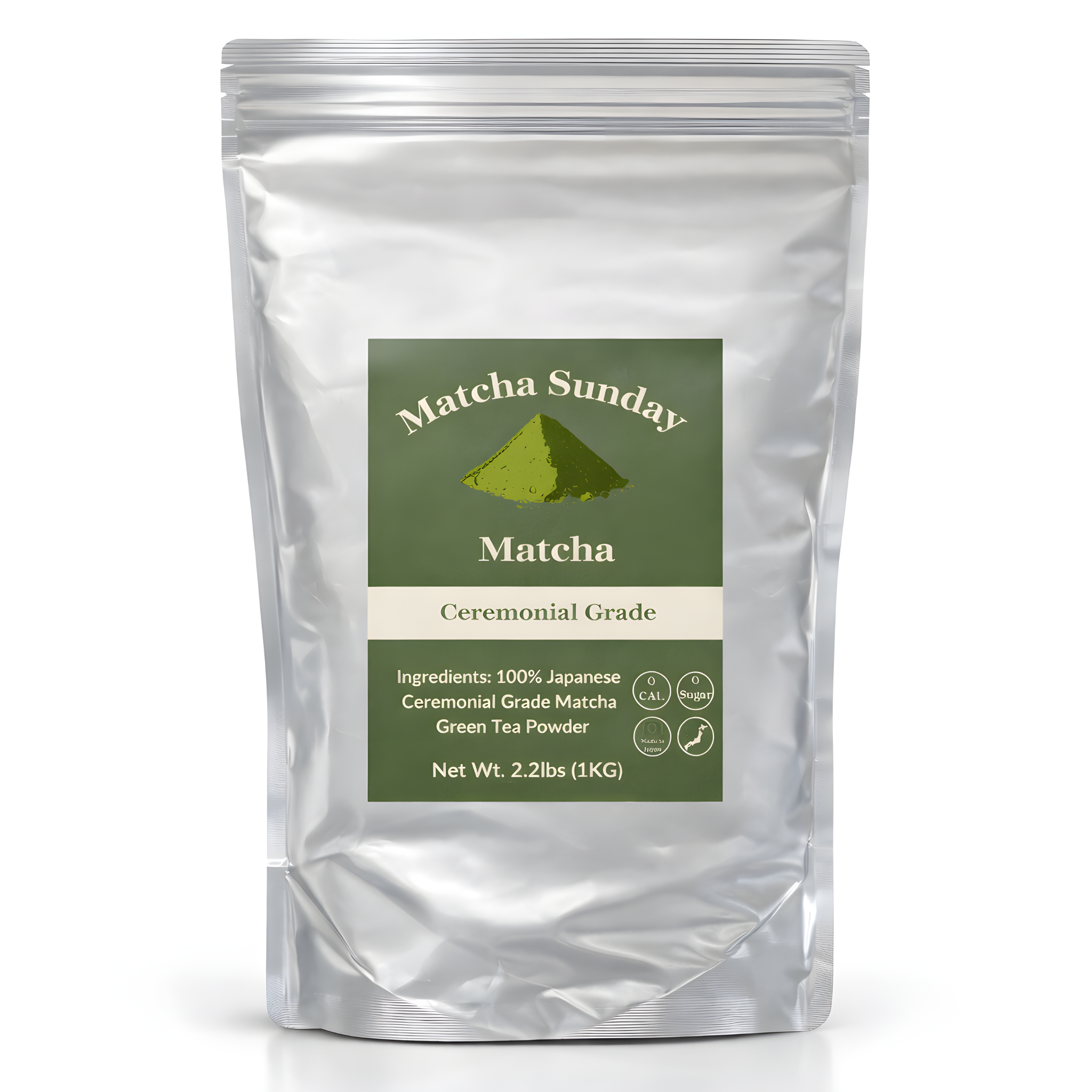
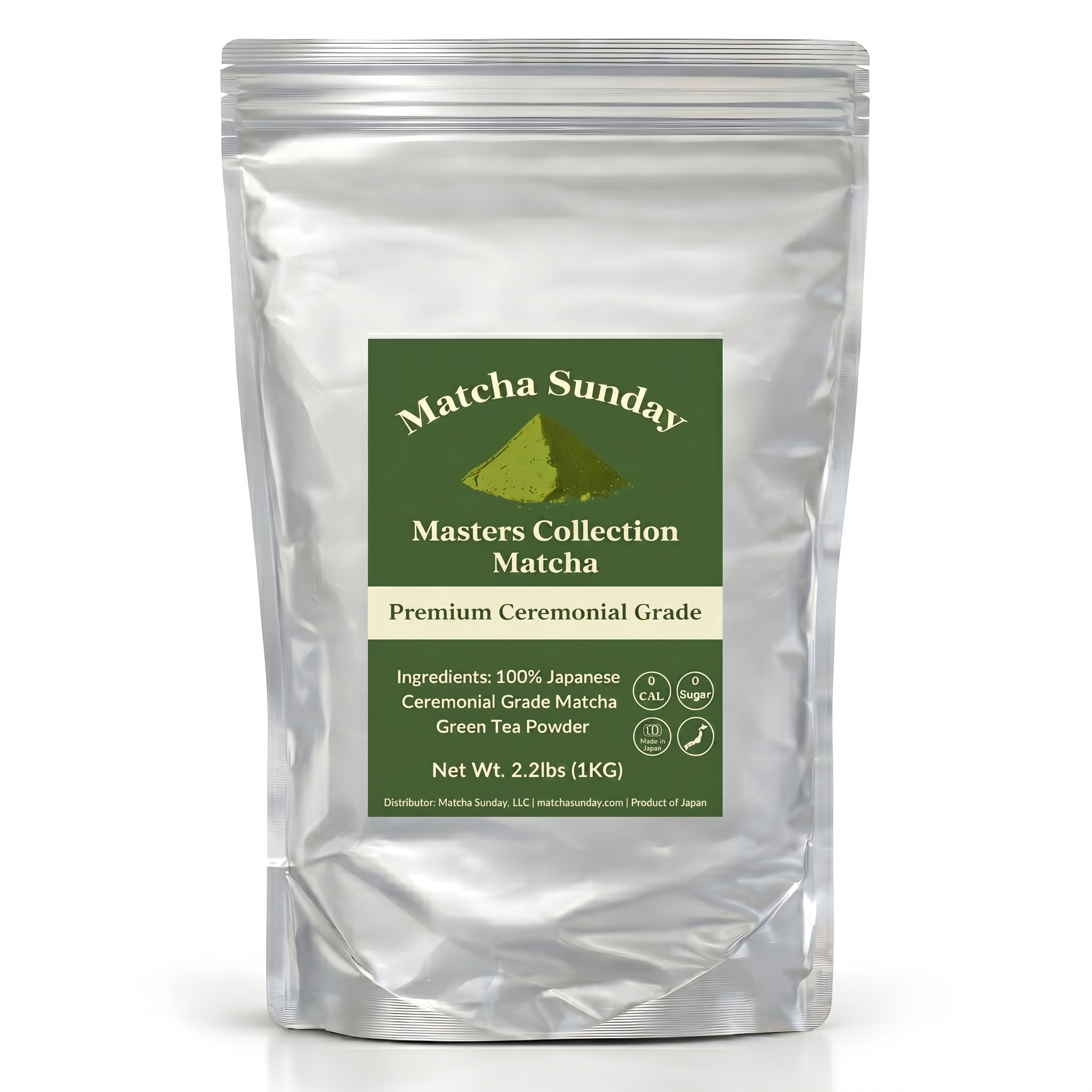
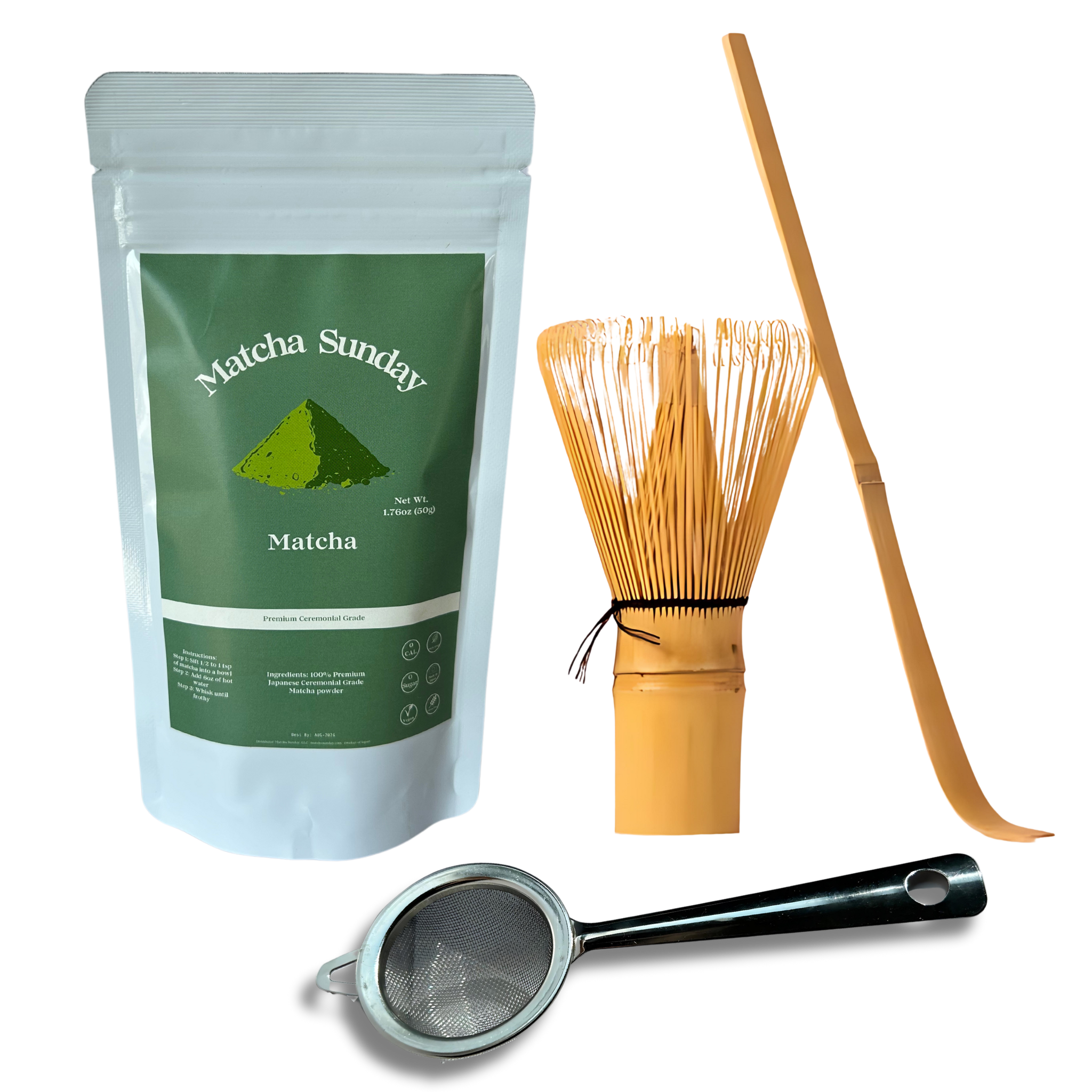
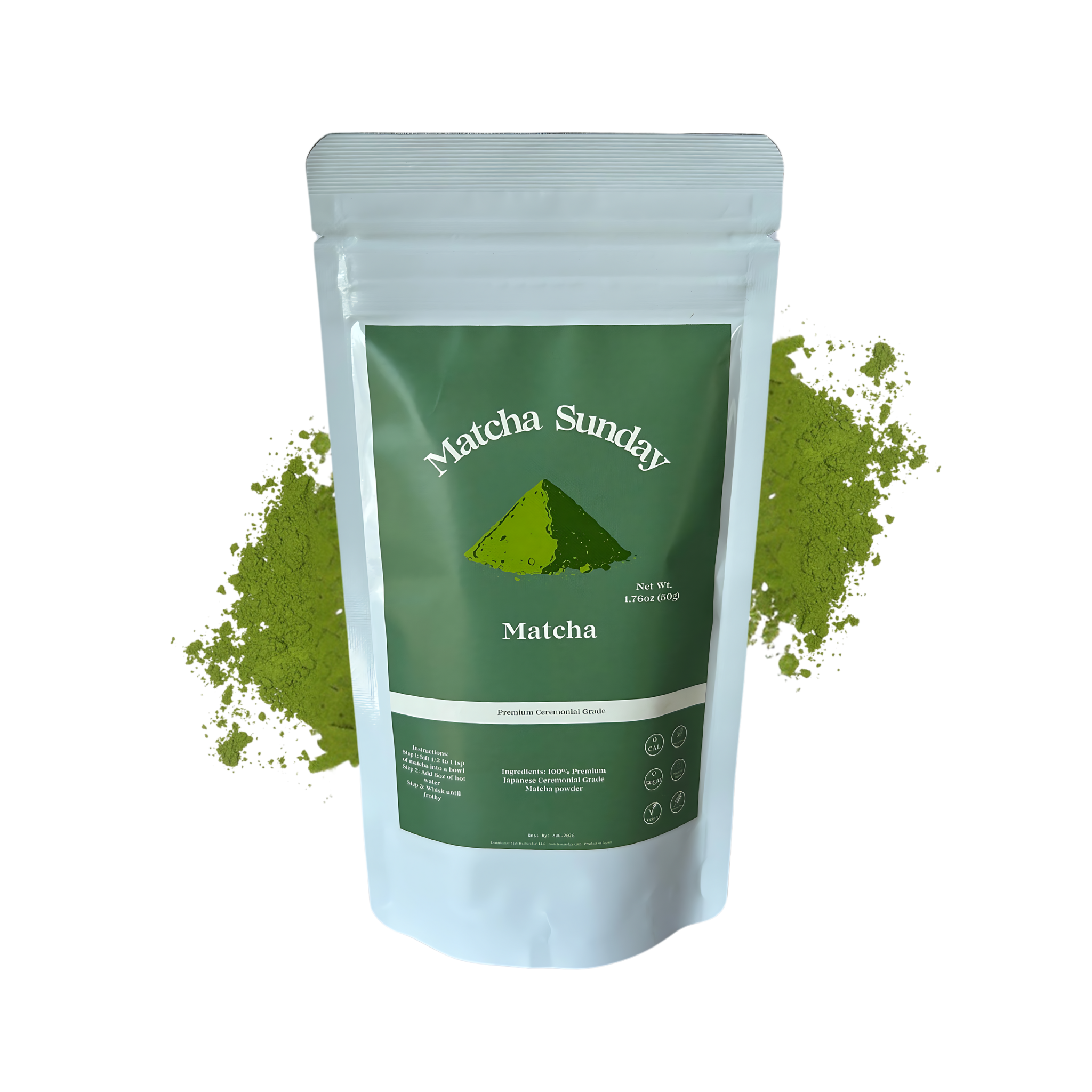
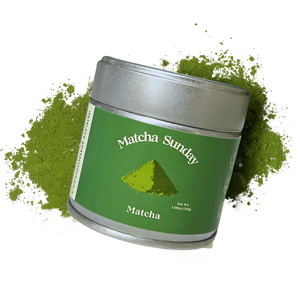
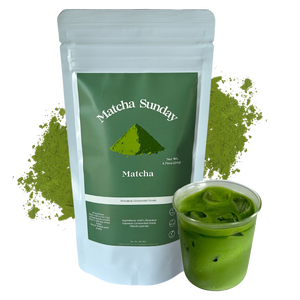
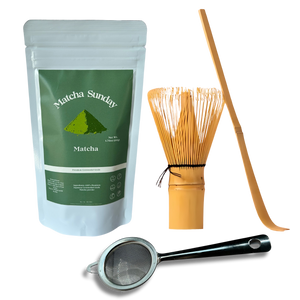
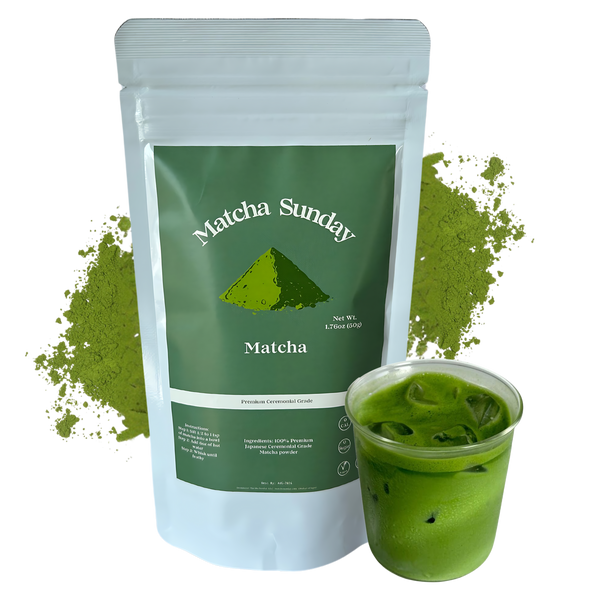
That vivid jade color and naturally sweet profile are exactly what our ceremonial matcha from Japan is chosen for, and it is the pouch we reach for every time we build the green layer in this recipe. Stick to 2 g of matcha in 60 ml of water for the top layer. It is stronger than a plain iced latte on purpose, because the melting ice and the milk below dilute it as you drink. Our guide to matcha latte ratios explains how to scale these numbers for bigger glasses or stronger drinks.
How much caffeine is in a mango matcha latte?
A mango matcha latte made with 2 g of ceremonial matcha contains about 60 to 70 mg of caffeine, all of it from the matcha. Published figures for matcha generally fall between roughly 20 and 40 mg per gram depending on harvest and grade, so individual servings can land a little above or below, but about 60 to 70 mg is the number we plan around for 2 g of ceremonial grade. The mango, milk, and ice contribute none. For comparison, an 8 oz cup of brewed coffee is often cited at around 95 mg.
Matcha caffeine also tends to feel different from coffee caffeine. Matcha naturally contains L theanine, an amino acid associated with calm alertness, and most of us at the shop describe the lift as steady and focused rather than jittery. If you are sensitive to caffeine, halve the matcha to 1 g for a lighter drink of roughly 30 to 35 mg, or simply enjoy this one earlier in the day and save the evening for something gentler.
Can you make a mango matcha latte without dairy?
Yes, and it layers beautifully. The mango puree and the whisked matcha are already dairy free, so you only need to swap the milk. Oat milk is our favorite all around choice because it is creamy enough to hold a visible line between the mango and the matcha.
- Oat milk: the closest match to whole milk for body and layering. Full fat barista style versions hold the cleanest lines.
- Coconut milk beverage: leans into the tropical theme and pairs naturally with mango. Choose the drinkable carton kind, not thick canned coconut milk.
- Almond milk: works, but it is thinner, so pour extra slowly over the spoon.
To make the drink fully plant based, use agave or simple syrup instead of honey in the puree. Everything else stays exactly the same.
How can you change up a mango matcha latte?
Once you have the base recipe down, the layered format is easy to riff on. These are the variations we come back to most:
- Frozen mango shortcut: thaw 100 g of frozen mango chunks and blend as usual. Frozen mango is picked ripe, so it often blends sweeter and thicker than fresh.
- Coconut mango version: use coconut milk beverage as the middle layer and add a tiny pinch of salt to the puree to sharpen the mango flavor.
- Double sunrise: split the bottom layer between mango puree and strawberry puree for a four color glass, borrowing from our strawberry matcha layering method.
- Sparkling mango matcha: replace the milk with chilled sparkling water for a lighter, fizzy glass, closer in spirit to our matcha lemonade than a latte.
- Make ahead: the puree keeps in the fridge for up to 3 days, but always whisk the matcha fresh right before you pour, since whisked matcha settles and loses its froth within minutes.
Start your matcha ritual
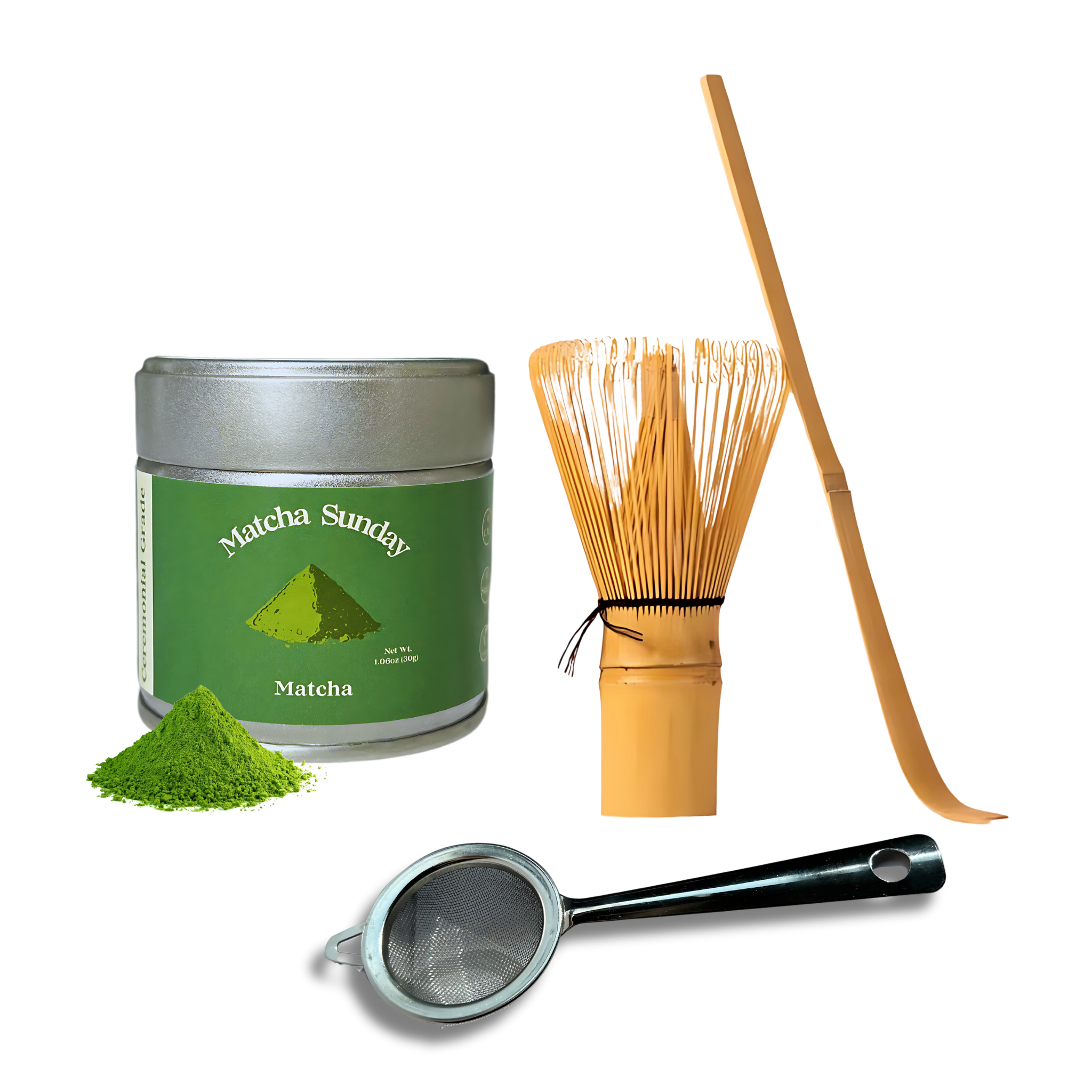
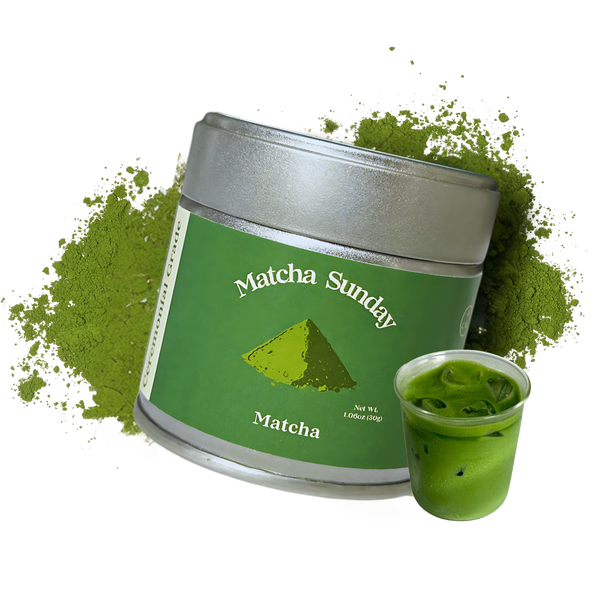
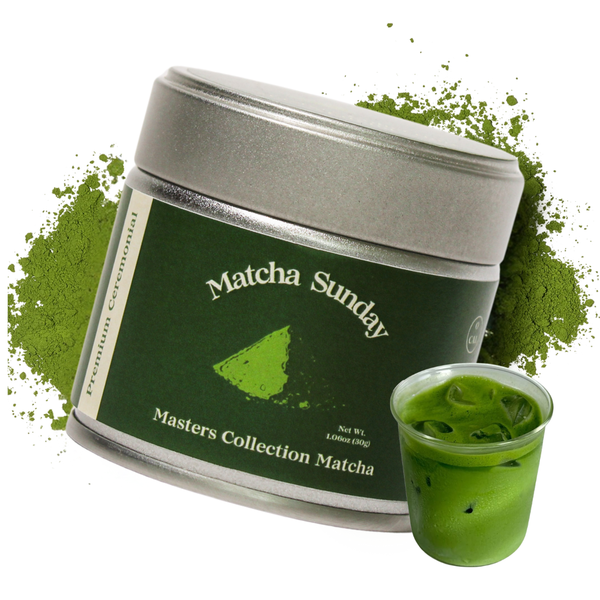
All 100% matcha from Japan. Pick the one that fits how you like to drink it.
Frequently asked questions
What does a mango matcha latte taste like?
It tastes like a tropical dessert with a green tea finish. The first sips are sweet and honeyed from the mango, the milk adds a creamy middle, and the matcha brings a fresh, grassy, gently savory depth. Stirred together, it balances sweet and earthy in one glass.
How much caffeine is in a mango matcha latte?
Made with 2 g of ceremonial matcha, it contains about 60 to 70 mg of caffeine, all from the matcha itself. Published per gram figures for matcha run roughly 20 to 40 mg depending on harvest and grade, so servings can vary a little. That is less than a typical 8 oz cup of brewed coffee, often cited around 95 mg. Using 1 g of matcha drops it to roughly 30 to 35 mg.
Can I use frozen mango instead of fresh?
Yes. Thaw about 100 g of frozen mango chunks and blend them into a smooth, thick puree exactly as you would fresh fruit. Frozen mango is harvested ripe, so it often blends sweeter and more consistent than store bought fruit, which makes it a reliable choice all year.
Why did my layers mix together?
Layers mix when the densities are too close or the pour is too fast. Make sure the mango puree is thick and spoonable, the milk is very cold, and you pour both the milk and the matcha slowly over the back of a spoon. A watery puree is the most common cause of muddy layers.
What water temperature should I use to whisk matcha for an iced latte?
Use water at about 75°C (167°F), well below boiling. Water that is too hot scalds matcha and turns it bitter, while this range draws out its natural sweetness. Whisk 2 g of matcha into 60 ml of water for 15 to 20 seconds until smooth and lightly frothy.
Can I make a mango matcha latte ahead of time?
Partly. The mango puree keeps covered in the fridge for up to 3 days, so you can prep several servings at once. The matcha layer should always be whisked fresh right before serving, because whisked matcha settles within minutes and the layers only hold in a freshly built glass.