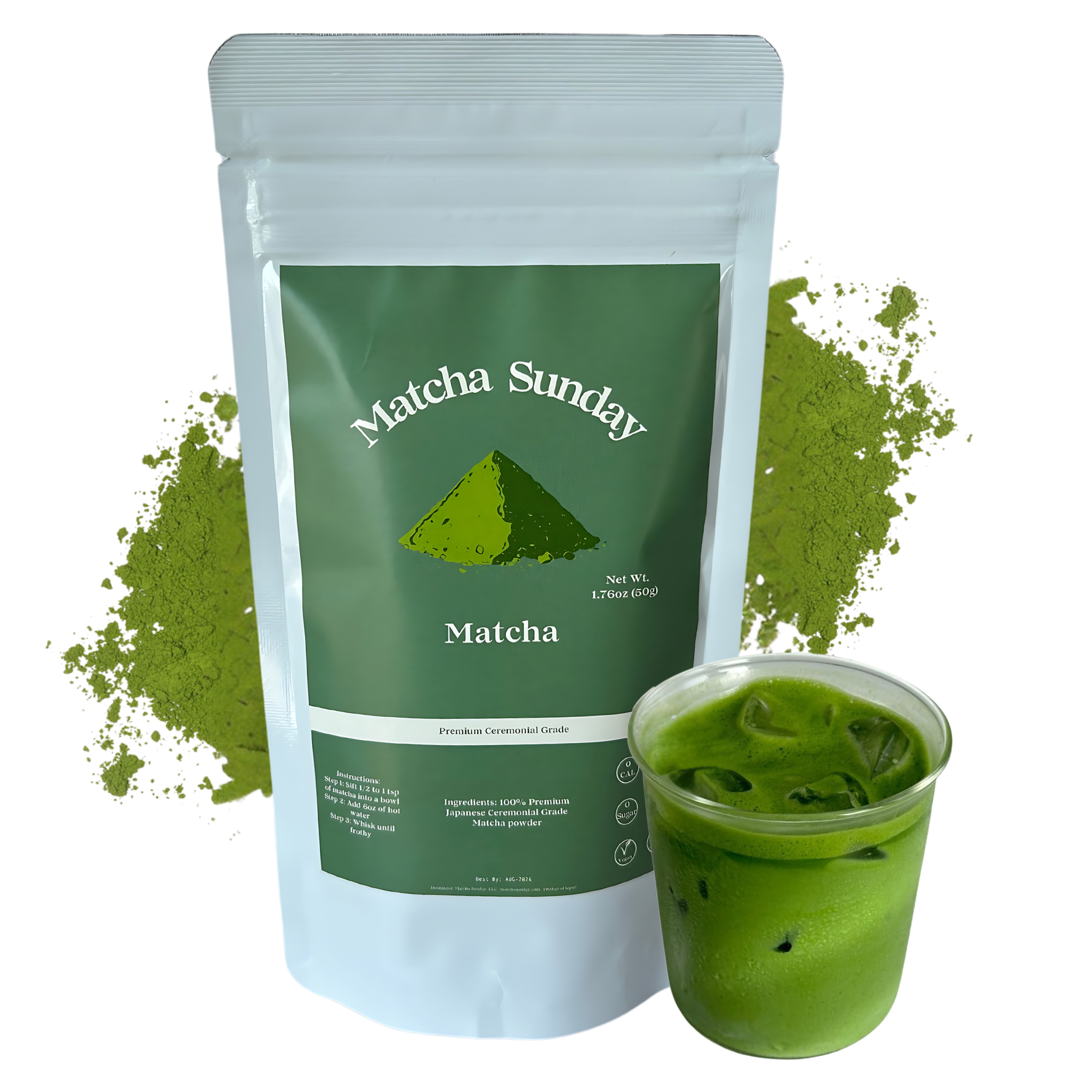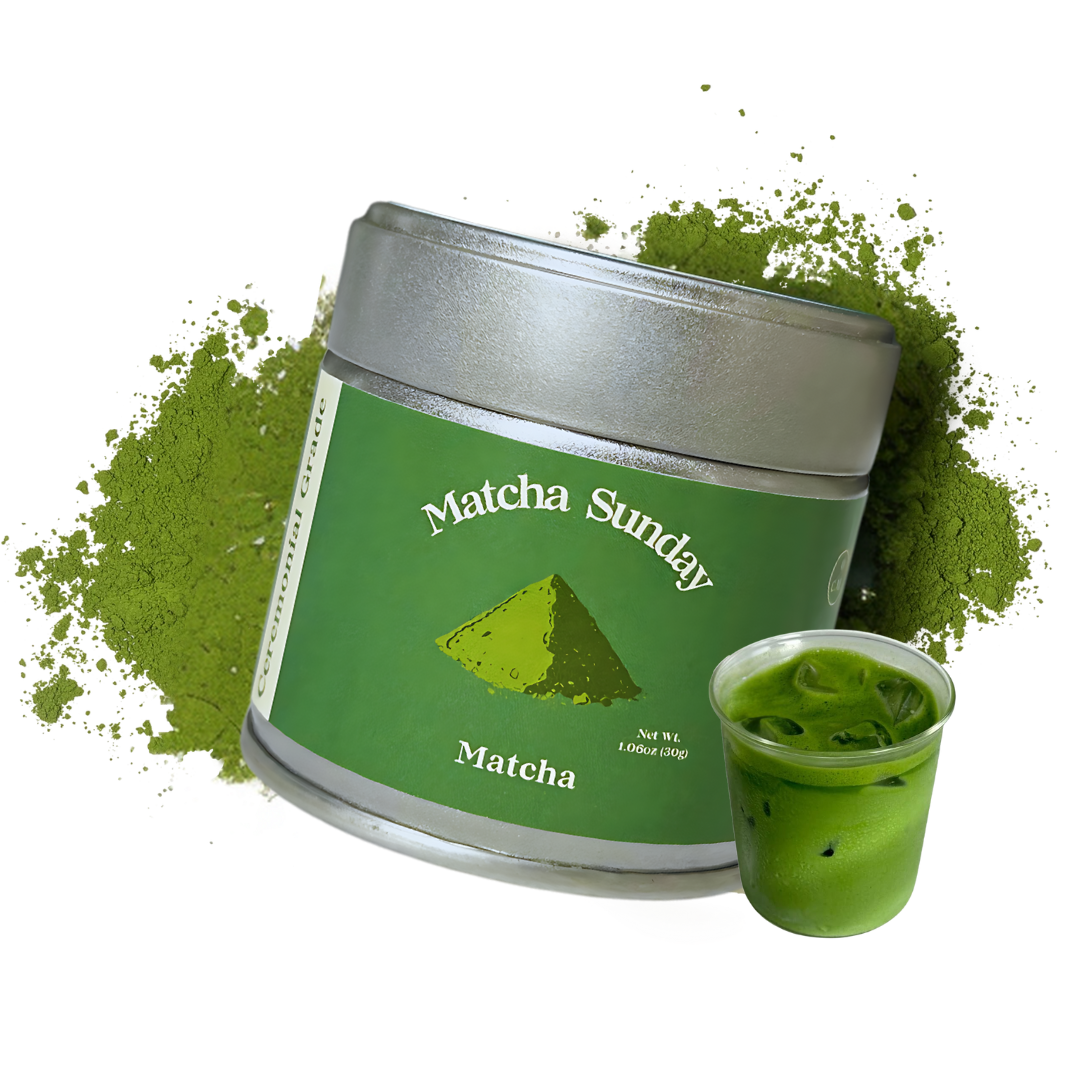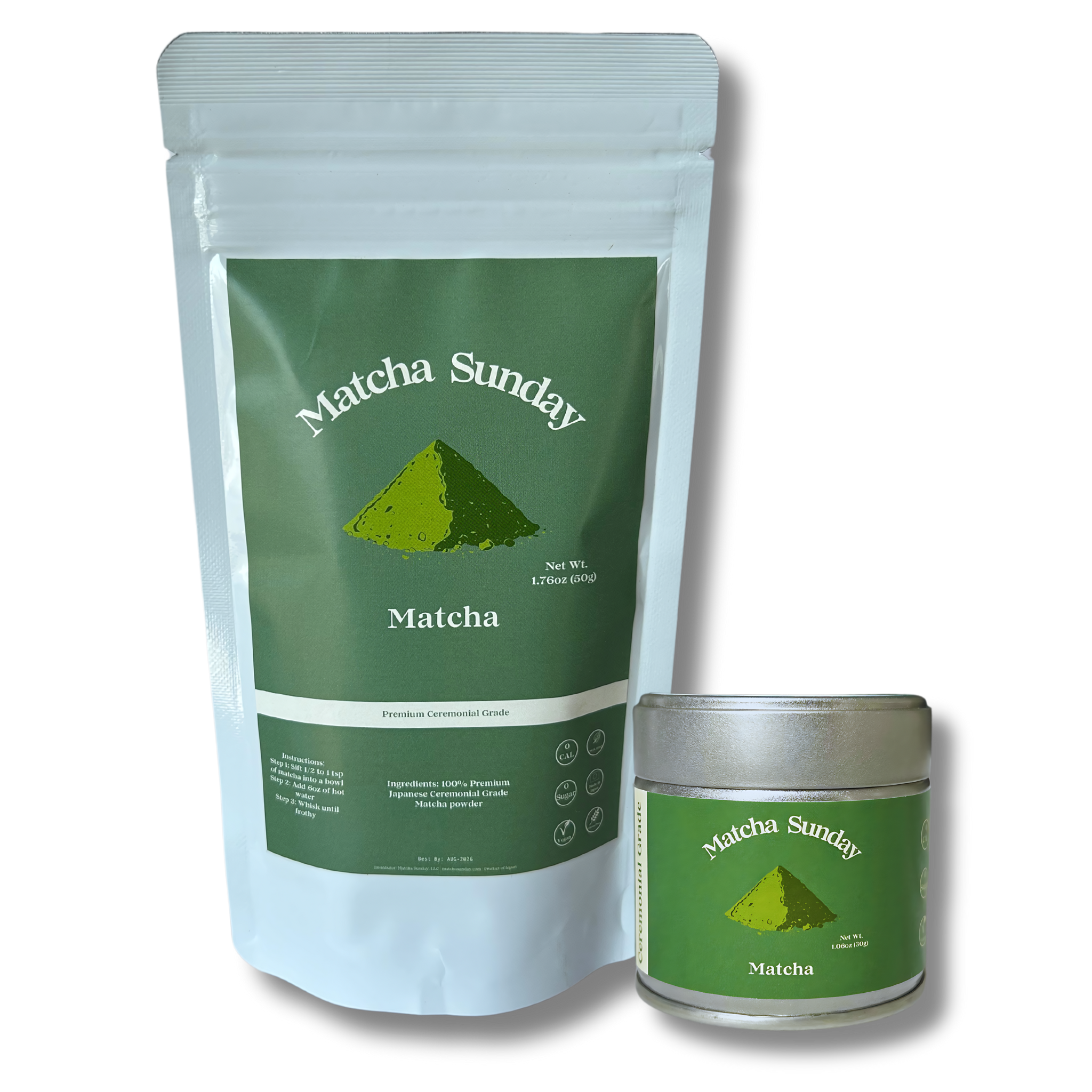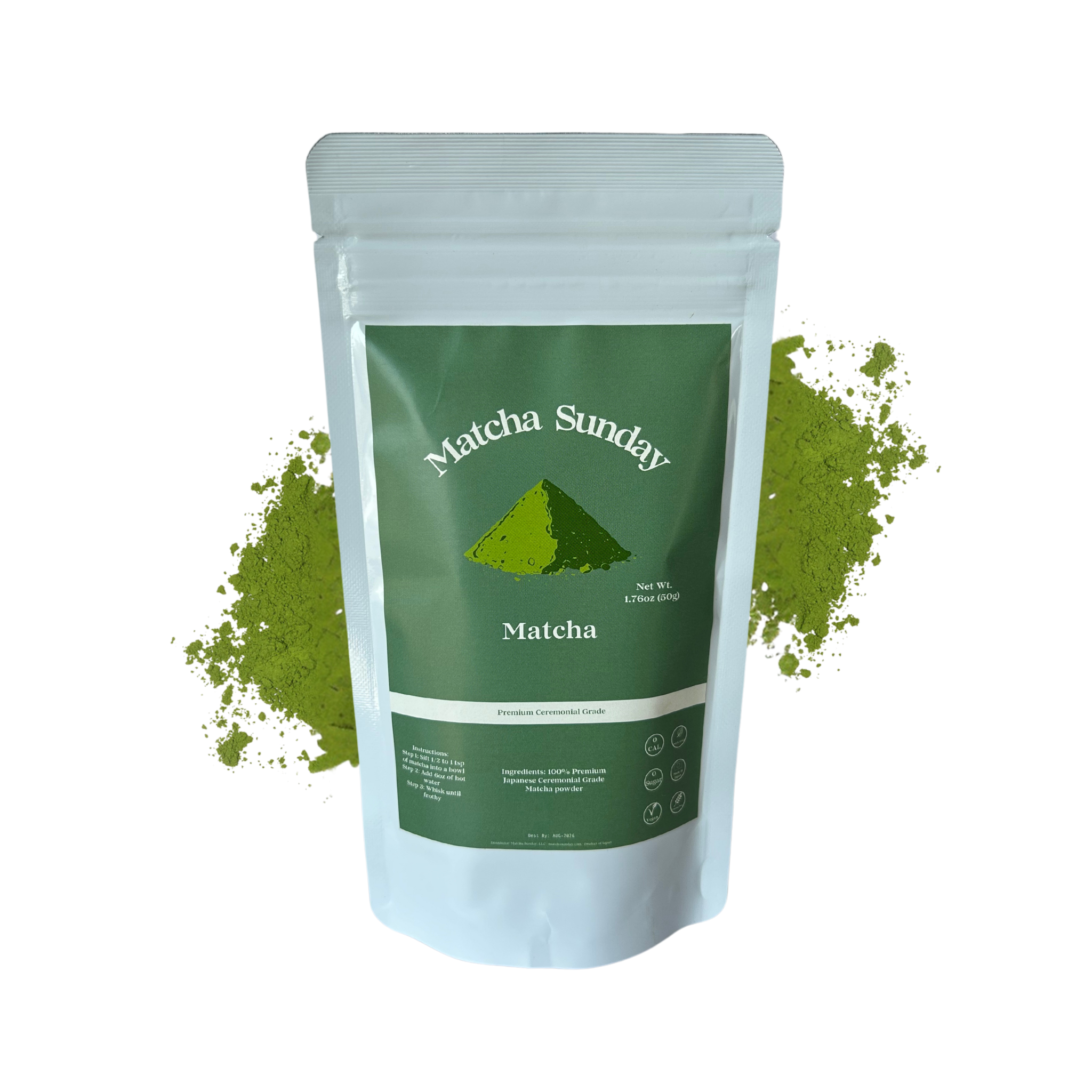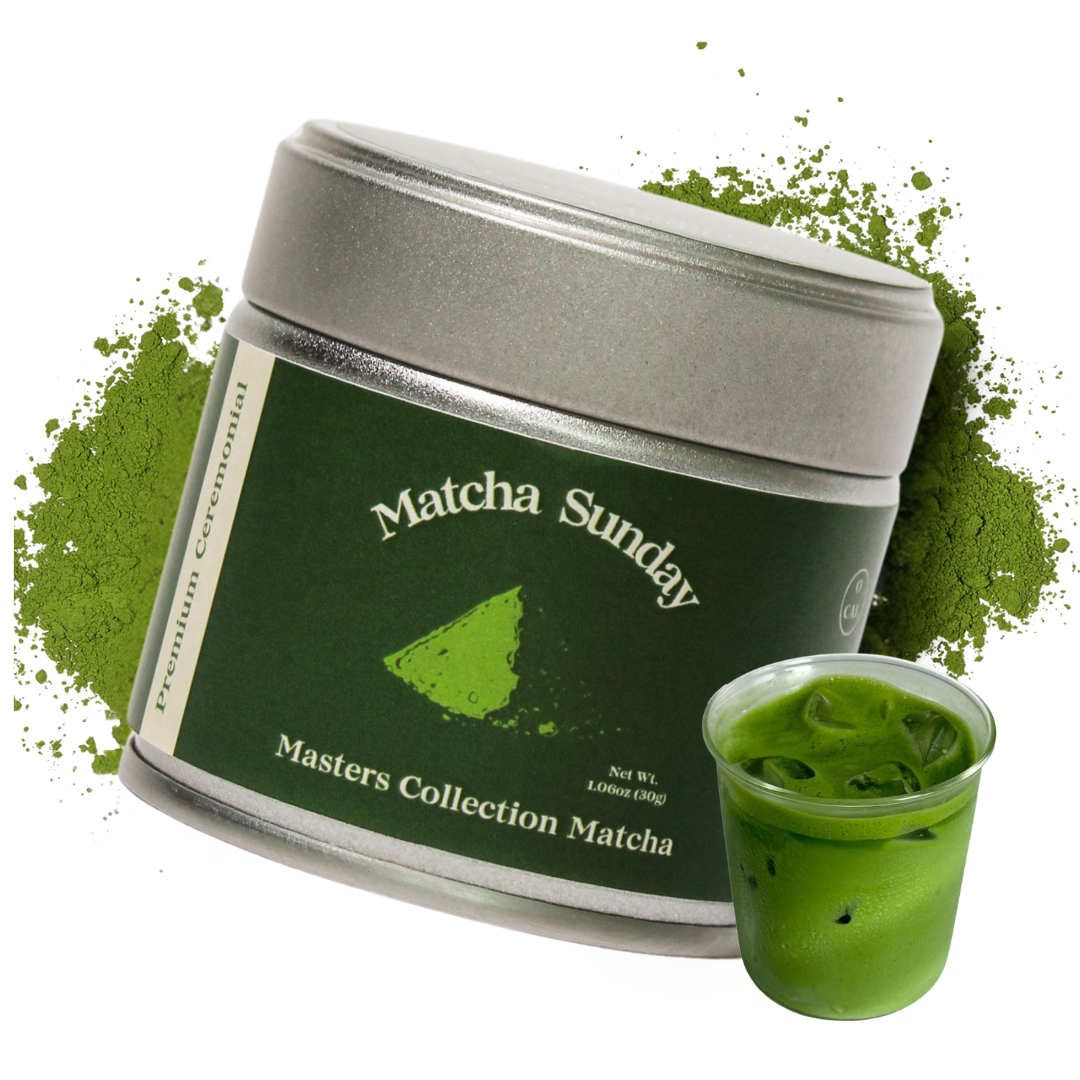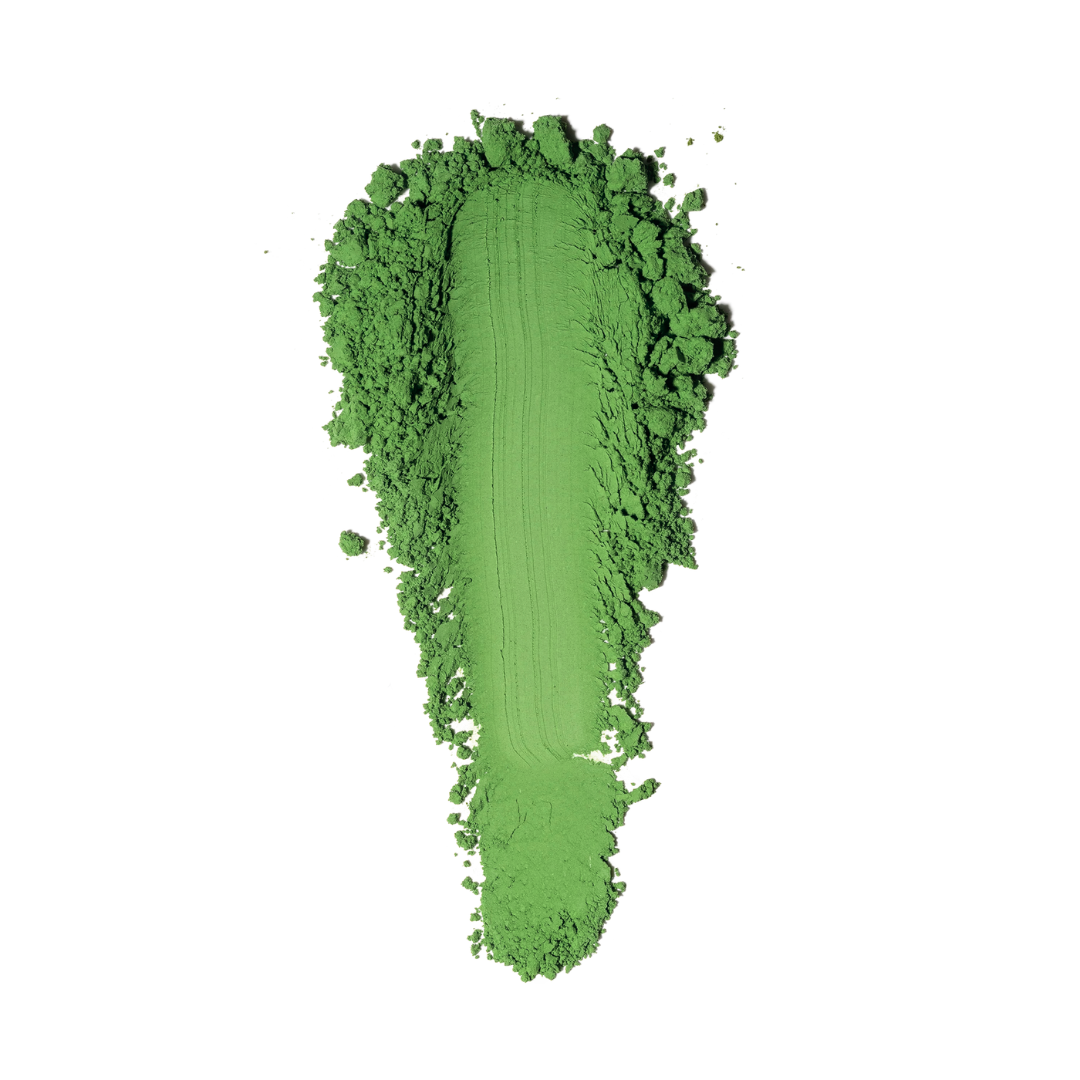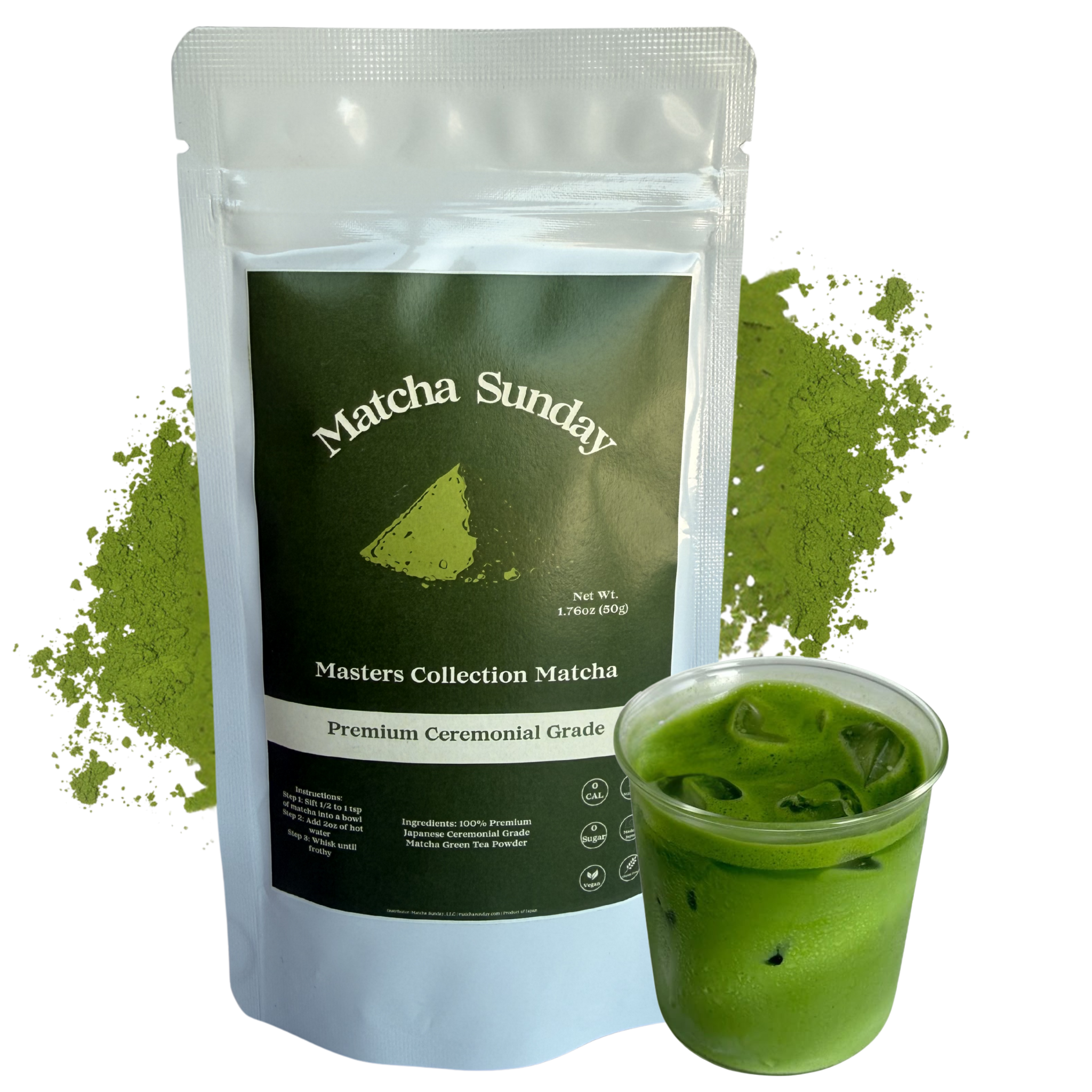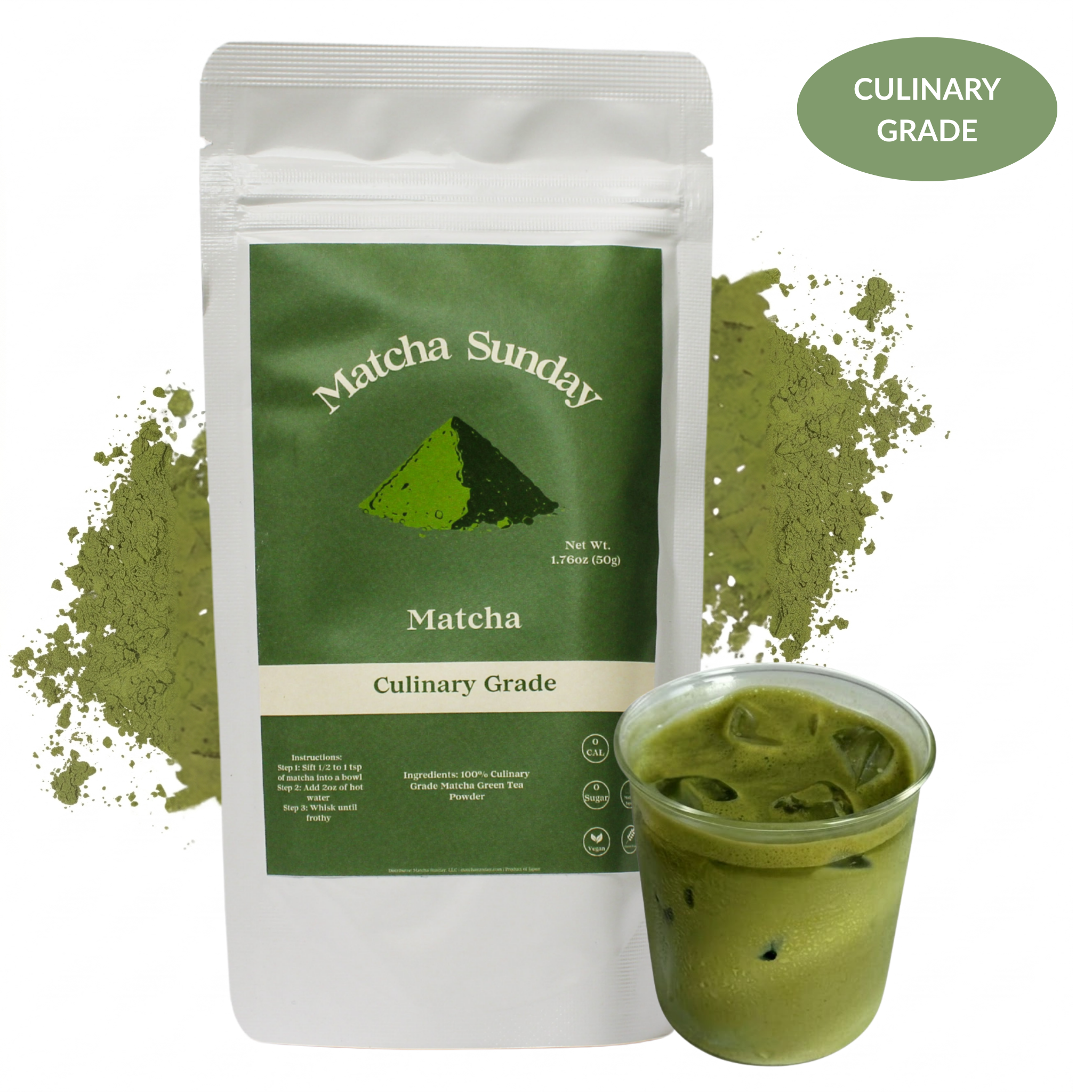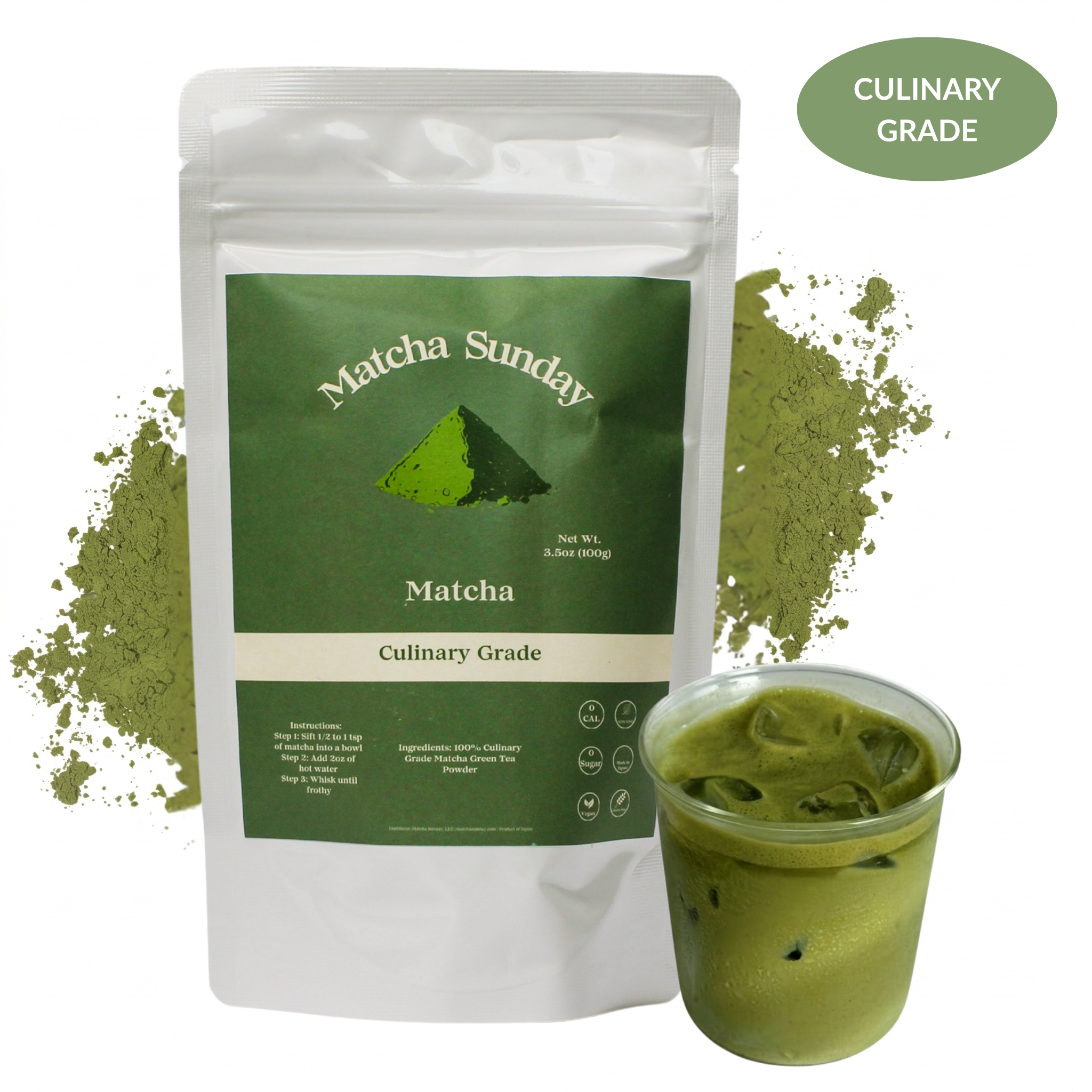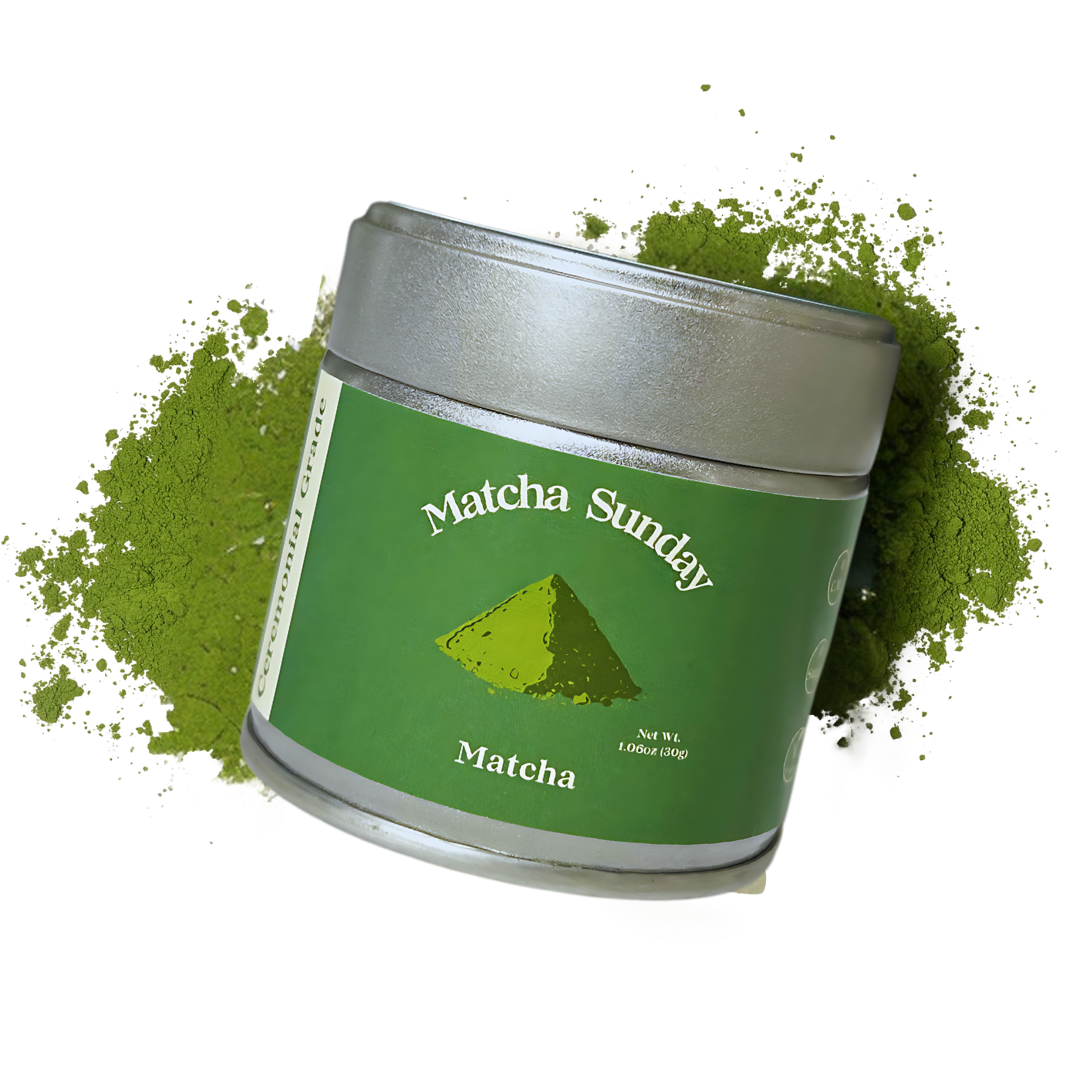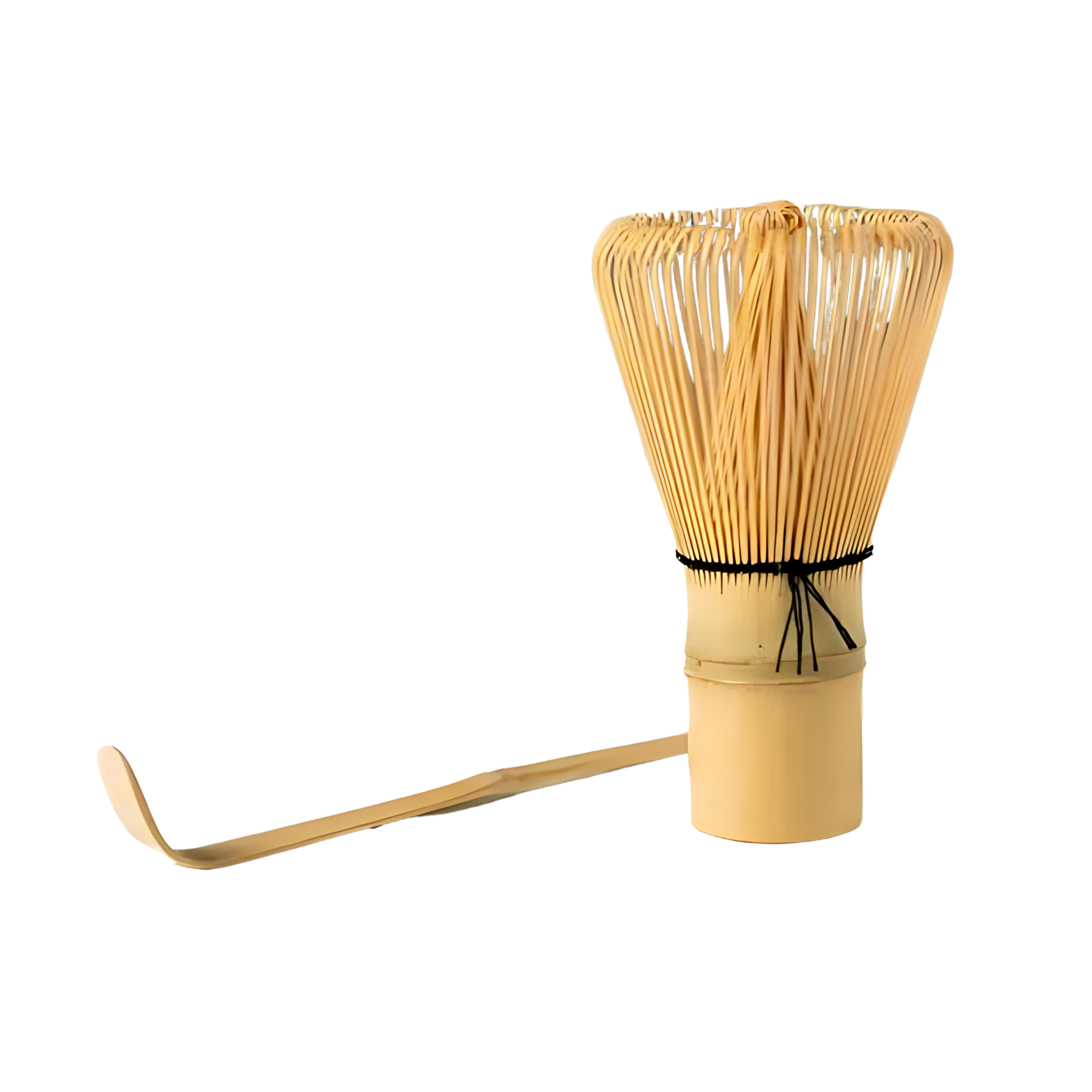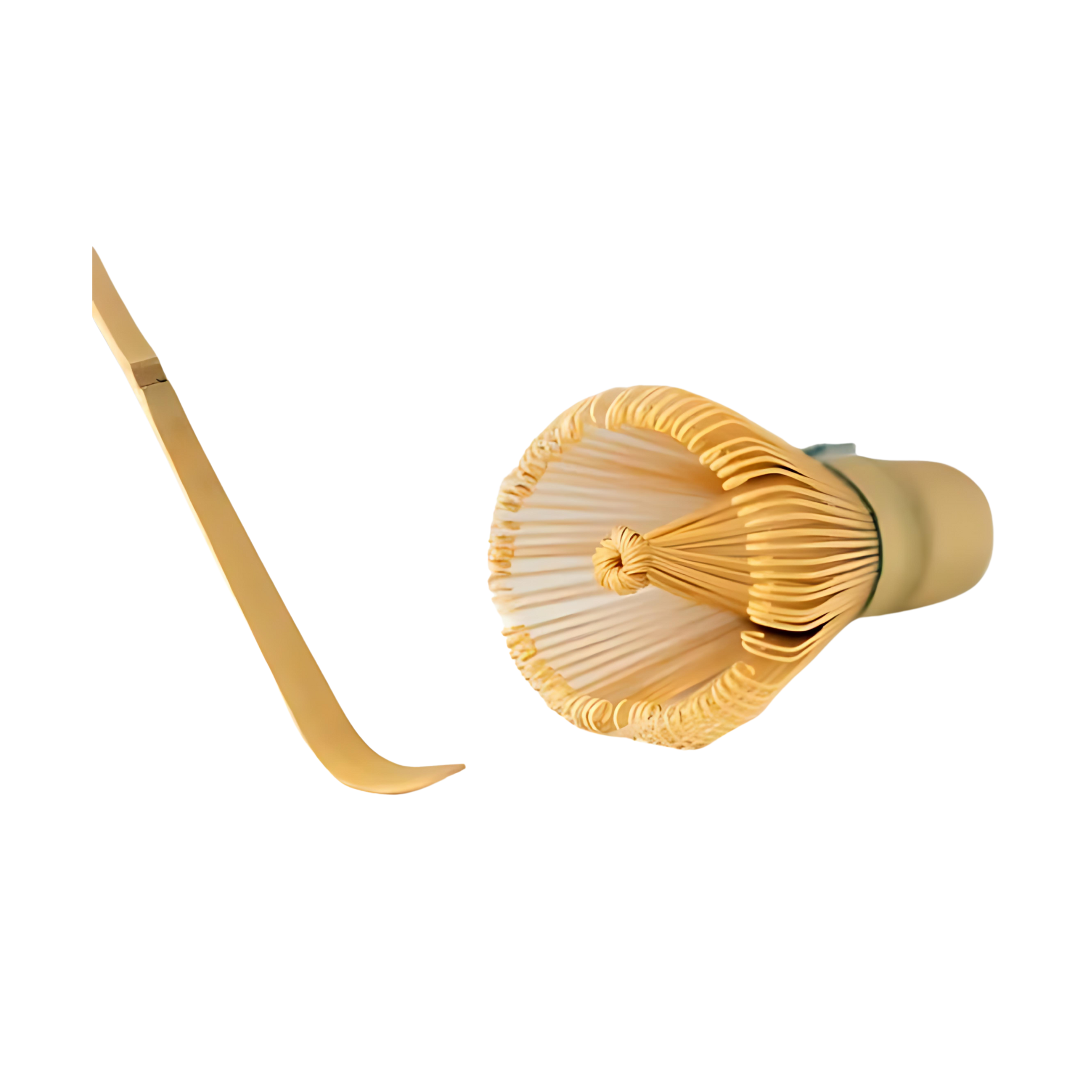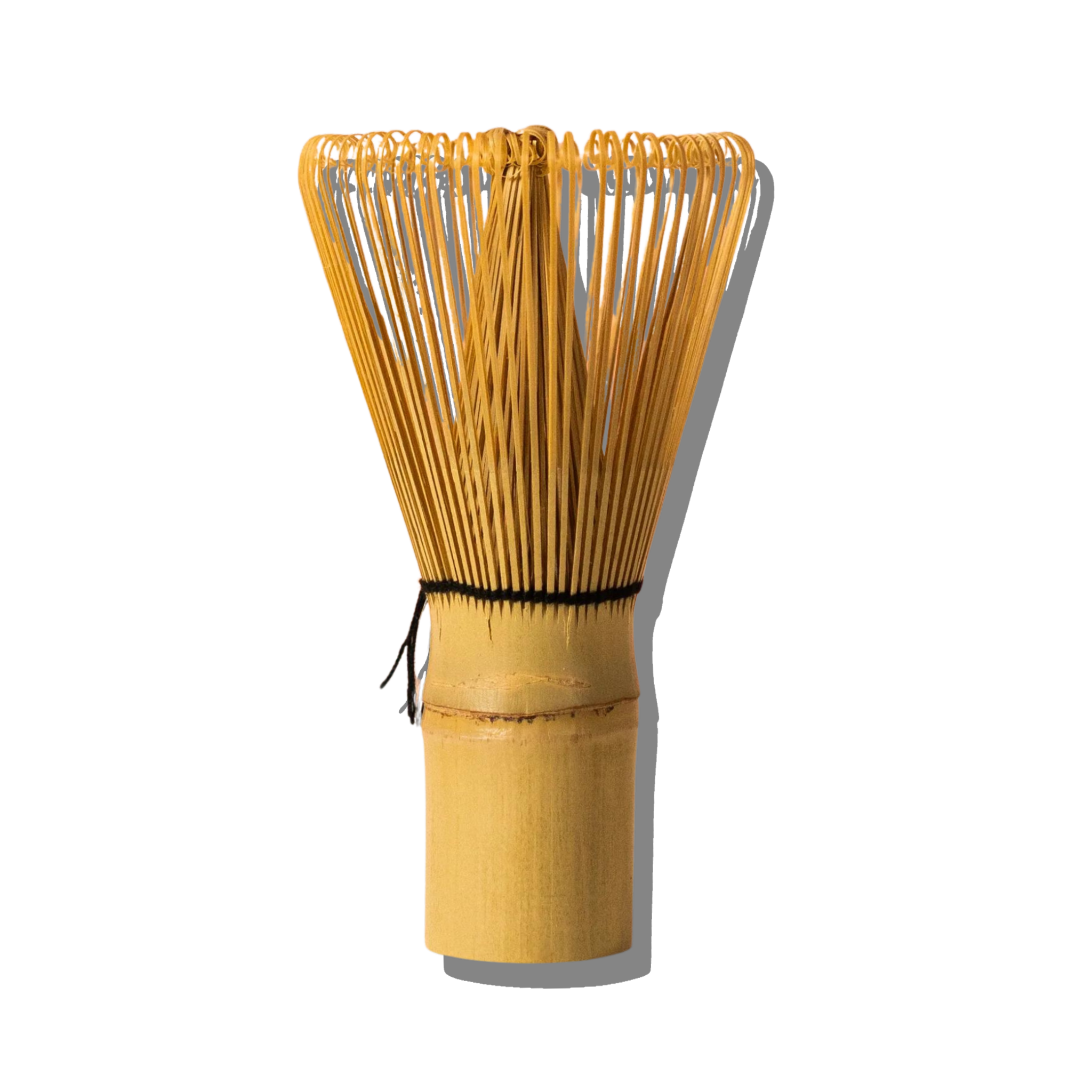
An iced brown sugar oat milk matcha latte is a chilled layered matcha drink made with homemade brown sugar syrup, ceremonial grade matcha from Japan, and barista oat milk over ice. It takes five minutes, serves one, and delivers about 130 mg of caffeine.
Most recipes treat brown sugar as a simple sweetener, but it is actually a flavor bridge. The molasses in dark brown sugar brings a deep, almost toffee like warmth that rounds out the vegetal edge of matcha instead of just covering it up. Where plain simple syrup makes matcha taste like sweetened grass, brown sugar makes it taste like a matcha dessert you would actually crave. We make this at Matcha Sunday almost every afternoon during the warmer months. The natural theanine in matcha gives you smooth, focused energy instead of the jittery spike from coffee, and the slow sweetness of brown sugar extends that calm feeling through every sip.
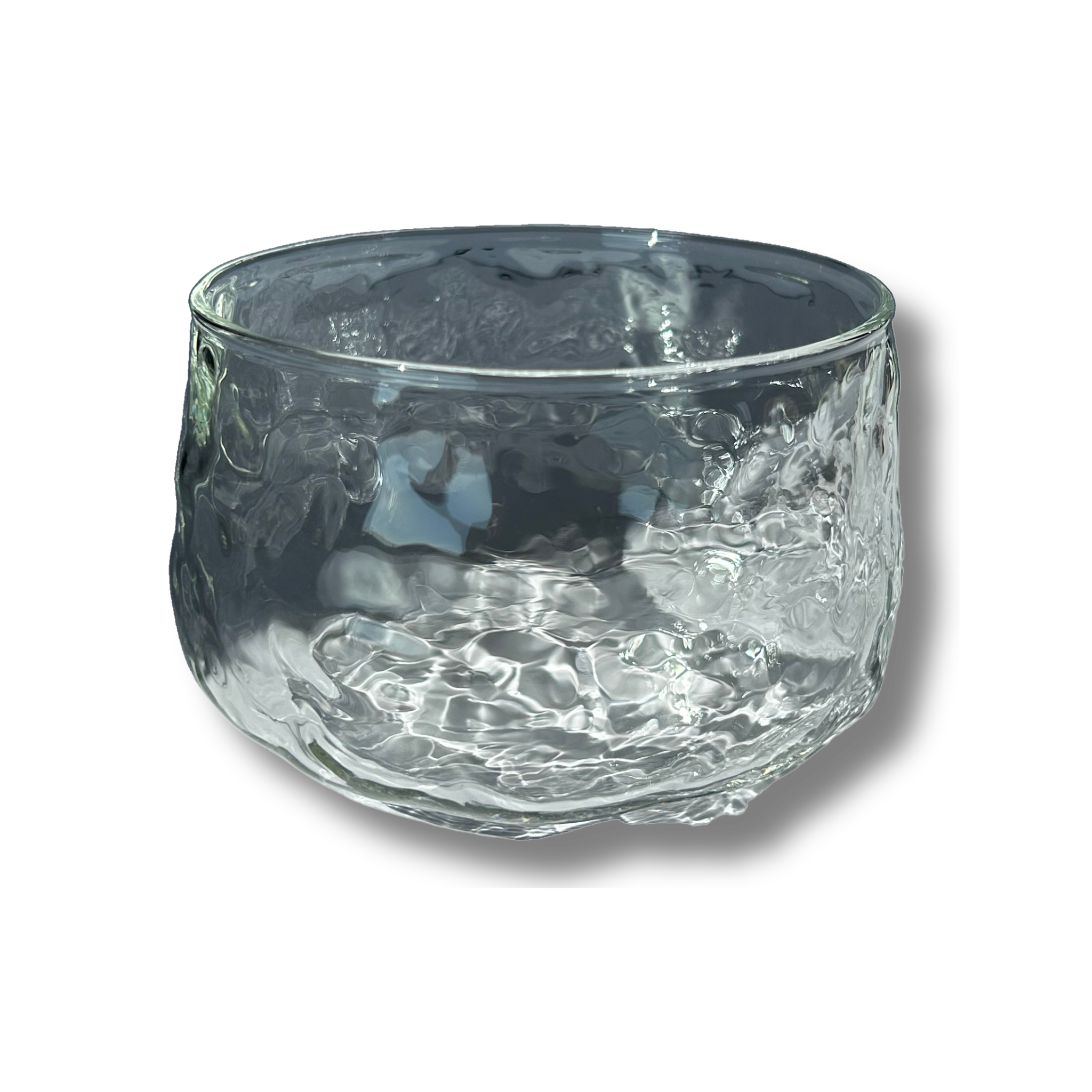
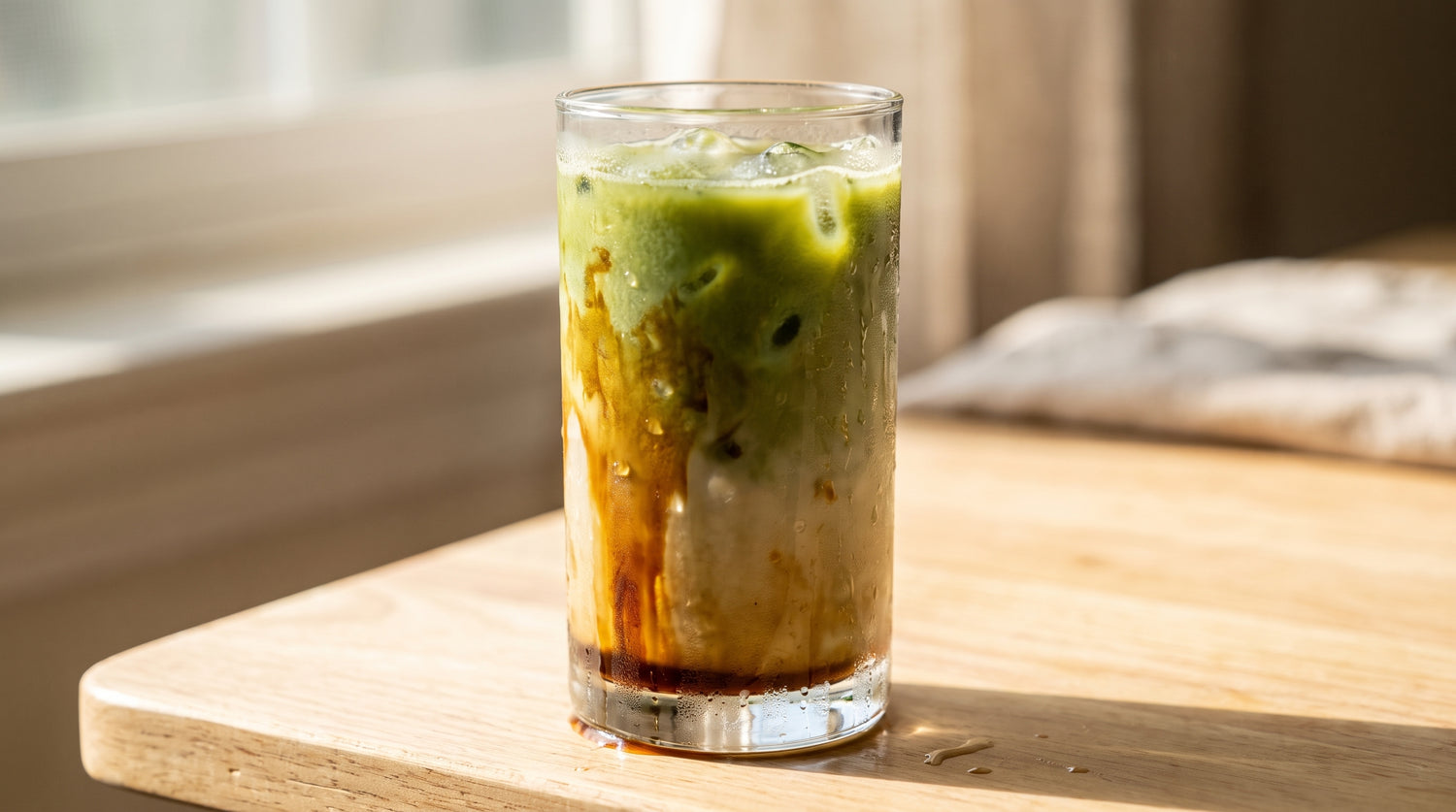
The layered pour looks impressive, but it is the easiest part. Brown sugar syrup sinks to the bottom, cold oat milk fills the middle, and a bright green matcha shot floats on top, creating a gradient that practically photographs itself. One stir through a straw blends all three layers into something rich, earthy, and caramel sweet.
How do you make an iced brown sugar oat milk matcha latte at home?
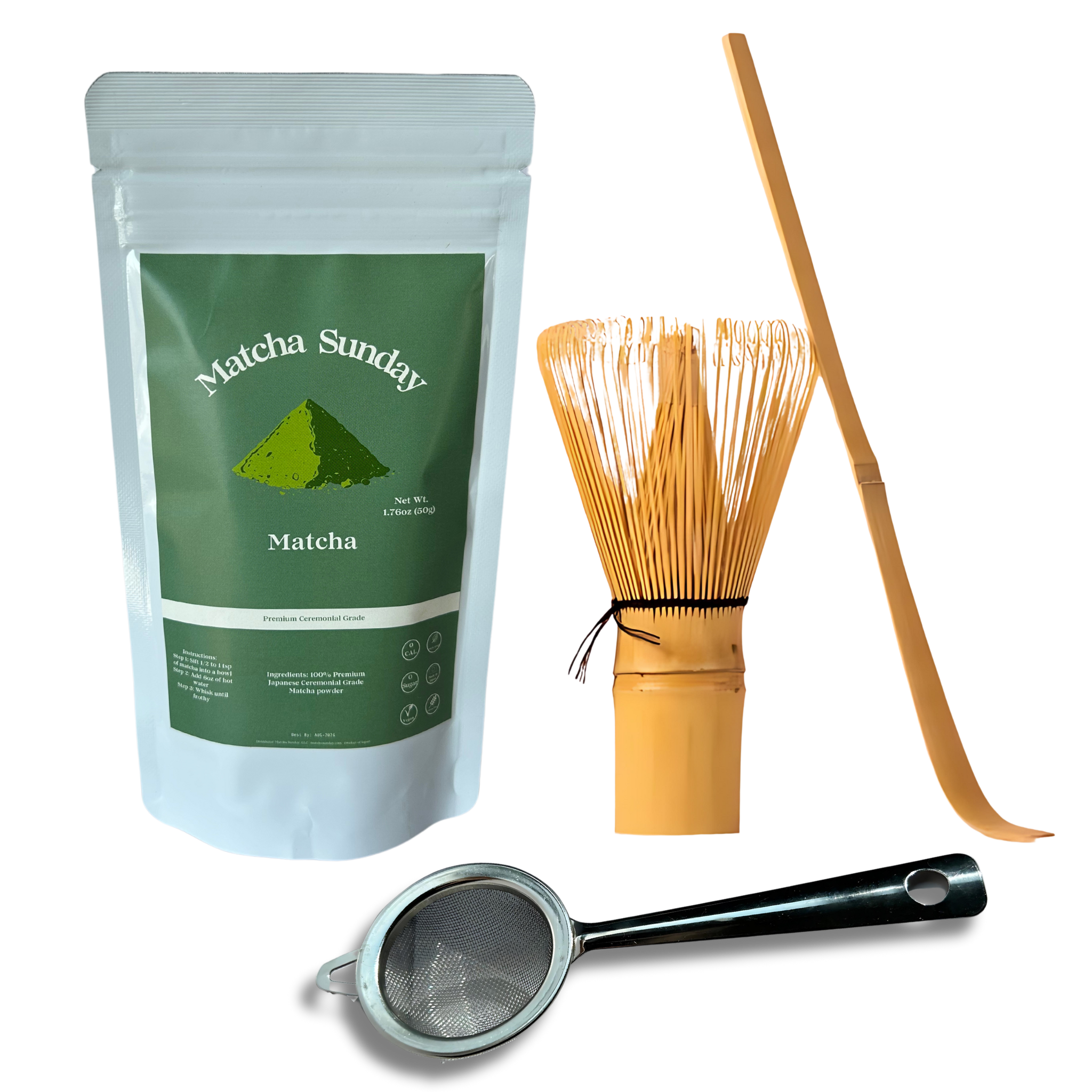
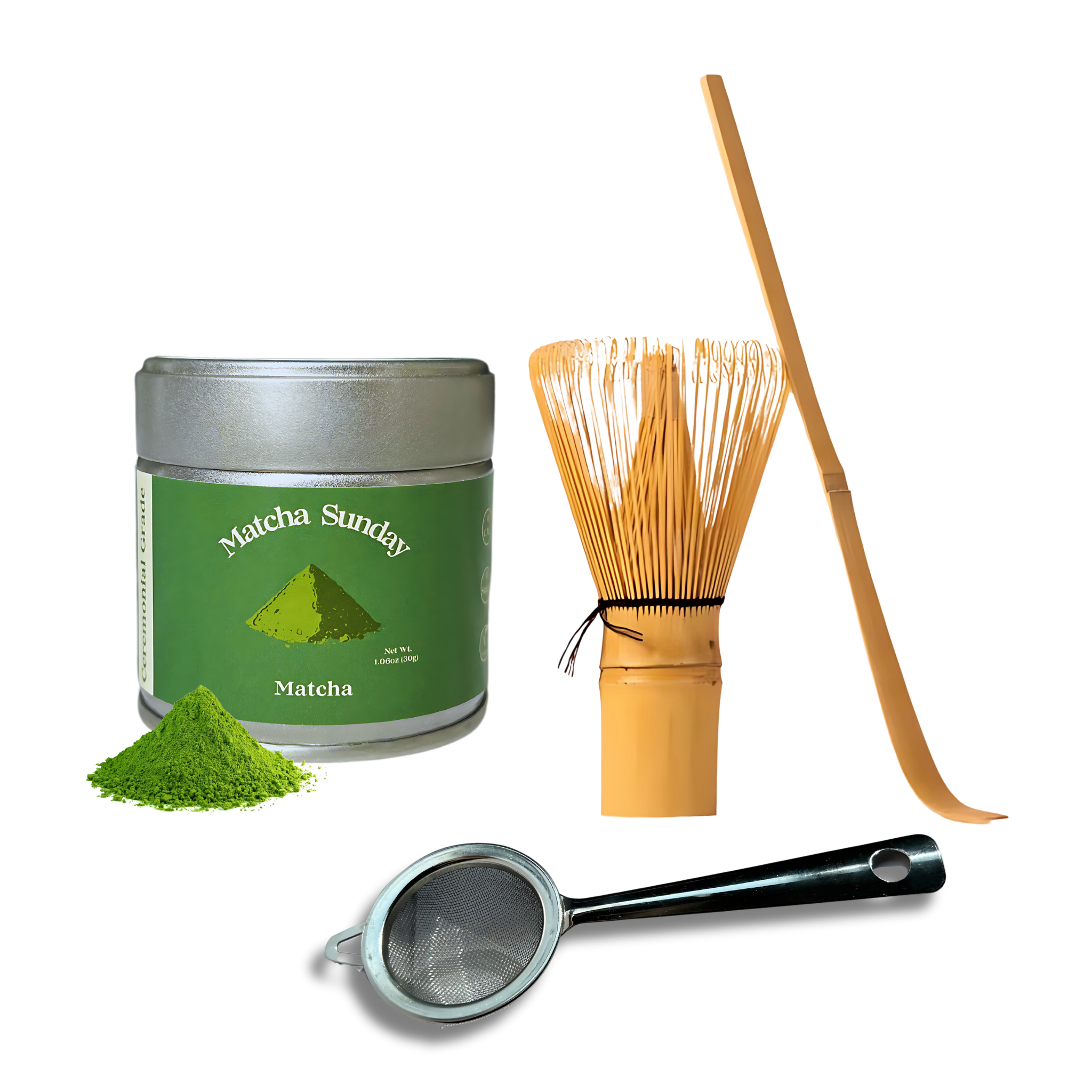
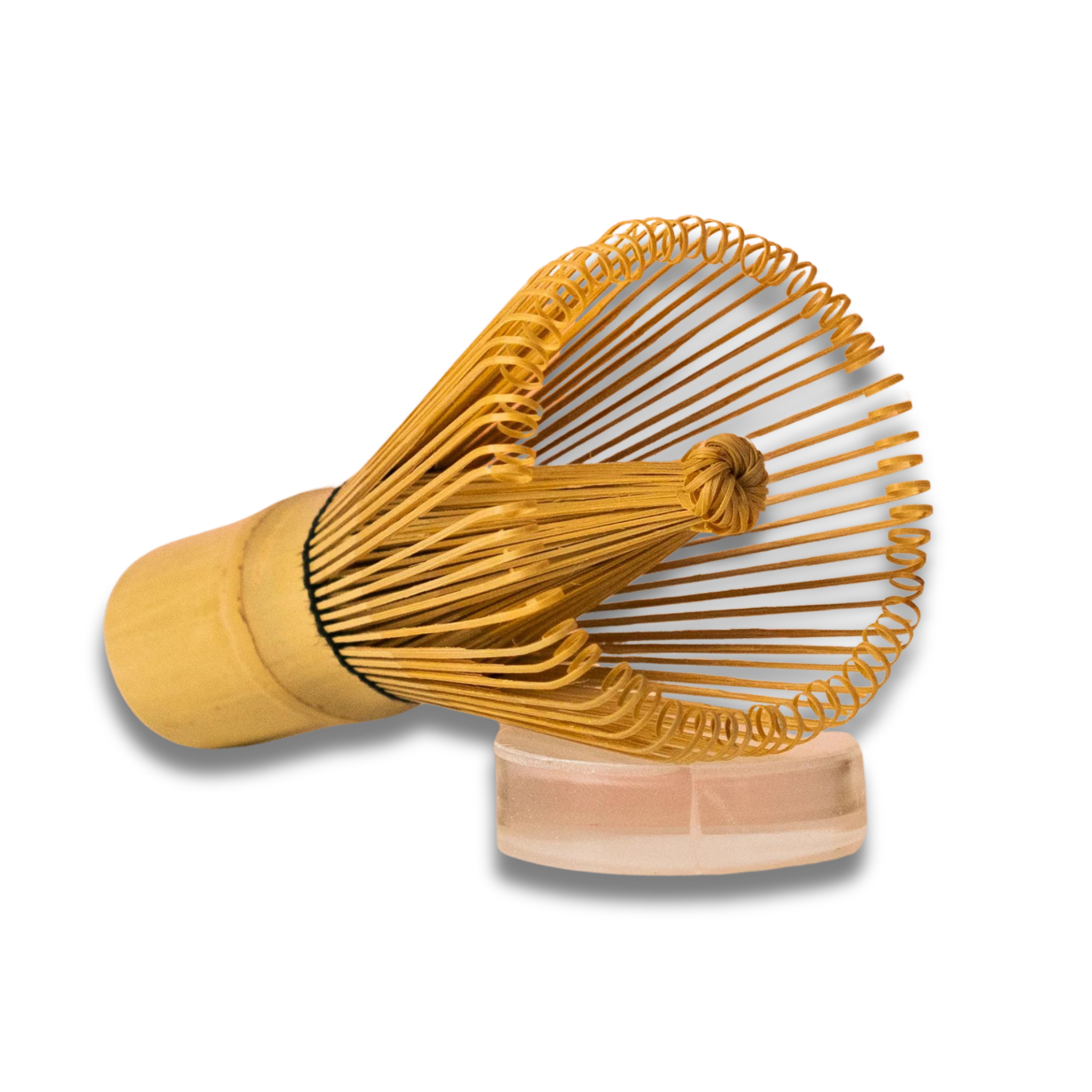
You whisk matcha into a small amount of hot water, build your glass with syrup and ice, pour oat milk, then float the matcha on top. The whole process takes about five minutes with no special equipment beyond a matcha whisk or a small regular whisk.
Ingredients
| Ingredient | Amount | Notes |
|---|---|---|
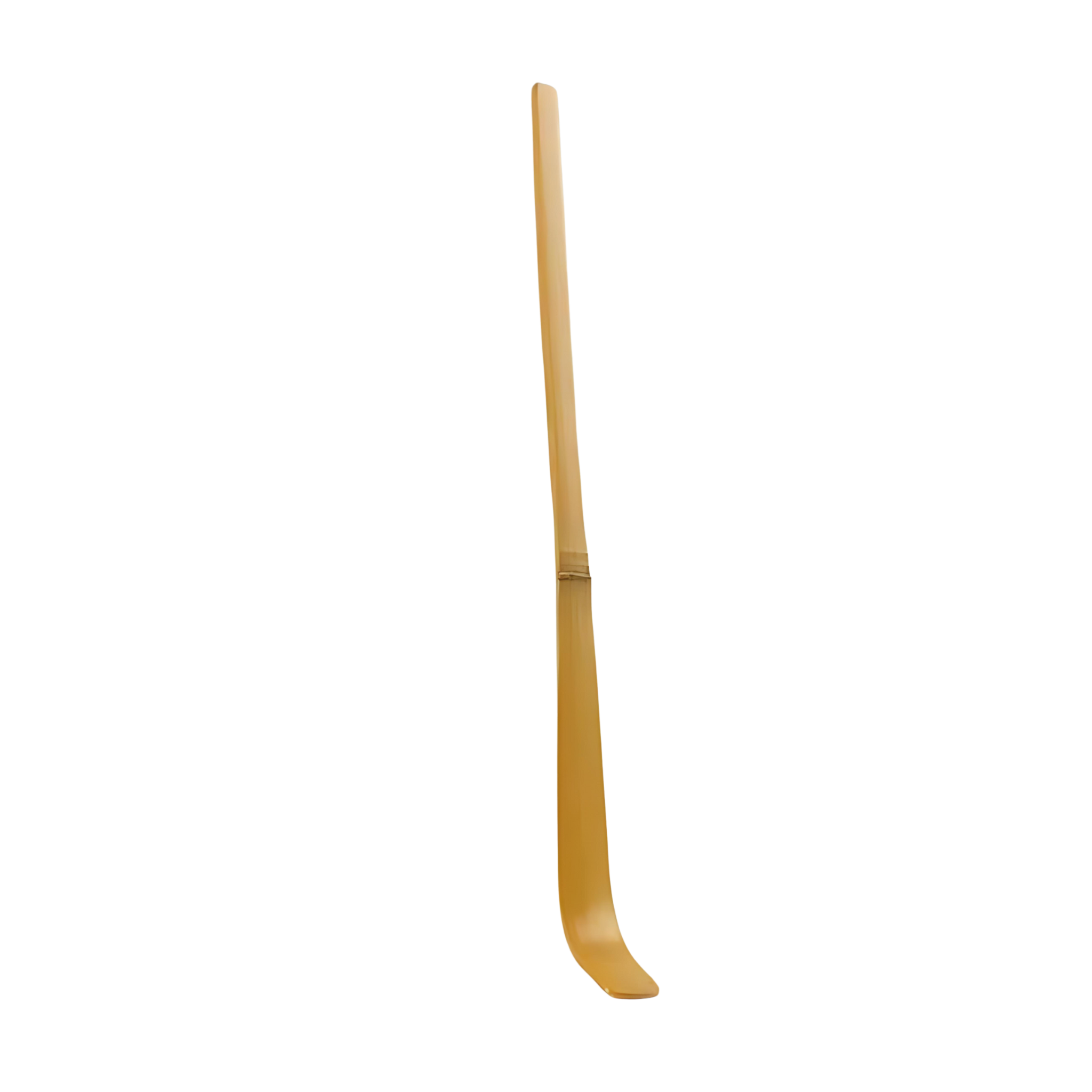
| Ceremonial grade matcha | 2 tsp (4 g) | Vibrant green, from Japan |
| Hot water (not boiling) | 2 oz (60 ml) | 175 degrees F or 80 degrees C is ideal |
| Brown sugar syrup | 1 to 2 tbsp | Recipe below or store bought |
| Barista oat milk | 8 oz (240 ml) | Cold, straight from the fridge |
| Ice | 1 cup | Standard cubes or large format |
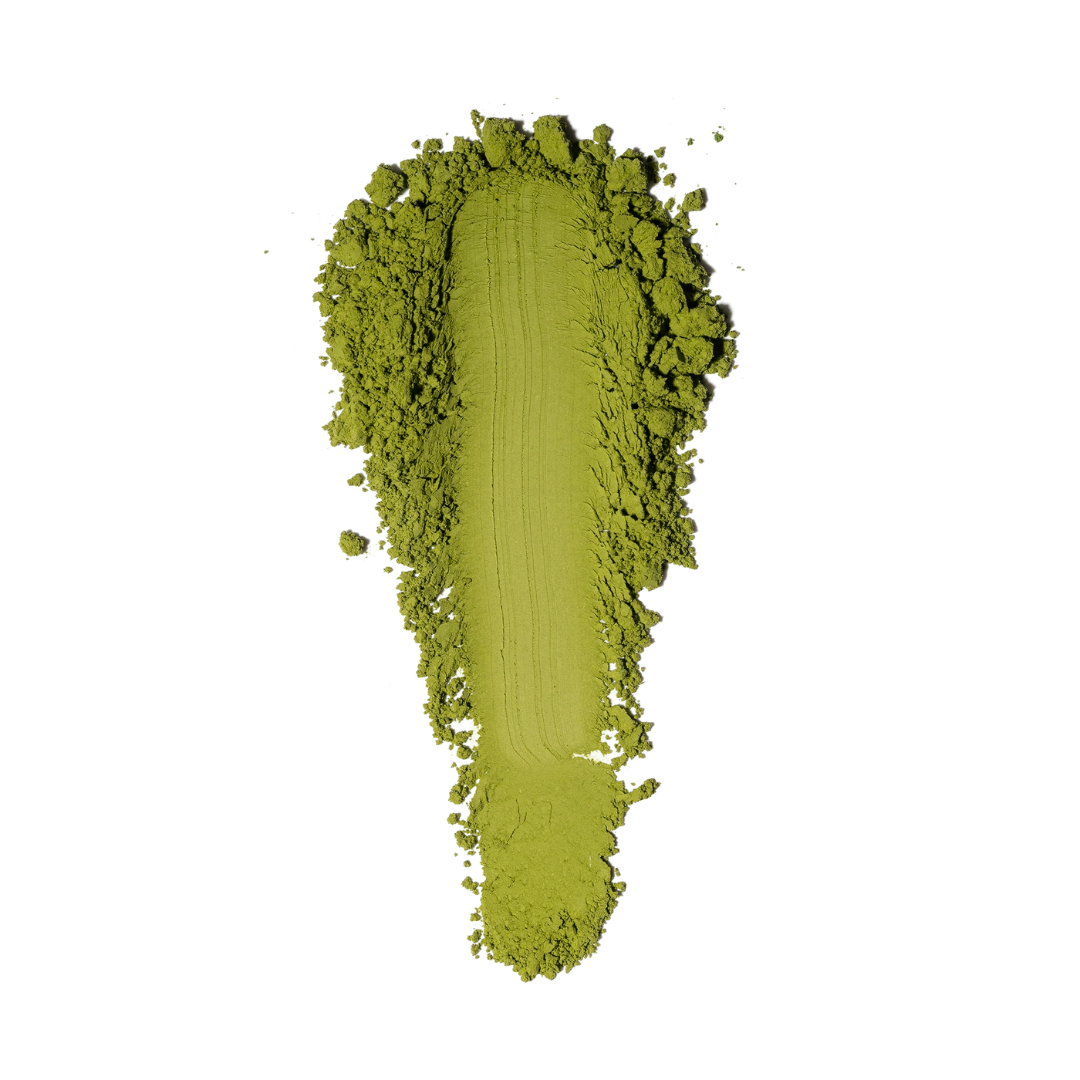
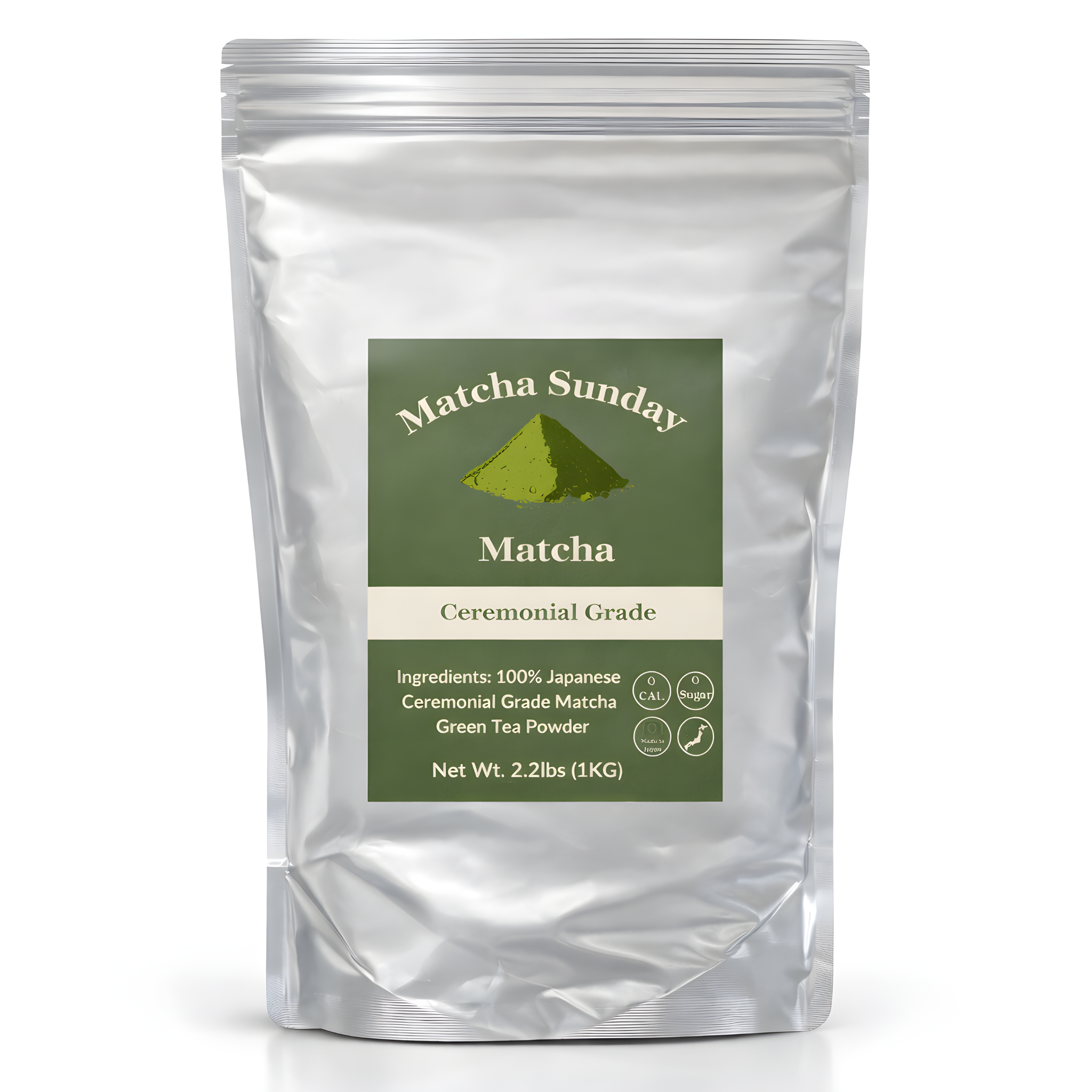
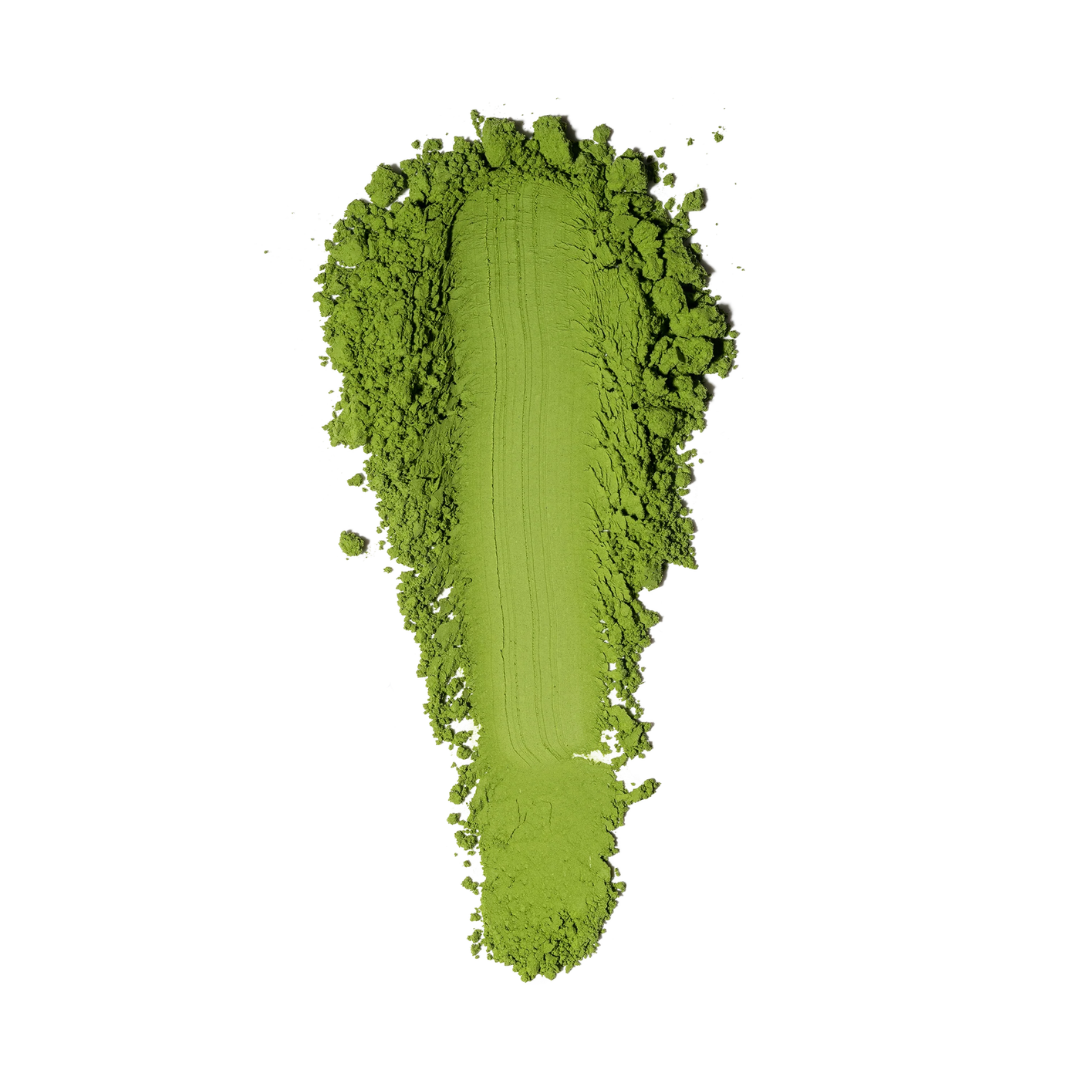
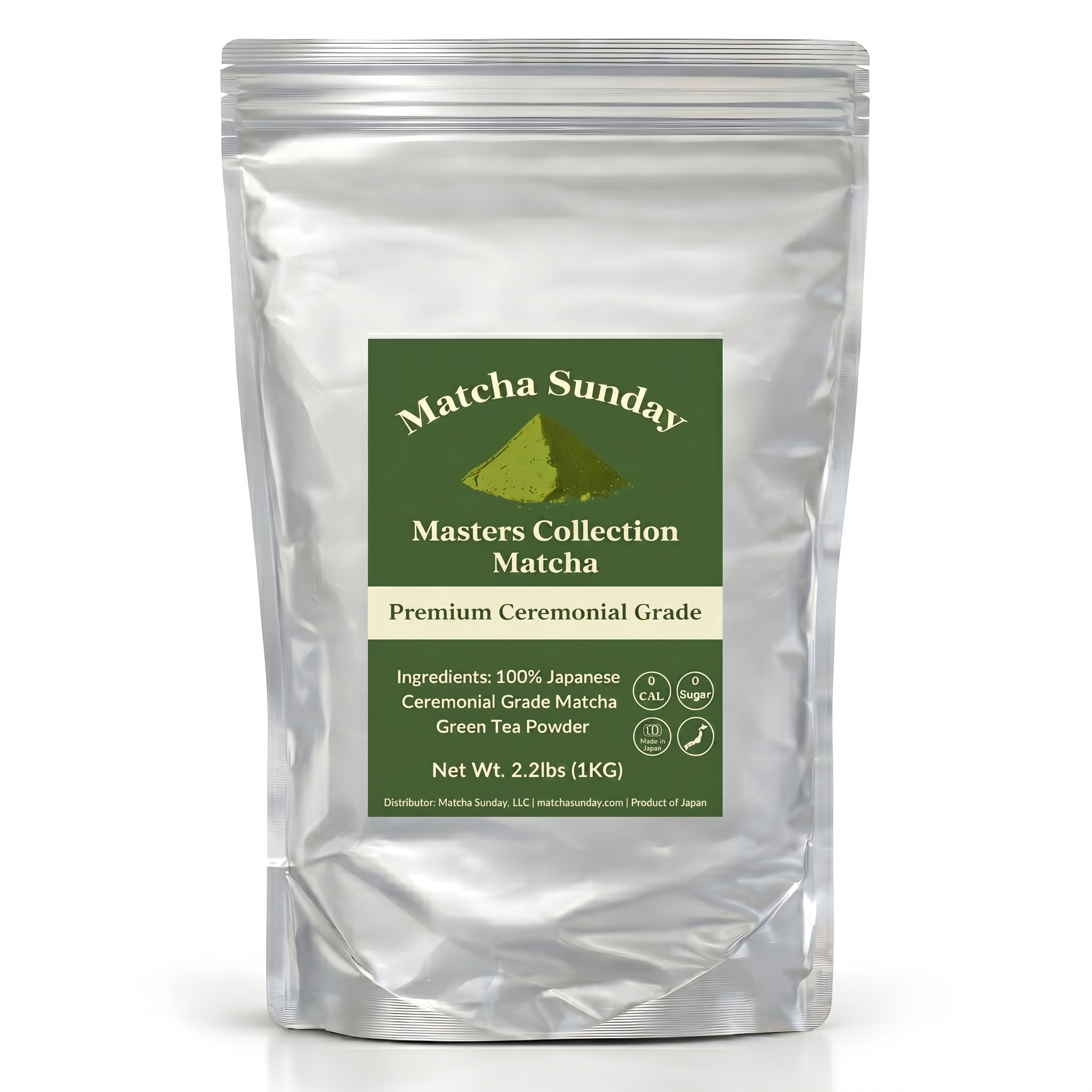
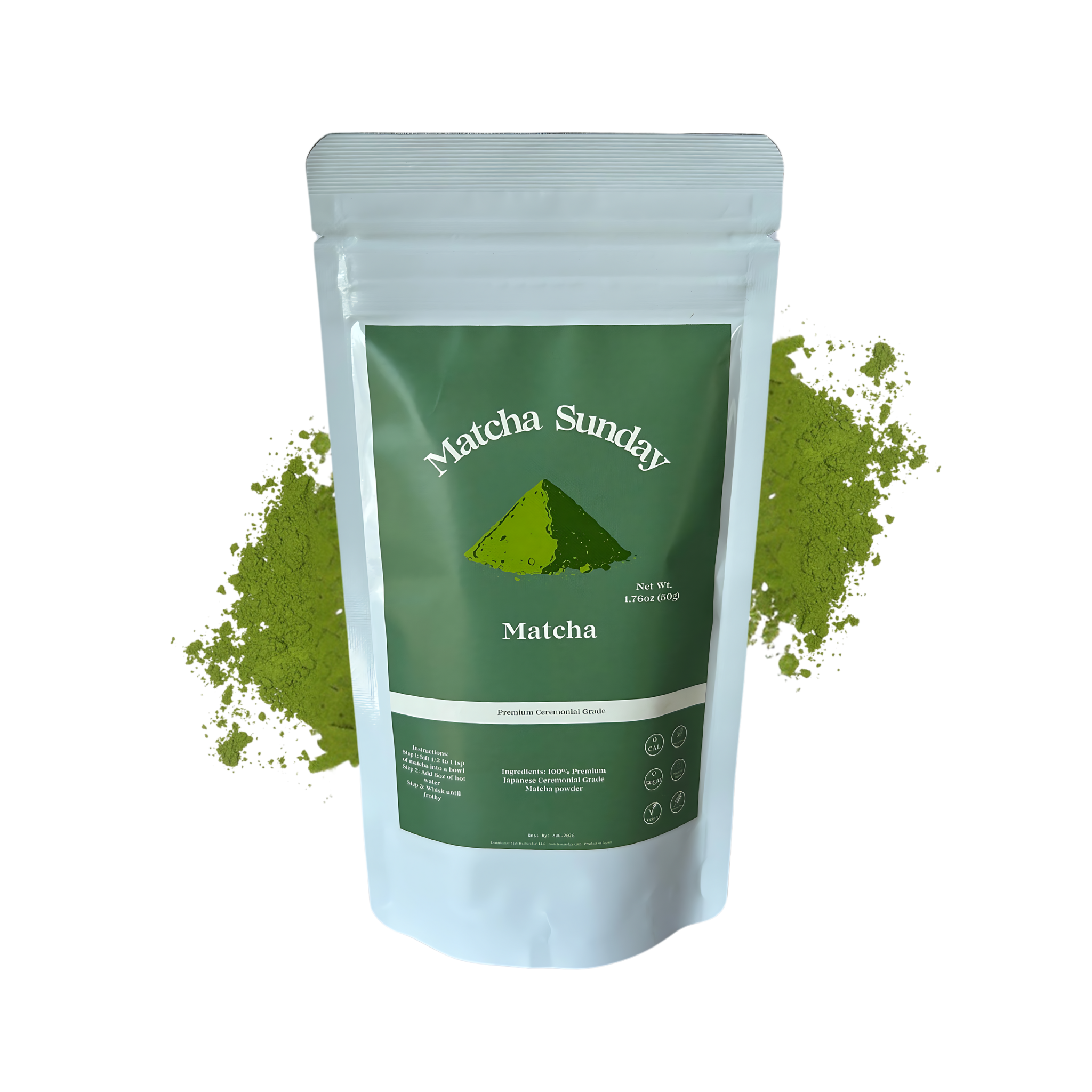
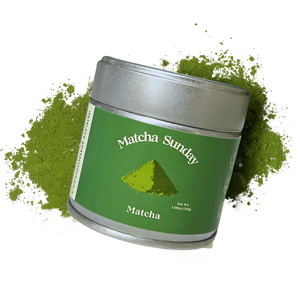
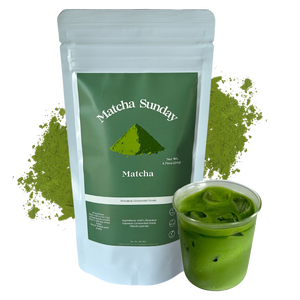
The matcha quality matters here more than in any blended drink. Because you taste the matcha directly against brown sugar, a lower grade powder will taste flat or overly bitter. Ceremonial grade matcha from Japan has a naturally sweeter, more layered flavor that holds its own against the syrup. If you are new to choosing matcha, our guide to what matcha tastes like covers the flavor differences between grades.
Brown sugar syrup (makes about 1 cup)
| Ingredient | Amount |
|---|---|
| Dark brown sugar | 1/2 cup (100 g) |
| Water | 1/2 cup (120 ml) |
Combine the brown sugar and water in a small saucepan over medium heat. Stir until the sugar dissolves completely, about two to three minutes. Remove from heat and let it cool before using. The syrup thickens slightly as it cools and develops a deep caramel color that looks beautiful pooled at the bottom of a clear glass.
Step by step method
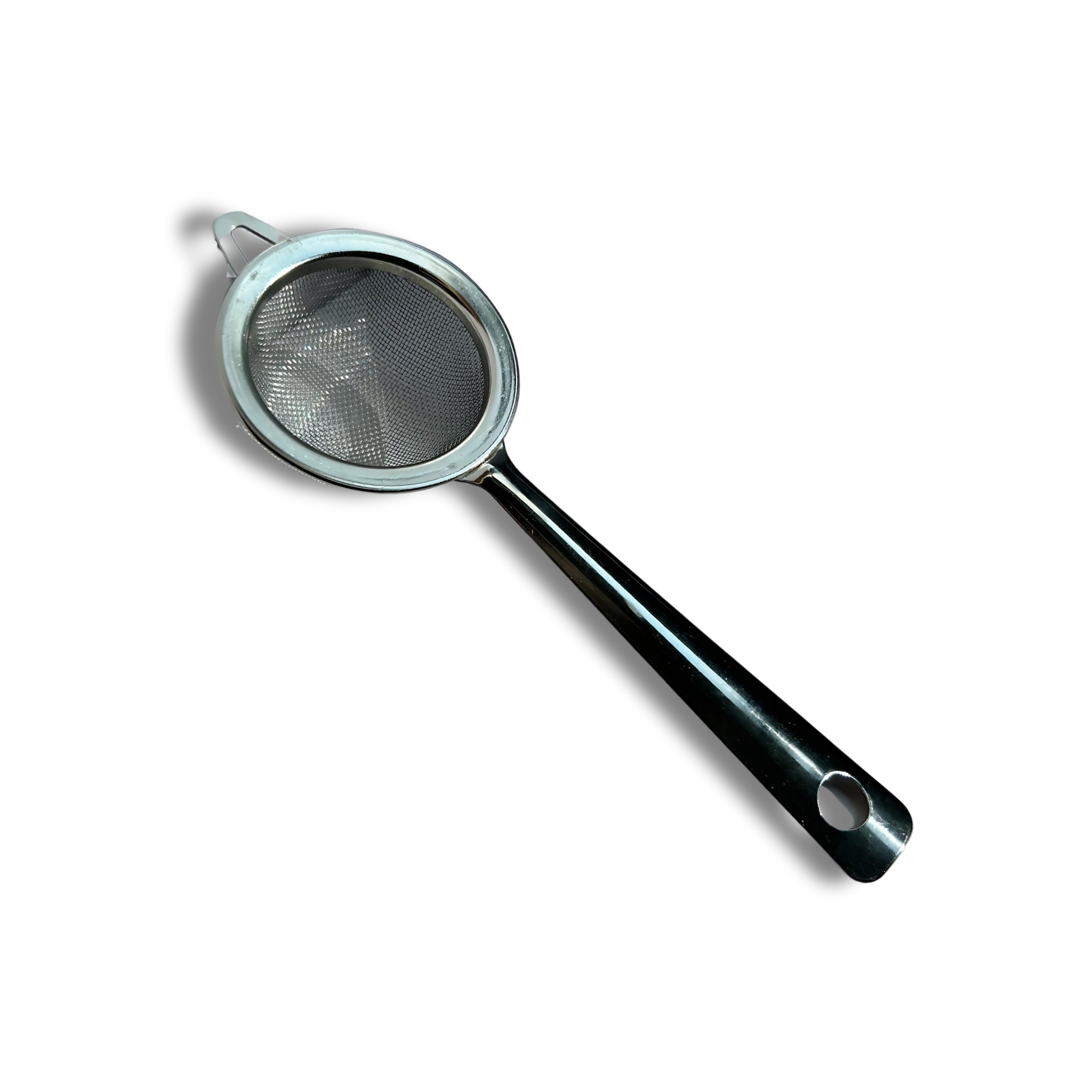
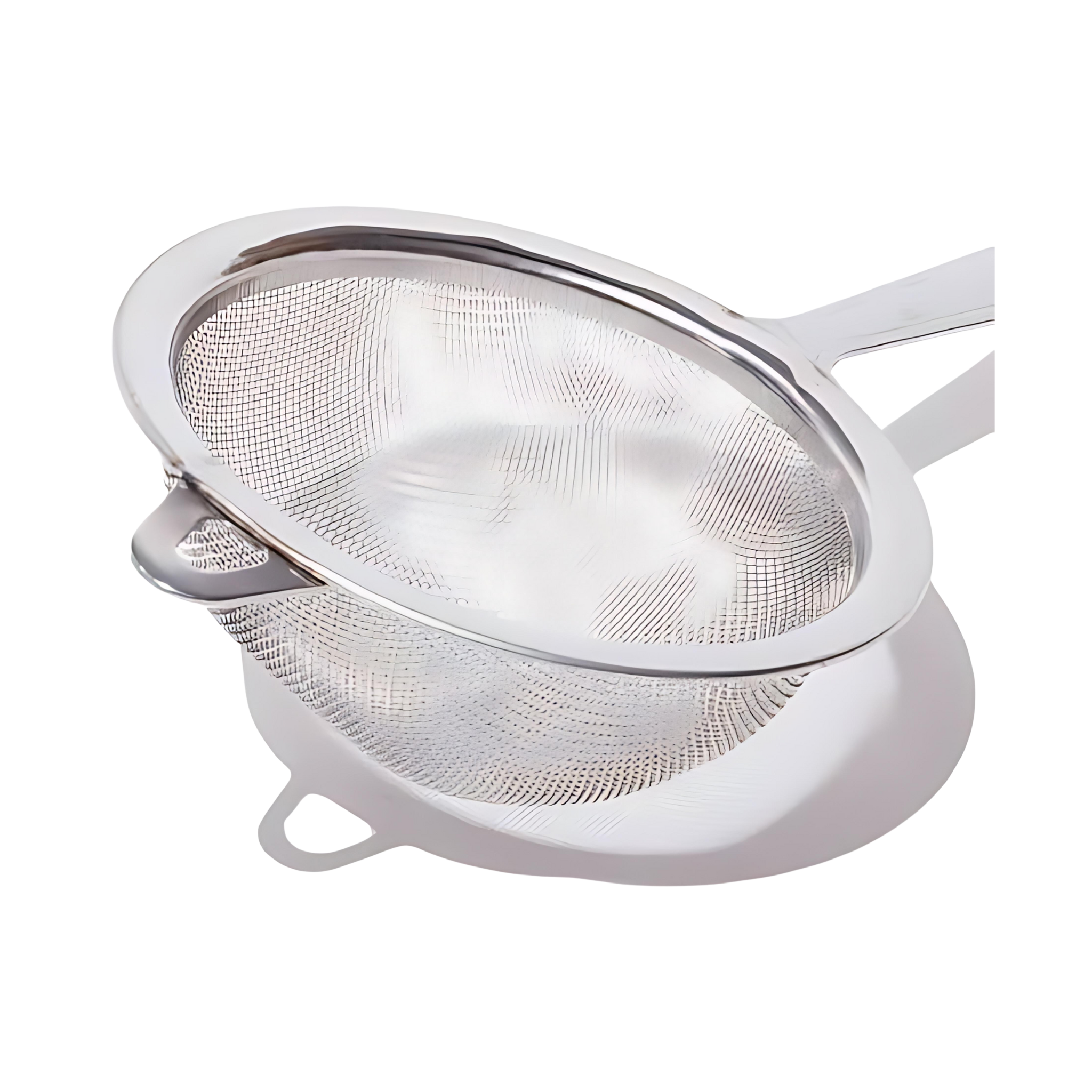
- Sift the matcha powder into a small bowl or wide cup to break up any clumps. Pour in 2 oz of hot water at about 175 degrees F (80 degrees C). Whisk vigorously in a W or M motion for 30 to 45 seconds until the matcha is fully dissolved and a thin layer of foam appears on top. Our guide to perfectly smooth matcha walks through this technique in detail.
- Add 1 to 2 tablespoons of brown sugar syrup to a tall clear glass (12 to 16 oz).
- Fill the glass with ice, packing it generously to the top.
- Pour cold barista oat milk slowly over the ice until the glass is about three quarters full.
- Slowly pour the whisked matcha over the back of a spoon onto the top of the oat milk. This creates the layered green on white effect.
- Serve immediately with a straw. Stir before drinking to blend all three layers together, or sip through the layers for a shifting flavor experience.
The result is a tall, layered glass with a golden brown base, a creamy white middle, and a vivid green crown. This is the same iced matcha latte technique we use for every cold matcha drink, and it works every time at home.
What kind of brown sugar works best for a matcha latte?
Dark brown sugar is our top pick because it contains more molasses than light brown sugar, which gives the syrup a deeper caramel flavor and a richer color in the glass. The molasses brings a malty, almost butterscotch quality that complements the umami notes in good matcha.
| Sugar type | Molasses content | Flavor profile | Best for |
|---|---|---|---|
| Dark brown sugar | About 6.5% | Deep caramel, toffee | Bold syrup with rich color |
| Light brown sugar | About 3.5% | Mild caramel, butterscotch | Subtle sweetness, lighter layers |
| Muscovado | About 8 to 10% | Intense, almost smoky | Maximum depth, very dark syrup |
| Coconut sugar | None (natural) | Warm, toasty | Lower glycemic alternative |
Muscovado is a great upgrade for the most intense caramel note. It is minimally refined and has a sticky, almost fudge like texture that dissolves beautifully into syrup. Coconut sugar works as a one to one swap and brings a warm, toasted flavor that pairs well with matcha. If you enjoy coconut and matcha together, our coconut matcha cloud recipe takes that pairing in a completely different direction. Avoid white sugar or plain simple syrup here because the whole point of this recipe is the brown sugar character.
How do you get the layered caramel swirl effect?
The layers happen naturally when you build the drink in the right order: syrup on the bottom, ice in the middle, cold milk, then matcha on top. Each liquid has a different density and the ice acts as a buffer that slows the mixing.
Four details make the layers cleaner:
- Pour over a spoon. Hold a spoon upside down just above the surface of the milk and pour the matcha onto the back of the spoon. This disperses the liquid gently instead of punching through the milk layer. Tilt the spoon slightly so the matcha fans out across the surface rather than streaming down in one spot.
- Use plenty of ice. A full glass of ice creates a physical barrier between layers. Less ice means faster mixing and muddier separation.
- Keep the oat milk cold. Cold milk is denser than room temperature milk, which helps it stay distinct from the matcha layer above.
- Do not stir until you are ready to drink. The beauty of this drink is the gradient. Take a photo first, then stir.
When you finally stir, the brown sugar, oat milk, and matcha blend into a unified caramel matcha flavor. Getting the ratios right between matcha and milk is what keeps the flavor balanced rather than too sweet or too bitter.
Can you make brown sugar syrup ahead of time?
Yes, and we strongly recommend it. Making a batch on Sunday sets you up for a full week of five minute lattes. Store the cooled syrup in a clean glass jar or squeeze bottle in the refrigerator, where it keeps well for up to two weeks.
- Use a clean spoon or pour directly from the bottle each time to avoid introducing bacteria.
- If the syrup crystallizes, reheat it gently with a splash of water and stir until smooth again.
- For a flavored variation, add a split vanilla bean or a cinnamon stick while the syrup simmers, then strain before storing.
Once the syrup is in the fridge, the entire latte becomes a two minute pour. That is the real trick to making this a daily habit instead of an occasional project.
What is the best oat milk for a matcha latte?
Barista edition oat milks are the best choice because they are formulated with added fats that create a creamier texture and better layering. Regular oat milk tends to be thinner and separates faster when it meets the matcha.
| Oat milk | Texture | Sweetness | Layering |
|---|---|---|---|
| Oatly Barista Edition | Very creamy, thick | Naturally sweet | Excellent |
| Califia Farms Barista Blend | Smooth, medium body | Mildly sweet | Very good |
| Minor Figures | Creamy, consistent | Neutral | Very good |
| Chobani Oat Barista | Clean, medium body | Lightly sweet | Good |
| Store brand regular oat milk | Thin, watery | Varies | Poor |
We reach for Oatly Barista Edition most days. It is thick enough to hold layers, naturally sweet enough to complement the brown sugar, and it does not separate when it meets the matcha. Whatever brand you choose, make sure it is cold. Straight from the fridge oat milk layers better, tastes smoother, and keeps the drink from getting watery before you finish it.
Why does brown sugar work better than white sugar with matcha?
White sugar adds pure sweetness and nothing else. Brown sugar brings molasses, and molasses brings warm, caramel flavors that complement the vegetal and umami notes in matcha. Think of it the way you would pair food: you would not put plain sugar on roasted vegetables, but a brown sugar glaze transforms them. Matcha responds to brown sugar the same way.
The depth of the syrup also means you can use less of it. One tablespoon of brown sugar syrup delivers more perceived sweetness and flavor complexity than two tablespoons of plain simple syrup, so the drink stays balanced without becoming a sugar bomb. For a full breakdown of what the tea itself adds before any sweetener or milk, our guide to matcha calories puts the numbers in perspective.
What are the best variations of a brown sugar matcha latte?
- Vanilla brown sugar: Add 1/2 teaspoon of pure vanilla extract to your brown sugar syrup while it simmers for a warm, bakery like note.
- Cinnamon brown sugar: Drop a whole cinnamon stick into the saucepan while making the syrup. Remove before storing.
- Double matcha: Use 3 teaspoons of matcha instead of 2 for a stronger, more bitter presence that stands up to the sweetness. This version has roughly 195 mg of caffeine.
- Less sweet: Start with just 1 teaspoon of syrup and taste before adding more. The oat milk itself brings natural sweetness.
- Coconut cream float: Replace the top inch of oat milk with cold coconut cream for a richer, slightly tropical version.
- Cold foam topper: Froth 2 tablespoons of oat milk with a splash of brown sugar syrup using a milk frother. Spoon the foam on top for a cafe style finish.
Use any of these as a starting point and adjust to your taste. The base recipe is forgiving, so small tweaks rarely throw off the balance.
Start your matcha ritual
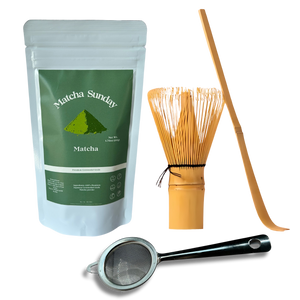
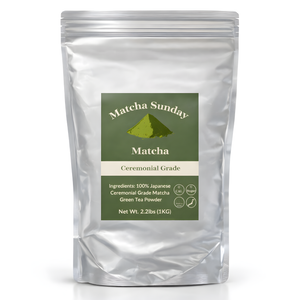
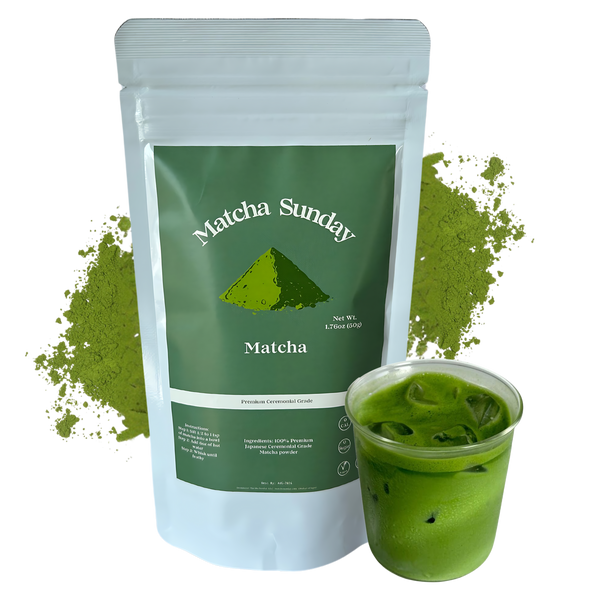
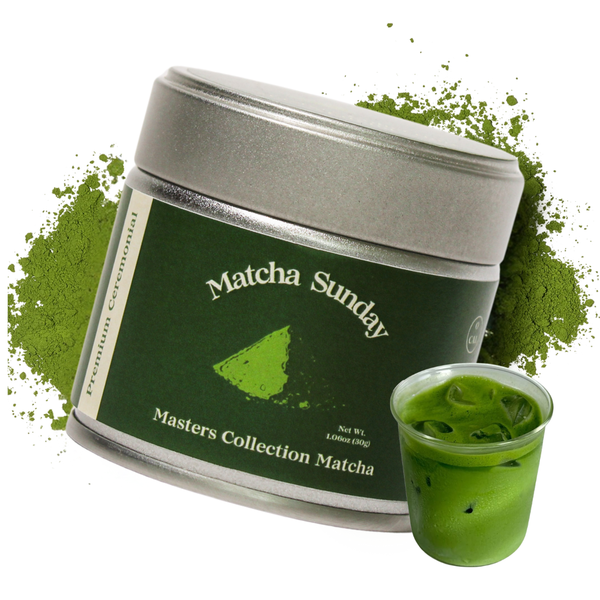
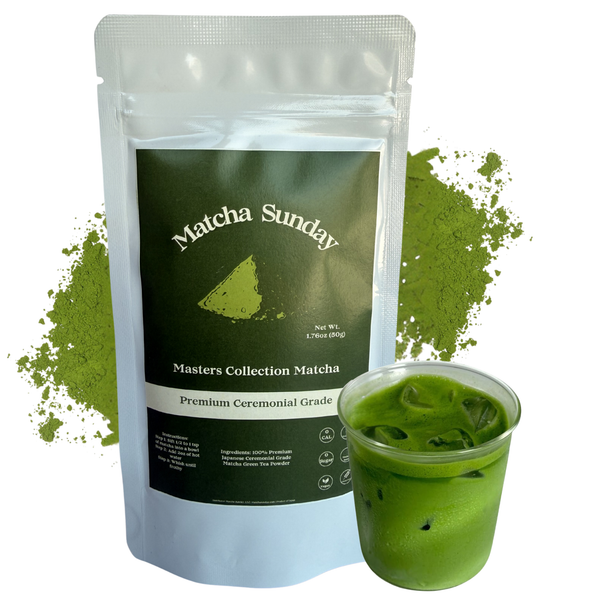
All 100% matcha from Japan. Pick the one that fits how you like to drink it.
Frequently asked questions
How many calories are in an iced brown sugar oat milk matcha latte?
A standard serving made with 8 oz of barista oat milk and 1 tablespoon of brown sugar syrup contains roughly 170 to 200 calories. Most come from the oat milk and syrup. Matcha itself adds about 5 calories per teaspoon. Using less syrup or a lighter oat milk brings the total down.
Can I use regular green tea instead of matcha?
No. Matcha is a powder that suspends in liquid and creates the thick, vibrant green layer. Brewed green tea is too thin and pale to create the layered effect or deliver the same concentrated flavor.
Why does my matcha taste bitter in this recipe?
Bitterness usually means the water was too hot or the matcha quality is too low. Always use water at about 175 degrees F (80 degrees C), never boiling. Ceremonial grade matcha from Japan has a naturally smoother, sweeter flavor than culinary grade.
Can I use a different milk instead of oat milk?
You can use any milk you like, but oat milk gives the best results. It has a neutral, creamy flavor that complements both the matcha and the brown sugar. Almond milk can taste slightly bitter. Dairy whole milk works well for richness. Coconut milk adds tropical notes that shift the flavor profile.
How do I make this without a matcha whisk?
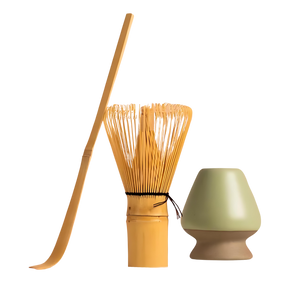
Use a small regular whisk, a milk frother, or a jar with a tight lid. If using a jar, add the matcha and hot water, seal, and shake vigorously for 30 seconds. The goal is to fully dissolve the powder with no visible clumps.
Can I make this hot instead of iced?
Yes. Skip the ice, warm the oat milk on the stove or in a frother, and stir the brown sugar syrup directly into the hot milk before adding the whisked matcha on top. You will not get the same layered look, but the flavor combination is just as good warm. Follow the same matcha latte ratios for balanced flavor.